AI Humanoid Robot Plays Tennis — LATENT Achieves 91% Forehand Success Rate
A Tsinghua University research team unveiled LATENT, an AI system that teaches the Unitree G1 humanoid robot to play tennis. Using only amateur motion data, it achieved a 91% forehand and 78% backhand success rate — a new milestone for reinforcement learning robotics.
An AI humanoid robot is rallying tennis with humans. The Unitree G1 robot — 132cm tall, 35kg — stepped onto the court with a tennis racket. When a human serves, the robot runs to return it, and the rally continues back and forth. It returns balls traveling at 54–108 km/h with a 90.9% forehand and 77.8% backhand success rate. This isn't science fiction — it's a real research result published this week by a Tsinghua University team using the reinforcement learning system LATENT.
Training an AI Robot: Learning From Just 5 Amateurs
The project is called LATENT (Learning Athletic humanoid TEnnis skills from imperfect human motioN daTa), a collaboration between Tsinghua University, Peking University, robotics startup Galbot, and the Shanghai AI Research Institute.
The most remarkable aspect is that high-quality training data isn't required. Previously, precise motion capture of professional athletes was needed. LATENT instead had just 5 amateur tennis players demonstrate basic movements separately — forehand, backhand, side steps — rather than recording actual matches.
The capture space was only 3m × 5m, one-seventeenth of a real tennis court (~260m²). They collected just 5 hours of motion data with no editing or labeling required. To learn the fundamentals of reinforcement learning, check out our free learning guide.
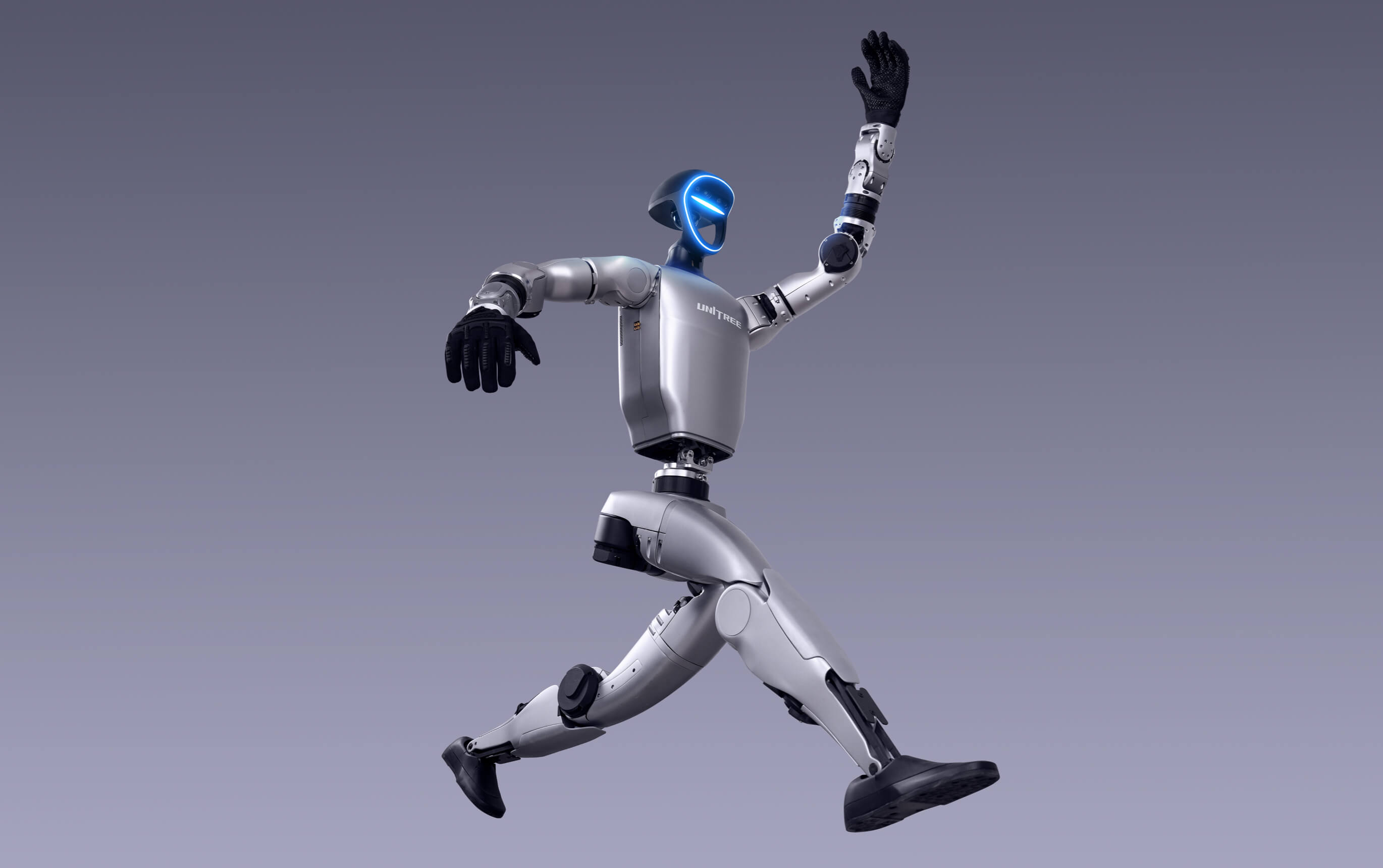
▲ The Unitree G1 humanoid robot used in the LATENT project. 132cm tall, 35kg, with up to 43 joint motors. (Source: Unitree)
Success Rates on a Real Court: 91% Forehand, 78% Backhand
The team ran 20 consecutive rally experiments with human players on a real court. The results are impressive:
Real Court Test Results
• Forehand return: 90.9%
• Backhand return: 77.8%
• Front court (near net): 88.9%
• Back court (near baseline): 81.8%
Ball speeds ranged from 15–30 m/s (54–108 km/h), comparable to typical amateur rally speeds. The robot automatically repositions its feet based on ball trajectory and distinguishes between forehand and backhand swings.
In simulation, success rates were even higher — forehand 96.5%, backhand 82.1% — significantly outperforming prior methods (PPO, AMP, ASE, PULSE, etc.).
LATENT's 3-Stage Process: High Performance From Imperfect Data
LATENT's training has three stages. Think of it as showing basic swing videos to a beginner, then letting them practice thousands of times in a virtual court, then placing them on a real one.
Stage 1 Imitation Learning — The robot mimics basic movements from the 5 amateur players.
Stage 2 Latent Space Encoding — Individual movement fragments are compressed into a unified "skill dictionary." Inaccurate wrist motions are automatically corrected.
Stage 3 Reinforcement Learning — On a virtual court, the robot learns to choose the right movement based on ball position and speed.
The key innovation is the Latent Action Barrier, which constrains AI exploration to human-like movement ranges. This ensures the robot maintains natural swing patterns while accurately returning balls.
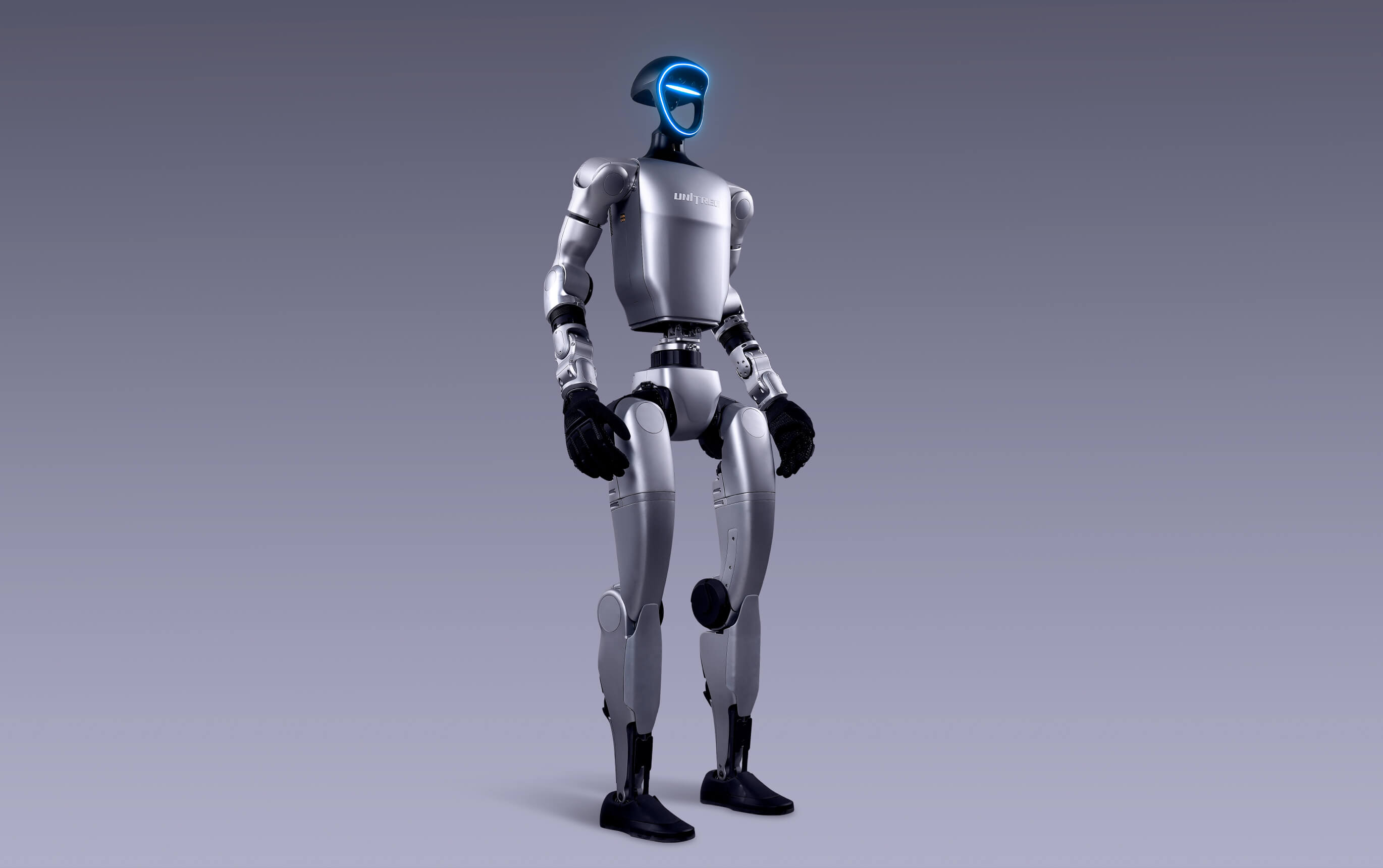
▲ The Unitree G1 starts at approximately $13,500, featuring 23–43 joint motors, depth cameras, and 3D lidar. (Source: Unitree)
Hacker News: "Way Better Than Tesla Optimus"
The research received 149 votes on Hacker News with active discussion.
One user noted: "Tesla Optimus crawls at 0.02 m/s while this robot plays tennis rallies." Experts did point out a limitation — the robot still relies on external motion capture cameras rather than its own onboard vision to track the ball.
The team acknowledged this, stating they plan to develop onboard ball recognition next. They also see the technology extending to soccer, parkour, and other sports.
Beyond Tennis: The Future of AI Robot Sports
LATENT's real significance isn't just "a robot playing tennis." The core insight is that complex physical skills can be learned from imperfect data. This could dramatically reduce the cost of teaching robots various physical activities.
Research in robot sports — table tennis, badminton, soccer, basketball, boxing — is advancing rapidly, and LATENT represents one of the fastest, most dynamic physical feats achieved by a real humanoid robot.
Watch the Demo
See the robot rallying with humans at the LATENT project page. Multi-rally, footwork, and robot-vs-robot matches are all available.
Source code is on GitHub for researchers to reproduce.
To learn more about AI and automation, visit our free learning guide.
Related Content — More AI News | Free Learning Guide
Stay updated on AI news
Simple explanations of the latest AI developments