A Free Tool That Filters Out AI Slop and Shows Only Human-Written Blogs — Kagi Small Web Hits 660 Upvotes on Hacker News
In an era where AI-generated content dominates search results, Kagi Small Web — a free service that curates posts from 6,000 personal blogs — has claimed the #1 spot on Hacker News with 660 upvotes. Anyone can use it for free, and the source list is open source.
These days, when you search for something on Google, it's getting harder and harder to tell whether a piece of writing was created by a human or by AI. In fact, one user in the Hacker News discussion shared that "after clicking the 'next post' button over 100 times on Small Web, more than 90% of the posts were about AI and coding agents." It's a sign that in the age of AI, finding writing that real people have actually experienced, thought about, and written themselves is becoming increasingly difficult.
One service has stepped up to tackle this problem head-on. It's Kagi Small Web, built by Kagi, a company already well-known for its AI-powered search engine. The project shot to #1 on Hacker News with 660 upvotes and 187 comments.
A Free Service That Curates Posts from 6,000 Personal Blogs
Kagi Small Web is a free service that collects and displays recent posts exclusively from personally-run blogs and websites — no corporate media or sponsored content. Currently, about 6,000 verified personal sites are registered, and the service primarily surfaces posts published within the last 7 days.
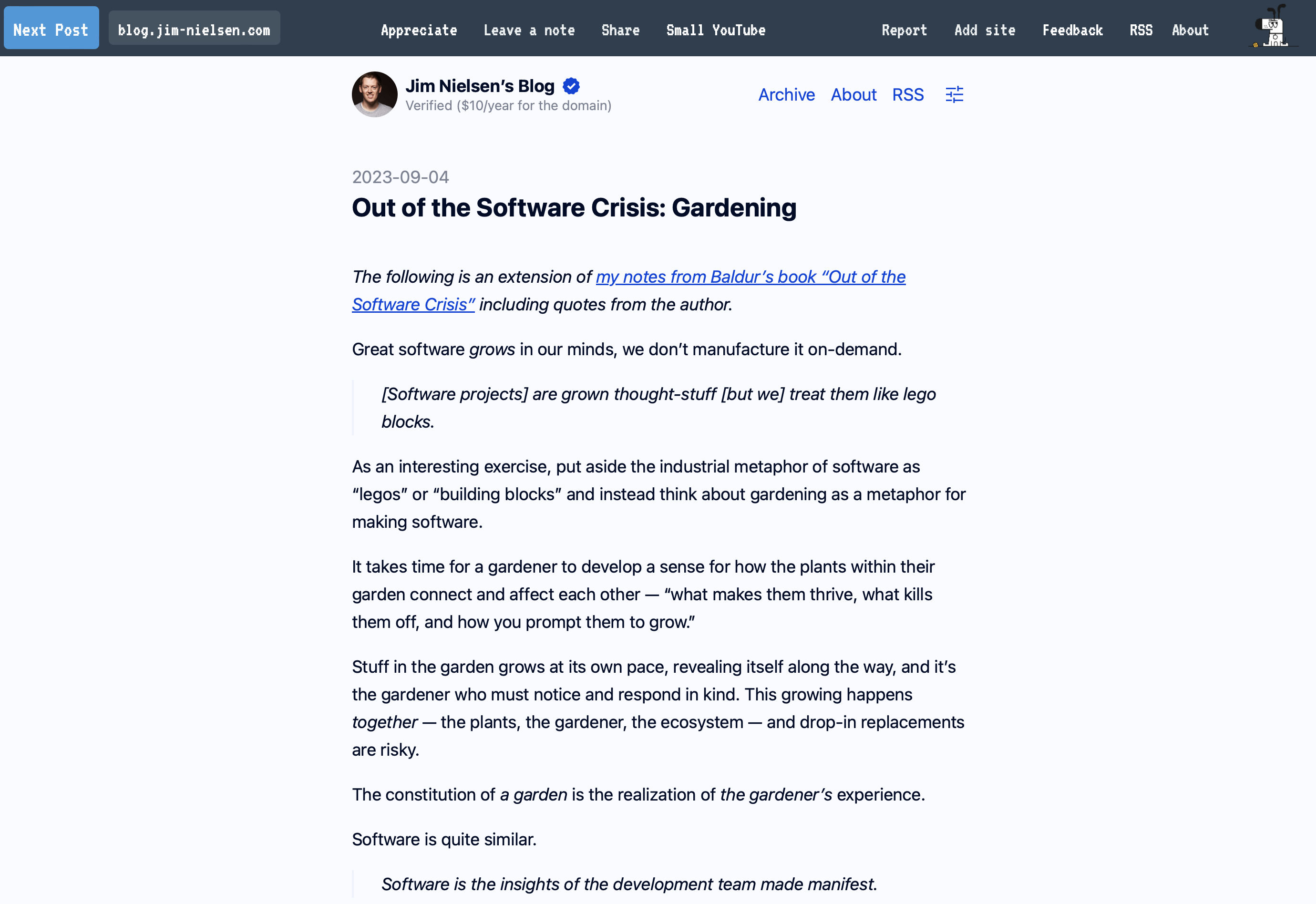
The inclusion criteria are strict. A blog must have been active for at least 3 years, and the writing must be genuinely authored by a real person sharing their own thoughts. Sponsored content and adult material are excluded.
28 Topics, from Programming to Cooking
This isn't just a collection of tech blogs. It spans 28 categories covering a wide range of interests.
Key Categories and Post Counts
- 🖥️ Programming — 979 posts
- 💬 Personal & Lifestyle — 1,022 posts
- 🤖 AI — 653 posts
- 🌐 Web & Internet — 552 posts
- 🎮 Gaming — 244 posts
- 🔒 Security — 416 posts
- 🎨 Art & Design — 164 posts
- 🍳 Food & Cooking — 67 posts
Beyond these, there are 28 total categories including science, health, travel, photography, essays, and economics.
Why People Who Remember StumbleUpon Are Thrilled
The most frequently mentioned name in the Hacker News comments was StumbleUpon — a popular web discovery service from the 2000s that showed you random interesting websites at the click of a button. After it shut down in 2018, no service quite replicated that experience — until now. Many commenters said Kagi Small Web's "Next Post" button brings back exactly that feeling of serendipitous discovery.
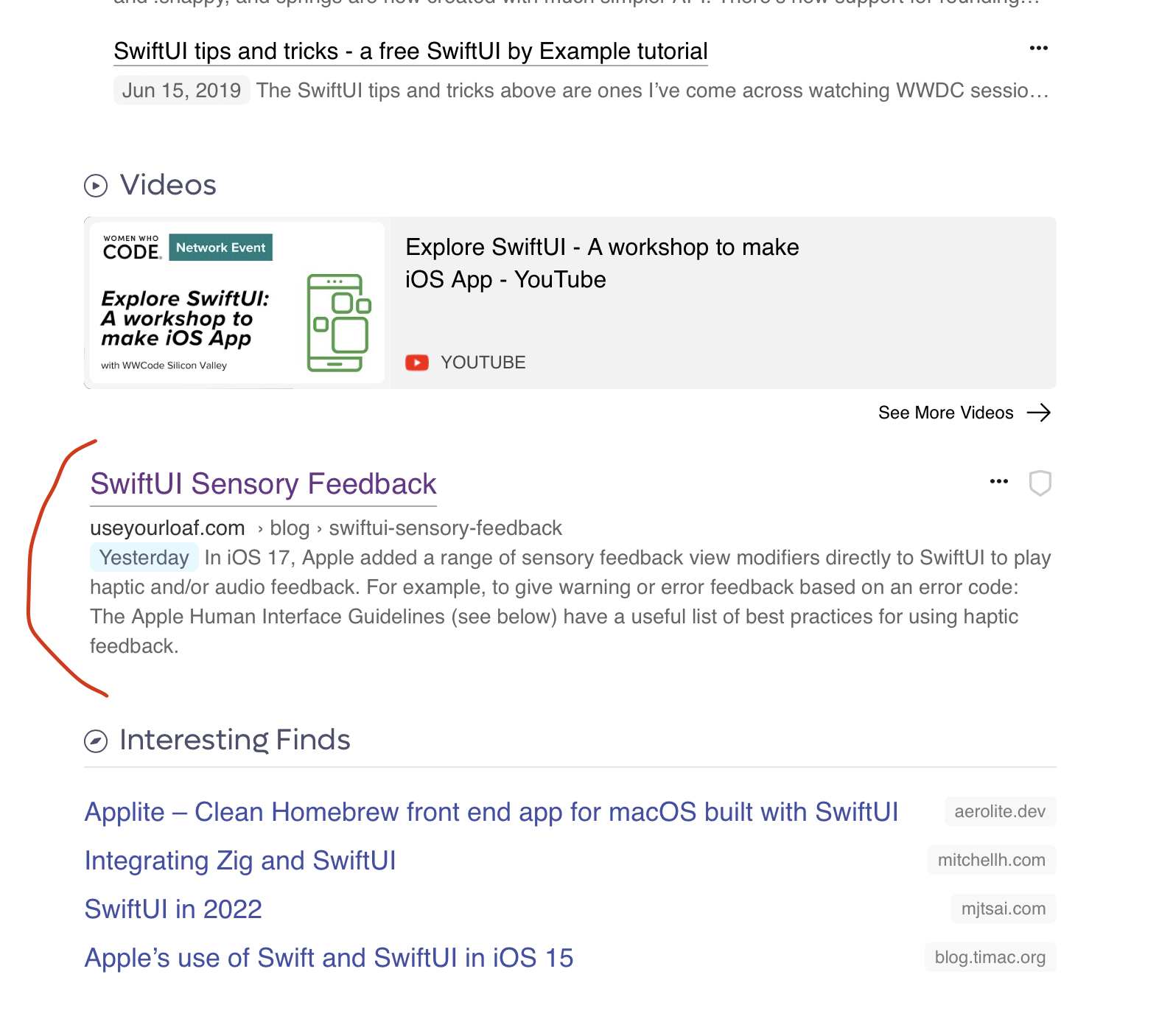
If you already use the Kagi search engine, Small Web blog posts automatically appear in your regular search results under an "Interesting Finds" section. Personal blogs show up right alongside results from major websites.
AI Features Built In — Summaries and Translation in One Click
Kagi Small Web isn't just a simple list of links. It offers AI-powered summaries and AI translation for each post. While most blog posts are in English, a single tap on the translate button lets you read them in your preferred language. For longer posts, the summary feature lets you quickly grasp the key points.
There's also an experimental feature called Small YouTube. It curates videos exclusively from smaller YouTube creators with fewer than 400,000 subscribers — a gateway to discovering quality content that tends to get buried by the algorithm (the system that decides which videos get recommended to viewers).
What 187 Hacker News Comments Reveal: Limitations and Potential
Of course, there were criticisms too. The most common concern was that the inclusion criteria are too narrow.
"The requirement for an RSS feed (a standardized format that lets readers subscribe to website updates) and recent posts means truly valuable reference sites and personal project pages get left out." — Hacker News user
Another user pointed out a UX (user experience) issue: "If you refresh the page, you can't find the post you were reading again." The URLs aren't fixed, so there's no way to return to a specific post later.
But the overall response was positive. The dominant sentiment was that this is "a meaningful effort to revive individual voices on a corporate-dominated internet" — and that conviction is what drove the impressive 660 upvotes.
How to Try It Right Now
① Browse on the web — Head to kagi.com/smallweb and start using it instantly with no sign-up required. Hit the "Next Post" button to discover random posts, or pick a category from the top menu.
② Subscribe via RSS — Add the URL below to your RSS reader (such as Feedly or Inoreader) to automatically receive new posts every 5 hours.
https://kagi.com/api/v1/smallweb/feed/③ Browse AI posts only — Go to kagi.com/smallweb?cat=ai to explore the 653 posts in the AI category.
④ Submit your own blog — Click the "Add site" button at the top of the page to submit your blog. It must have been active for at least 3 years.
In the Age of AI, the Value of 'Real Writing' Is Rising
Since ChatGPT arrived, the internet has been flooded with mass-produced AI-generated content. There are persistent concerns that low-quality AI content designed for SEO (Search Engine Optimization — techniques used to rank higher in search results) is polluting search results. In this landscape, the simple act of seeking out and reading writing by real humans has taken on new value.
Kagi Small Web is at the forefront of this movement. It ensures transparency by making its source list open source (publicly available for anyone to inspect and contribute to), and its lightweight design that works without JavaScript embodies the philosophy of the "small web." In an era where AI creates the content, this is a growing signal that the movement to protect human-made content is gaining momentum.
Related Content — Get Started with AI the Easy Way | Free Learning Guide | More AI News
Sources
Stay updated on AI news
Simple explanations of the latest AI developments