This AI coding agent actually remembers what you taught it
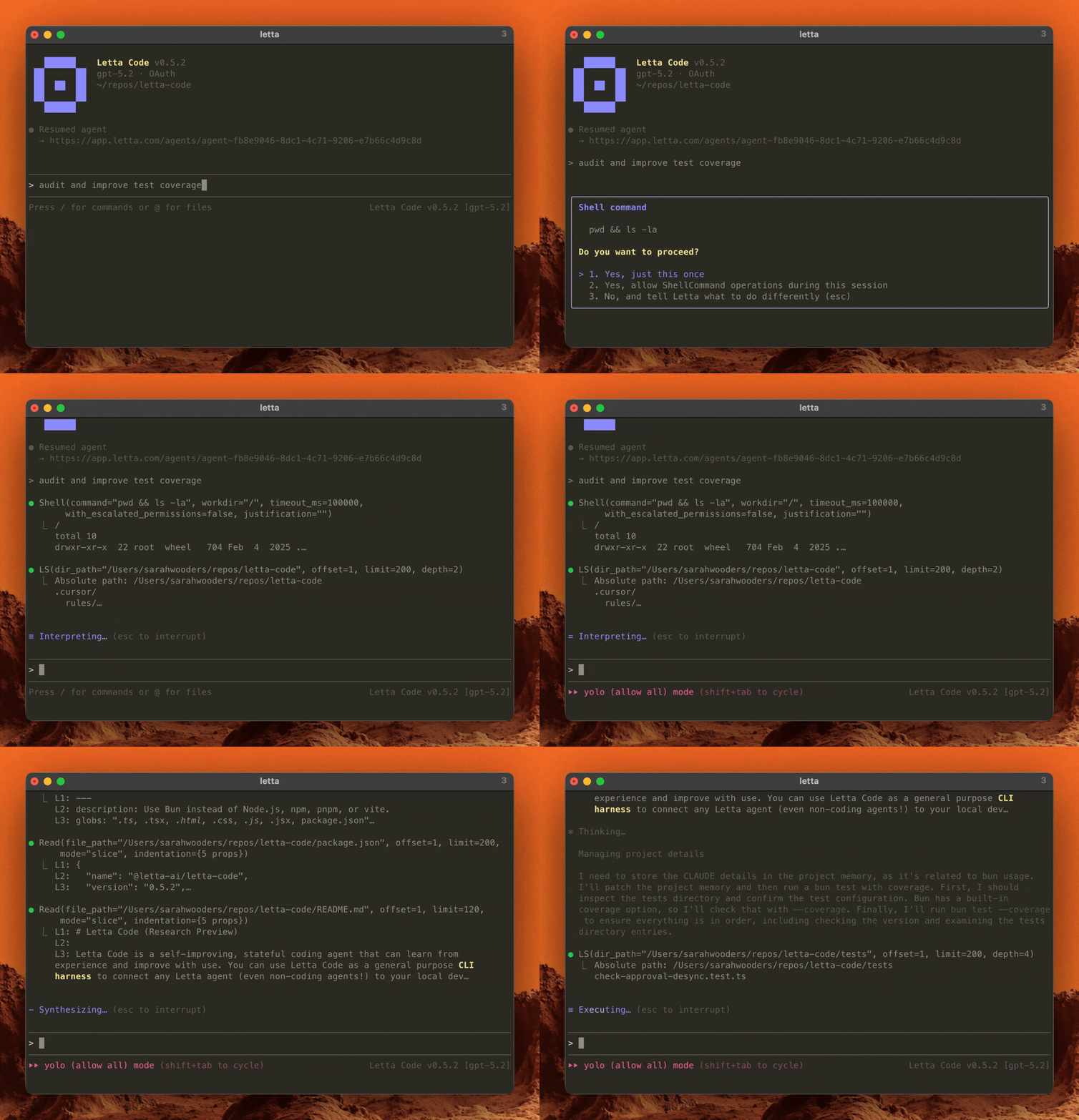
Letta Code is a memory-first coding agent that learns across sessions. Unlike Claude Code or ChatGPT, it never forgets.
Every time you start a new conversation with Claude Code or ChatGPT, your AI assistant forgets everything — your coding style, your project structure, the workaround you spent 20 minutes explaining yesterday. Letta Code is built to fix exactly that problem.
It's an open-source coding agent that remembers everything across sessions. Think of it like the difference between hiring a new contractor every day versus having a coworker who actually learns from working with you.
Why forgetting is the biggest problem with AI coding tools
Current AI coding tools like Claude Code, GitHub Copilot, and Cursor all share the same limitation: every conversation starts from zero. You explain your project's architecture. You tell it your naming conventions. You show it how your team handles errors. Then you close the terminal — and it's all gone.
Letta Code takes a fundamentally different approach. Built on the Letta API (formerly known as MemGPT), it runs a persistent agent that lives on your computer and carries its memory forward automatically.
The difference in one sentence: Claude Code and ChatGPT are like meeting a new contractor every morning. Letta Code is like having a junior developer who gets better every week.
How the memory system works
Letta Code uses a hierarchical memory architecture (a layered system for storing different types of information, from recent actions to long-term knowledge). Here's what that means in practice:
/init — Initialize the agent's memory with your project details
/remember — Tell the agent to save specific knowledge ("always use TypeScript strict mode in this project")
/skill — Let the agent learn reusable abilities from tasks it completes
/clear — Start a fresh conversation while keeping all learned memory intact
When you type /clear, it doesn't wipe the agent's brain — it just starts a new conversation thread. Everything the agent has learned stays.
Skill learning: 37% better performance from experience
The most impressive feature is skill learning. After completing a task, the agent can reflect on what worked and create a reusable "skill" — a structured knowledge file with approaches, pitfalls, and verification strategies.
According to Letta's benchmarks on Terminal Bench 2.0 (a standardized test for coding agents with 89 tasks):
📊 21% improvement from learning task patterns alone
📊 37% improvement when the agent also learns from its failures
📊 16% cost reduction — the agent makes fewer unnecessary tool calls
Skills are saved as plain markdown files you can version-control with Git, share with teammates, or copy between projects. If your colleague figures out how to handle a tricky deployment pattern, their agent's skill file can teach your agent too.
Works with Claude, GPT, Gemini, and more
Letta Code isn't locked to one AI provider. You can switch models mid-conversation with the /model command:
- Claude Sonnet/Opus 4.5 (Anthropic)
- GPT-5.2-Codex (OpenAI)
- Gemini 3 Pro (Google)
- GLM-4.7 and other providers via custom API keys
This means you can use Claude for complex architecture decisions and switch to a cheaper model for routine refactoring — and the agent remembers everything regardless of which model powers it.
Try it in 30 seconds
If you have Node.js installed, getting started takes one command:
npm install -g @letta-ai/letta-code
cd your-project
letta
On first launch, you'll authenticate with a free Letta account, then start chatting. The free tier lets you get started; the Pro plan at $20/month unlocks more models and up to 20 persistent agents.
What just shipped in v0.19
The latest release (v0.19.0 on March 17, v0.19.1 on March 18) brought significant upgrades:
- Client-side memory with Git sync — your agent's memory is now backed by Git, so you can track what it learned over time
- Subagent lifecycle management — delegate tasks to specialized sub-agents that inherit the parent's memory
- WebSocket protocol v2 — faster, more stable communication between the terminal and the agent server
- GPT-5.4 Mini/Nano model support — use OpenAI's latest budget-friendly models
Who should pay attention
If you use Claude Code daily and find yourself re-explaining project context every session, Letta Code solves that specific pain point. You can even use Claude's models through Letta Code — getting Anthropic's intelligence with persistent memory on top.
If you manage a dev team, the skill-sharing system means one developer's hard-won knowledge can instantly benefit everyone else's AI assistant.
If you're exploring AI coding tools for the first time, Letta Code's memory system makes it more forgiving — it learns your preferences over time instead of requiring perfect prompts every session.
The project has 1.9K GitHub stars and 108 releases, with active development. It's still early, but the core idea — that AI assistants should learn, not just respond — feels like where the entire industry is heading.
Full documentation and source code: github.com/letta-ai/letta-code
Related Content — Get Started with Easy Claude Code | Free Learning Guides | More AI News
Sources
Stay updated on AI news
Simple explanations of the latest AI developments