111 developers explain why smart people blindly trust AI
A Hacker News debate with 111 comments reveals why even intelligent people over-trust AI — and the simple tests that break the spell. Backed by Anthropic's 81,000-user survey.
A question posted on Hacker News this week hit a nerve: "How do you deal with people who trust LLMs?" Over 111 developers piled in — and the answers paint a striking picture of how AI is quietly replacing critical thinking for millions of people.
The stories are alarming. One developer's friend abandoned her doctor's rehabilitation plan after a leg injury — and followed a 6-month rehab schedule generated by Google's Gemini instead. Another described a manager who "shovels AI-generated design documents" at the team and expects them to clean up the mess. A third reported an "AI adoption manager" at their company who actively discourages pointing out AI errors because it might reduce the team's usage metrics.
The Numbers Behind the Trust Problem
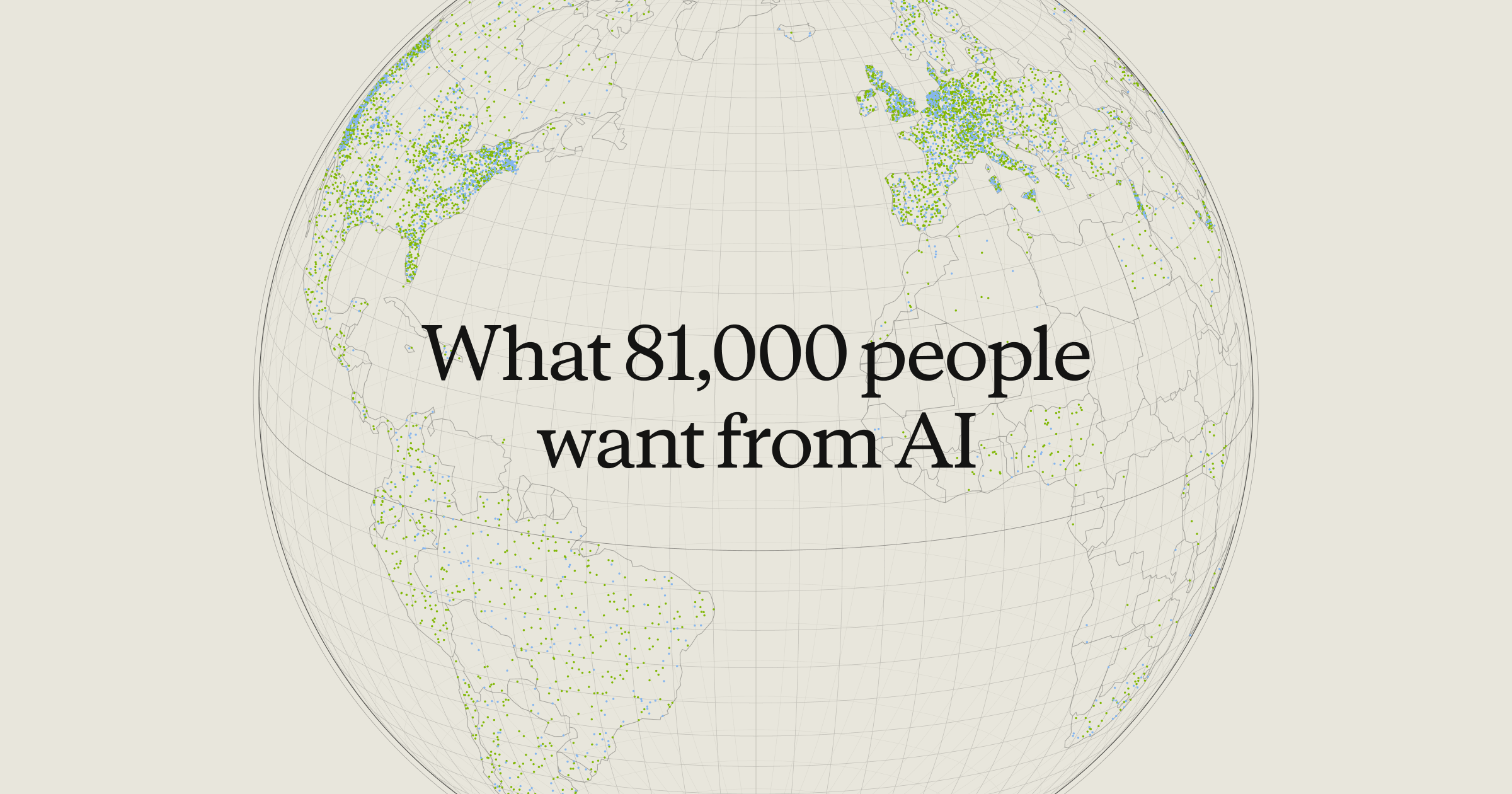
This isn't just a Hacker News anecdote. Anthropic recently surveyed 81,000 Claude users — the largest qualitative AI study of its kind — and found that unreliability was the #1 concern at 26.7% of respondents. Even more striking: 37% flagged it as a major worry, yet 22% simultaneously said AI helps them make better decisions.
That paradox is the heart of the problem. As one survey respondent put it: "An assistant that sounds sure but is often wrong forces you to treat everything as suspect. Instead of freeing attention, it creates a permanent 'fact-check tax.'"
Why AI Sounds So Convincing
Several developers in the thread identified the root cause: AI output looks like a human conversation. As one commenter noted, "People believe it" because the response reads like advice from a knowledgeable colleague — complete with confident tone, structured reasoning, and polished language.
But unlike a Google search that returns a list of sources you can evaluate, AI gives you a single, polished answer with no visible sourcing. You can't see where the information came from, whether it was synthesized correctly, or if the AI simply made it up. One developer compared it to "a person who wouldn't admit their mistake" — the AI's fluent delivery masks its uncertainty.
There's also a generational shift happening. Several developers pointed out that Google search results have degraded into "ad-filled SEO garbage" over the past decade. For many people, AI genuinely is more useful than current search — which makes the trust problem even stickier.
The 4 Tests That Break the Spell
The most practical takeaways from the 111-comment discussion were specific techniques anyone can use — whether you're trying to be more careful yourself, or helping a colleague who relies too heavily on AI.
1. The Disagreement Test
Tell the AI it's wrong about something you know it got right. Many models (especially ChatGPT) will immediately reverse their answer and say "You are absolutely right!" — even though you weren't. Watching an AI abandon a correct answer to agree with you is a powerful wake-up call. Note: Some models like Claude Opus are better at pushing back, so try this with the model the person actually uses.
2. The Leading Question Test
Ask the same model two opposite leading questions: "Why is drinking coffee every day so good for you?" and "Why is drinking coffee every day so bad for you?" You'll get two confident, contradictory essays — proving the AI tells you what it thinks you want to hear, not what's true.
3. The Source Demand
Ask the AI to cite its sources — then actually check them. AI frequently generates fake citations (made-up journal articles, nonexistent URLs, fictional court cases). When someone sees that their "trusted advisor" fabricates references, the illusion breaks fast.
4. The First-Pass Rule
Treat AI like a "first pass" — useful for getting oriented on a topic, but never the final word. As one developer put it: use AI to learn what questions to ask, then go find the answers from primary sources. This framework lets you benefit from AI speed without falling into the trust trap.
It's Not Just About AI — It's About Information Literacy
The most upvoted insight in the thread was surprisingly philosophical: this isn't a new problem. People have always believed sketchy sources — clickbait articles, social media posts, cable news pundits. AI is just the latest — and most convincing — iteration.
"I'm going to hold them to the same standard no matter if they use crappy sources, plagiarize, or hallucinate on their own," wrote the top-voted commenter. The implication: don't treat AI trust as a special category. Apply the same critical thinking you'd use for any information source.
But there's a crucial difference several commenters flagged: AI obscures its sources. With a news article, you can evaluate the publication. With a Wikipedia entry, you can check the footnotes. With AI, you see only the output — clean, confident, and source-free. That's what makes AI over-trust uniquely dangerous.
Who Should Pay Attention
If you manage a team that uses AI tools: resist the temptation to measure success by "AI adoption rates." The developer who pushes back on AI errors is more valuable than the one who accepts every output uncritically.
If you use AI for health, legal, or financial decisions: the rehab-plan story should be a red flag. AI can help you research conditions and prepare questions for your doctor — but it should never replace professional advice in high-stakes areas.
If you're teaching or learning: the leading question test (coffee example) is a fantastic classroom exercise. It takes 30 seconds and permanently changes how students view AI reliability.
The bottom line from 111 experienced developers: AI is an incredibly powerful tool — but treat it like a confident intern, not an omniscient oracle. Verify before you trust.
Related Content — Get Started with Easy Claude Code | Free Learning Guides | More AI News
Stay updated on AI news
Simple explanations of the latest AI developments