Disney, DeepMind, and NVIDIA just open-sourced a physics engine
Newton is a free, GPU-powered physics simulator built by Disney Research, Google DeepMind, and NVIDIA. Install it with one command and simulate robots, cloth, and more.
Disney Research, Google DeepMind, and NVIDIA have joined forces to build Newton — a free, open-source physics simulation engine that can simulate everything from humanoid robots to flowing cloth to granular materials like sand. It launched at NVIDIA's GTC 2026 conference and is already trending on GitHub with 2,800+ stars.
The best part? You can install it with a single command and start running simulations in seconds — no complex setup required.
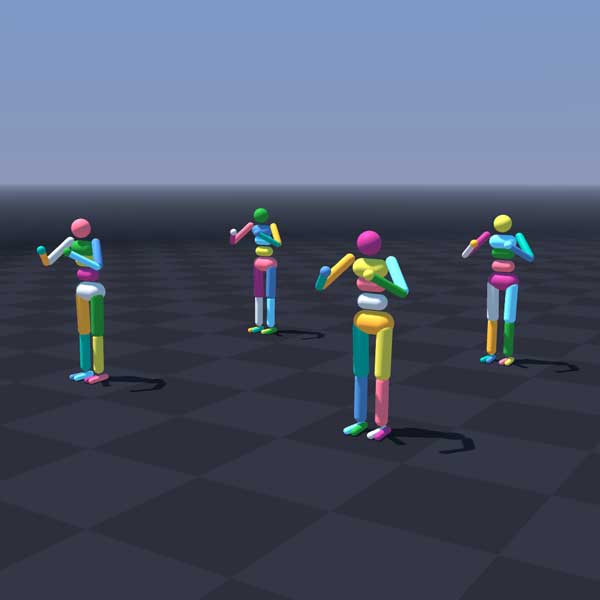
Three tech giants, one open-source project
This collaboration is remarkable. Disney Research (the R&D arm behind Pixar's physics and Disney's theme park robotics), Google DeepMind (the team behind AlphaGo and cutting-edge AI research), and NVIDIA (the company powering most AI hardware) rarely work together on a single open-source project.
Newton is now a Linux Foundation project, meaning it's governed by the open-source community — not controlled by any single company. It's licensed under Apache 2.0 (fully free to use, even commercially).
The engine is built on top of NVIDIA Warp (a GPU computing framework) and integrates MuJoCo (a physics engine originally built by DeepMind for AI research). Think of Newton as the layer that ties these powerful tools together into something anyone can use.
What can it simulate?
Newton comes with 50+ built-in examples covering a wide range of physics simulations:
Simulation categories:
It also supports differentiable simulation — a technique where AI can learn by "feeling" the physics. Instead of trial-and-error, an AI agent can calculate exactly how to adjust its movements based on the physics of the simulation. This is how researchers train robots to walk, grab objects, or navigate obstacles without breaking real hardware.
Try it yourself — one line to install
If you have Python and an NVIDIA GPU, you can be running a simulation in under a minute:
pip install "newton[examples]"
python -m newton.examples basic_pendulum
That's it. The first command installs Newton with all example files. The second runs a pendulum simulation that opens in a 3D viewer. From there, you can explore dozens of other examples:
# Simulate a humanoid robot
python -m newton.examples robot_humanoid

# Watch cloth physics in action
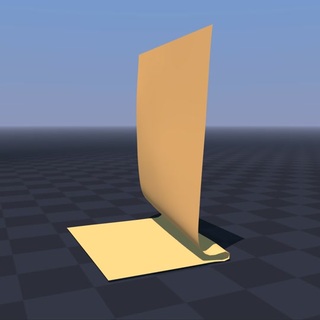
python -m newton.examples cloth_hanging

# Simulate a robot arm (Franka Panda)
python -m newton.examples robot_panda_hydro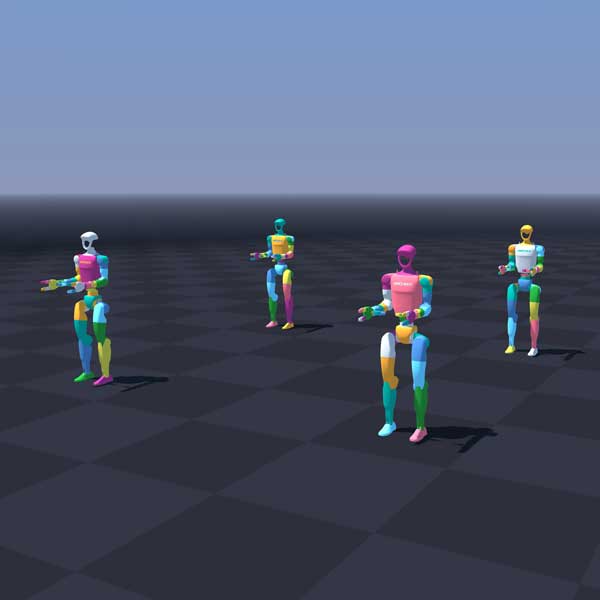
Who is this for?
Robotics students and researchers — Newton gives you a free, GPU-accelerated simulator to test robot designs and AI controllers without buying expensive hardware. It supports popular robots like the Franka Panda arm, Unitree H1 humanoid, and ANYmal quadruped.
Game developers and 3D artists — the cloth, soft body, and granular simulations could inform how you build physics in your own projects. Newton supports OpenUSD (the 3D format Pixar created and that Apple, NVIDIA, and Adobe are standardizing on).
AI researchers — the differentiable physics engine means you can train AI agents to interact with the physical world inside a simulation, then transfer those skills to real robots.
System requirements
You'll need Python 3.10+, an NVIDIA GPU (Maxwell generation or newer — basically any GPU from the last 8 years), and drivers version 545 or later. It runs on Linux, Windows, and macOS (CPU-only on Mac). No CUDA toolkit installation needed — Newton handles that automatically.
The fact that Disney, DeepMind, and NVIDIA chose to make this free and open-source — rather than keeping it proprietary — signals a real shift in how big companies think about simulation infrastructure. They're betting that a shared, community-driven physics engine will accelerate AI and robotics research faster than any one company could alone.
Related Content — Get Started with Easy Claude Code | Free Learning Guides | More AI News
Stay updated on AI news
Simple explanations of the latest AI developments