Stripe just let AI agents pay for things on their own
Stripe's new Machine Payments Protocol lets AI agents buy services, order food, and pay API bills — no human needed. Transactions start at $0.01.
Stripe just launched the Machine Payments Protocol (MPP) — an open standard that lets AI agents spend real money without a human clicking "confirm." Co-created with the Tempo network, MPP means your AI assistant could soon order lunch, pay for cloud services, or subscribe to tools — all on its own.
This isn't a concept demo. It's live, it works with existing Stripe merchant accounts, and the transactions show up in your Stripe dashboard like any normal payment.
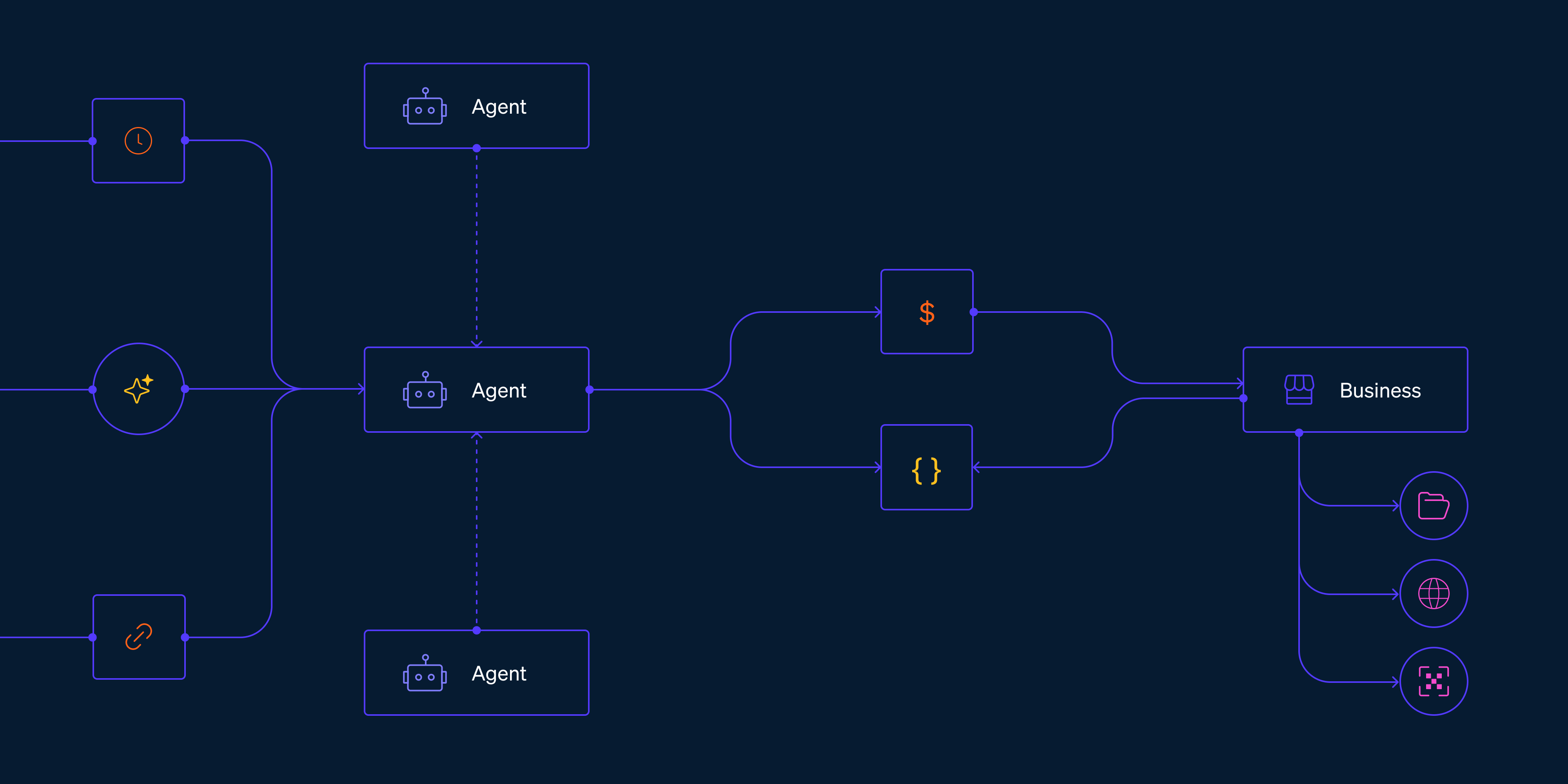
How an AI agent pays for something
The flow is surprisingly simple — four steps, no accounts, no sign-up forms:
1. The AI agent requests a resource (an API call, a file, a service)
2. The server responds: "That'll cost $X" (a payment request)
3. The agent authorizes and sends the payment
4. The resource is delivered
No account creation. No navigating pricing pages. No picking subscription tiers. The agent just pays and gets the thing. For Stripe merchants, the money settles into their existing balance on normal payout schedules.
Microtransactions down to one cent
One of the most interesting details: MPP supports payments as low as $0.01 USDC (a stablecoin pegged to the US dollar — essentially digital dollars). This opens up business models that weren't practical before. Imagine charging an AI agent a fraction of a cent per API call, or a few cents to generate a single image.
MPP supports multiple payment methods:
Stablecoins — USDC on the Tempo network, Base (Coinbase's blockchain), and Solana
Traditional cards — Standard credit/debit cards through Stripe
Buy now, pay later — Installment options for larger purchases
Real businesses are already using it
This isn't theoretical. Stripe highlighted four companies that are already accepting machine payments:
The privacy angle
Each payment uses a unique deposit address, which reduces the ability to track spending patterns across different services. In plain English: if your AI agent buys from five different services, those services can't easily connect the dots to build a profile of what else the agent is doing.
It's not the only game in town
Stripe isn't alone in this space. x402, backed by Coinbase, is another open protocol for machine payments — it works on Base and Solana blockchains. There's also L402, a Bitcoin-based alternative. What makes Stripe's approach stand out is that it also supports traditional card payments, meaning businesses don't have to go crypto-only to accept machine payments.
On Hacker News, reactions were cautiously skeptical. One commenter captured the core anxiety perfectly: "You're absolutely right! I should have sent $5.00 for that transaction and not $500,000." The fear of autonomous AI making expensive mistakes is real — and something Stripe will need to address with spending limits and safeguards.
Who should care about this
If you build AI agents or automations: This is the plumbing that lets your agents actually do things in the real world — not just answer questions, but buy services, order products, and pay for tools.
If you run an online business: You now have a way to sell to AI agents directly. That's a new customer base that literally never sleeps.
If you're just watching AI evolve: This is a significant milestone. AI agents that can autonomously manage money is one of the last barriers between "AI assistant" and "AI that actually handles your errands."
The catch
MPP is currently US-only and excludes New York and Texas. Integration requires a Stripe account, and the stablecoin payments use USDC — not regular dollars directly. But for Stripe's existing millions of merchants, adding machine payments takes just a few lines of code.
We're entering an era where AI agents aren't just advisors — they're customers. And Stripe just gave them a wallet.
Related Content — Get Started with Easy Claude Code | Free Learning Guides | More AI News
Stay updated on AI news
Simple explanations of the latest AI developments