AI just flooded bookstores with 1,100 novels in one week
One author used Claude to publish 200 AI novels in 12 months. Now publishers are requiring AI disclosure forms and authors are fighting back with 'Human Authored' labels.
A single author used Anthropic's Claude to write and publish more than 200 romance novels in one year under 21 different pen names — earning six figures and selling roughly 50,000 copies. In January 2026 alone, over 1,100 AI-assisted titles landed on Amazon's self-publishing platform in a single week. The publishing industry — one of the oldest creative industries in the world — is now in open conflict over what counts as a 'real' book.
The Scandal That Broke It Open
In early 2026, Hachette Book Group cancelled the US release of Shy Girl, a horror novel by Mia Ballard that had already sold 1,800 print copies in the UK. Readers on Reddit flagged unusual writing patterns — odd em-dash usage, phrases like describing socks as a "whisper of innocence," and sentence structures that felt machine-generated rather than human-written.
Ballard denied using AI, claiming an editor she hired had introduced it without her knowledge. But the damage was done. Hachette pulled the book, stating: "Hachette remains committed to protecting original creative expression and storytelling."
The 45-Minute Novelist
Meanwhile, a pseudonymous author calling herself "Coral Hart" demonstrated on a Zoom call that she could produce a complete book in 45 minutes using Claude. The New York Times profiled her in February 2026, revealing she had published over 200 romance novels in a single year across 21 pen names.
Hart launched a business called "Plot Prose" teaching others her technique, claiming over 1,600 students — including authors who previously opposed AI. Her advice to aspiring AI novelists: "Be shameless." Her argument: "If I can generate a book in a day, and you need six months to write a book, who's going to win the race?"
Bestselling romance author Marie Force responded: "It bogs down the publishing ecosystem that we all rely on to make a living."
The Numbers Behind the Flood
Key figures from the Authors Guild (February 2026 report):
1,100+ AI-generated or AI-assisted titles uploaded to Amazon KDP (Kindle Direct Publishing) in a single week in January 2026
78% of professional UK authors feel economically threatened by AI-generated books (Society of Authors 2025 survey)
10,000+ authors are listed as potential plaintiffs in the Authors Guild class action against OpenAI
3 books per day — Amazon's new upload limit per KDP account, introduced to slow the flood
Amazon introduced a "Human-Written" badge in October 2025, but it's entirely self-reported — authors simply check a box. There's no verification, creating what critics call a false sense of security.
Publishers Draw the Line
Penguin Random House, the world's largest publisher, announced in March 2026 that every submitted manuscript now requires an AI disclosure form. Authors must confirm whether AI was used at any stage of writing. The publisher isn't banning AI-assisted work outright — but it's mandating transparency.
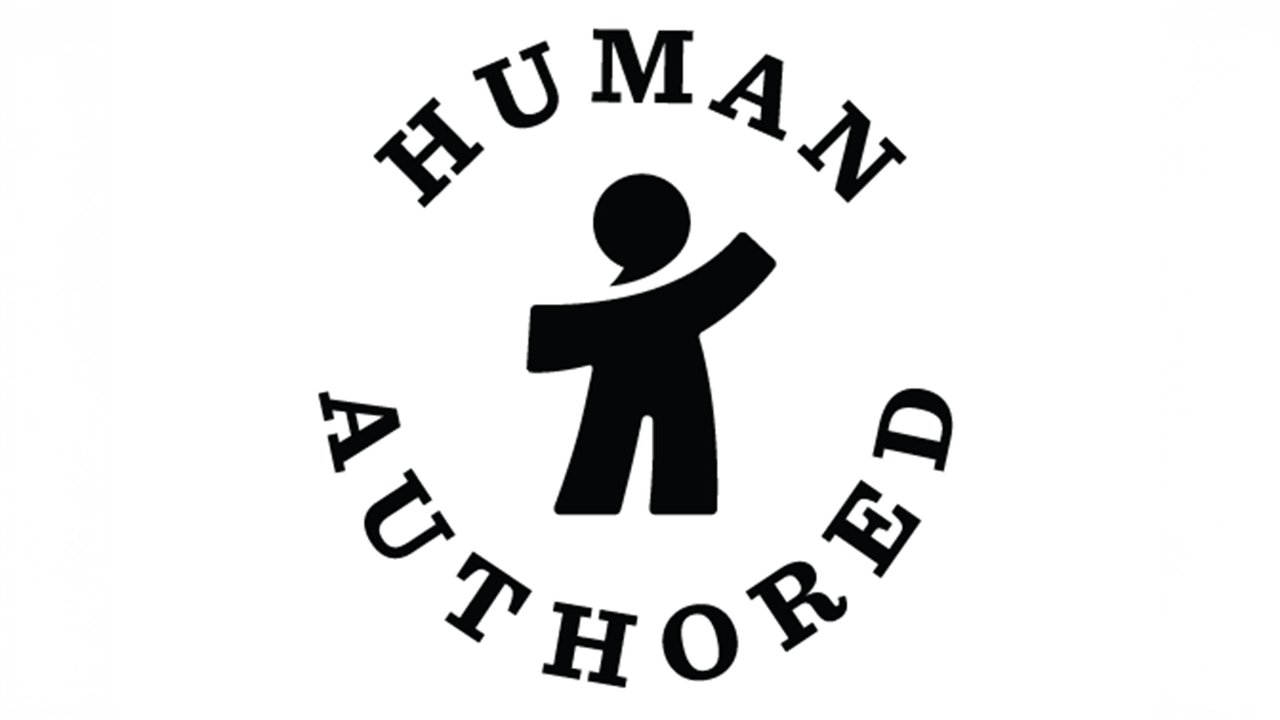
The Society of Authors went further. On March 11, at the London Book Fair, they launched a "Human Authored" certification logo — a small label authors can print on their book covers to signal the work was written by a human. 82% of the Society's members had expressed interest in such a program.
10,000 Authors Published an Empty Book
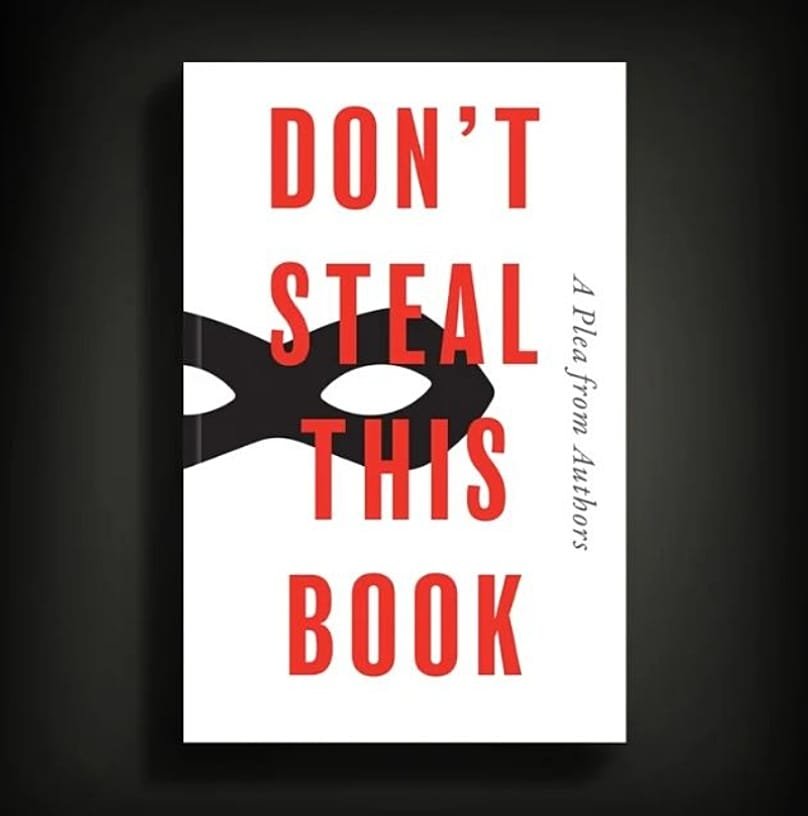
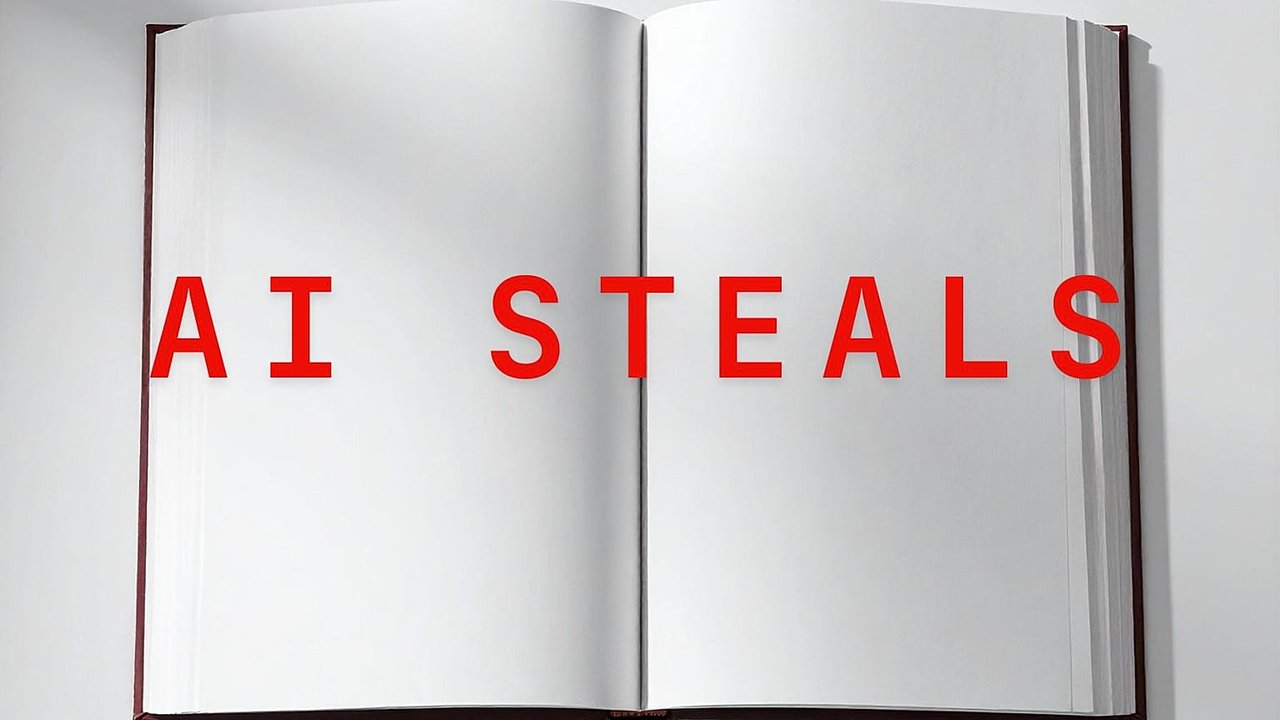
Perhaps the most dramatic response came at the same London Book Fair. Nearly 10,000 authors — including Kazuo Ishiguro (Nobel Prize winner), Richard Osman, and Alan Moore — published Don't Steal This Book, a protest novel consisting of 88 pages of author names followed by entirely blank pages.
The message: this is what the future of literature looks like if AI companies keep training on copyrighted books without permission or payment.
Organizer Ed Newton-Rex, founder of ethical AI company Fairly Trained, distributed 1,000 copies across the fair. The campaign statement read: "AI companies should pay for books, like everyone else. If they don't, this is what we'll be left with: empty pages, writers without pay, and readers deprived of the next book they'll love."
Why Writers, Marketers, and Content Creators Should Pay Attention
This isn't just about novelists. The same dynamics are playing out across every creative industry:
If you write for a living — whether books, articles, blog posts, or marketing copy — the "race to the bottom" in publishing is a preview of what's coming to your field. When one person can produce 200 pieces of content in the time it takes you to write one, visibility algorithms bury human work.
If you buy or commission content — AI disclosure is becoming the industry standard. Penguin Random House's policy will likely ripple across agencies, content platforms, and freelance marketplaces.
If you use AI as a creative tool — the line between "AI-assisted" and "AI-generated" is being drawn right now. How you use these tools today will determine whether your work is accepted or flagged tomorrow.
The Legal Battle Ahead
Over 10,000 authors are now listed as potential plaintiffs in the Authors Guild's class action suit against OpenAI, currently in the discovery phase. More than 70 active copyright lawsuits target AI companies globally. Major fair-use rulings are expected throughout 2026, and the outcome will determine whether AI companies must pay for the books they trained on — or whether the flood continues unchecked.
The US passed the AI Accountability Act in March 2026, requiring bias audits for AI in hiring and lending. But there's no equivalent protection for creative workers — yet. In the UK, the government dropped its plan to loosen copyright protections for AI companies after massive creator backlash.
The publishing industry's response — disclosure forms, human-authored labels, empty protest books — is the opening salvo in what may become the defining creative rights battle of the AI era.
Related Content — Get Started with Easy Claude Code | Free Learning Guides | More AI News
Sources
Stay updated on AI news
Simple explanations of the latest AI developments