Bezos vs Musk: the race to put AI data centers in space
Blue Origin just filed to launch 51,600 satellites for orbital AI computing. SpaceX wants 1 million. Here's why the future of AI might leave Earth.
Blue Origin, Jeff Bezos's space company, just asked the U.S. government for permission to launch 51,600 satellites into orbit — not for internet access, but to build AI data centers in space. The project is called Project Sunrise, and it's Blue Origin's answer to a growing problem: AI needs so much electricity that Earth's power grid can't keep up.
SpaceX filed a similar request in January — except Elon Musk wants to launch one million data center satellites. What was once science fiction is now an FCC filing number.
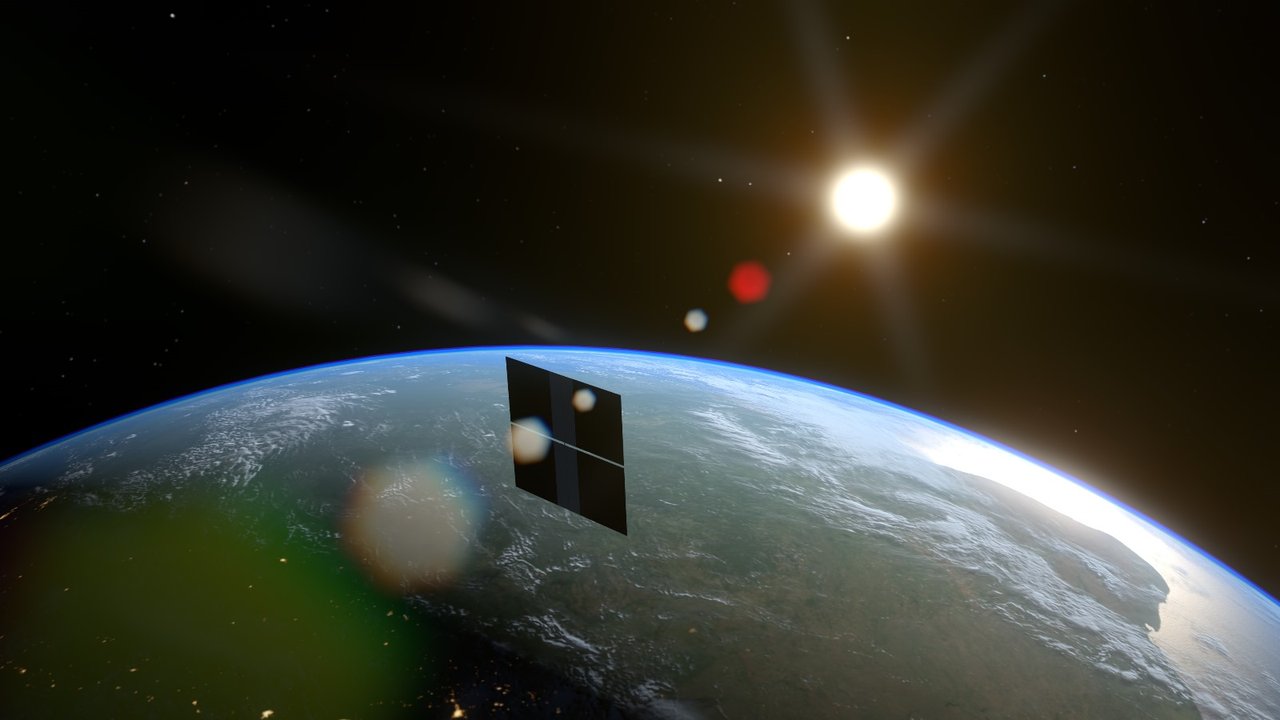
Why put data centers in space?
Training and running AI models like ChatGPT, Claude, and Gemini requires enormous amounts of electricity. A single large AI data center can consume as much power as a small city — and there are hundreds being built right now. The world's electrical grids are already strained.
Space solves this with one simple advantage: the sun never sets in orbit. Satellites in sun-synchronous orbits (paths that keep them in near-constant sunlight) can harvest solar energy 24/7 without any power bills, land costs, or grid connections. Blue Origin's filing argues this "fundamentally lowers the marginal cost of compute capacity compared to terrestrial alternatives."
There's another hidden benefit: cooling is free. On Earth, data centers burn through millions of gallons of water to keep chips from overheating. In the vacuum of space, heat radiates away naturally.
The numbers at a glance
Blue Origin (Project Sunrise): 51,600 satellites · 500–1,800 km altitude · sun-synchronous orbits · FCC filing March 19, 2026
SpaceX: Up to 1,000,000 satellites · 500–2,000 km altitude · FCC filing January 2026
Starcloud (NVIDIA-backed startup): Already flew an NVIDIA H100 GPU in orbit in November 2025 — the first data-center-class chip to run in space
Blue Origin's plan: Project Sunrise
The FCC filing (SAT-LOA-20260310-00118) reveals that Project Sunrise would place 300 to 1,000 satellites in each orbital layer, with layers spaced 5 to 10 kilometers apart. The satellites would communicate with each other using laser links (optical intersatellite links) and connect to Earth through TeraWave, Blue Origin's broadband satellite network announced in January.
Blue Origin says the entire system is "enabled by the revolutionary capacity of New Glenn's launch capability" — their heavy-lift rocket that successfully flew and landed its booster for the first time in November 2025.
But there's a catch: TeraWave hasn't launched a single satellite yet, with the first units targeted for late 2027. And New Glenn has only flown twice. Critics say the technology required to actually run AI workloads in orbit "doesn't exist" yet and will prove "unreliable."
SpaceX wants 20x more satellites
SpaceX's competing vision is even more ambitious. Their January filing proposes up to one million orbital data center satellites, enabled by Starship's ability to haul massive payloads to orbit cheaply. SpaceX claims orbital computing "could surpass the electricity consumption of the entire U.S. economy, without the immense cost and disruption of rebuilding Earth's strained electrical grid."
The timing isn't coincidental: Musk merged SpaceX with xAI (the company behind Grok) in late 2025, creating a vertically integrated rocket-to-AI pipeline.
Astronomers are alarmed. Scientists warn that a million reflective satellites would severely impair telescope observations, making ground-based astronomy increasingly difficult.
Someone already did it — on a tiny scale
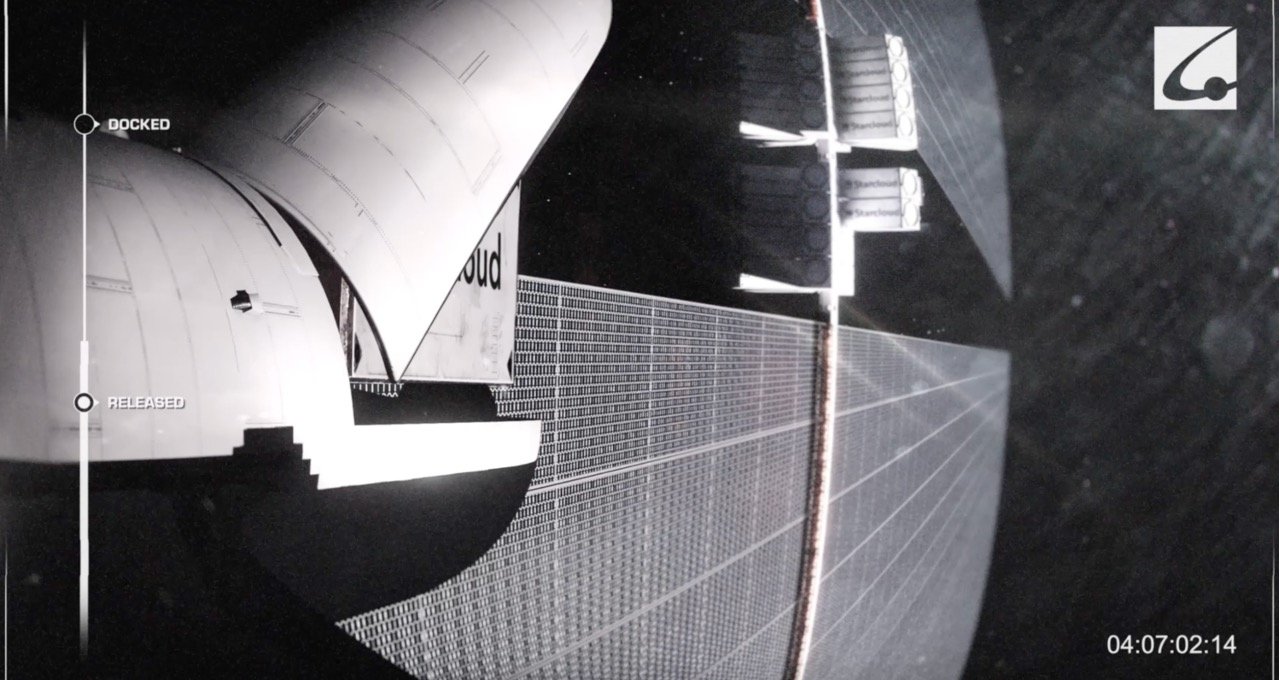
While Bezos and Musk file paperwork, a startup called Starcloud has already put an NVIDIA H100 GPU in orbit. Their 60-kilogram satellite launched in November 2025 and became the first to train an AI model in space. It's 100x more powerful than any previous space-based computing system.
Starcloud's CEO Philip Johnston predicts that "in 10 years, nearly all new data centers will be built in outer space." The company projects orbital computing will be 10x cheaper on energy and produce 10x less CO₂ over a facility's lifetime compared to Earth-based alternatives.
Their ultimate goal: a 5-gigawatt orbital facility spanning roughly 4 kilometers in each direction — the size of a small town, floating in space.
What this means for AI costs — and you
If orbital computing works at scale, it could dramatically lower the cost of using AI. Right now, the electricity bill is one of the biggest expenses for companies like OpenAI and Anthropic. Cheaper compute means cheaper subscriptions, more free tiers, and AI reaching places that can't afford massive data centers.
But experts urge caution. Fortune reports that "two to three years is not realistic at the scale being promised." The engineering challenges — thermal management, high-bandwidth communication between orbit and ground, and system reliability — remain enormous.
For now, this is a race between billionaires filing paperwork. But the fact that an NVIDIA GPU is already running AI workloads in orbit means this isn't just a dream anymore. The question is no longer if AI data centers will move to space — it's when and who gets there first.
Related Content — Get Started with Easy Claude Code | Free Learning Guides | More AI News
Stay updated on AI news
Simple explanations of the latest AI developments