Samsung just bet $74 billion on AI chips — its biggest gamble ever
Samsung is investing a record $74B in AI memory chips and a Texas factory to challenge SK Hynix and fuel NVIDIA's next AI supercomputers.
Samsung just announced the largest single-year investment in its history: $74 billion (110 trillion Korean won) poured into AI chips, semiconductor factories, and research. That's 22% more than last year — and the first time the company has crossed the $70 billion mark in annual spending.
Why? Because the AI chip race is no longer coming. It's here. And Samsung is losing.
The $74 billion breakdown
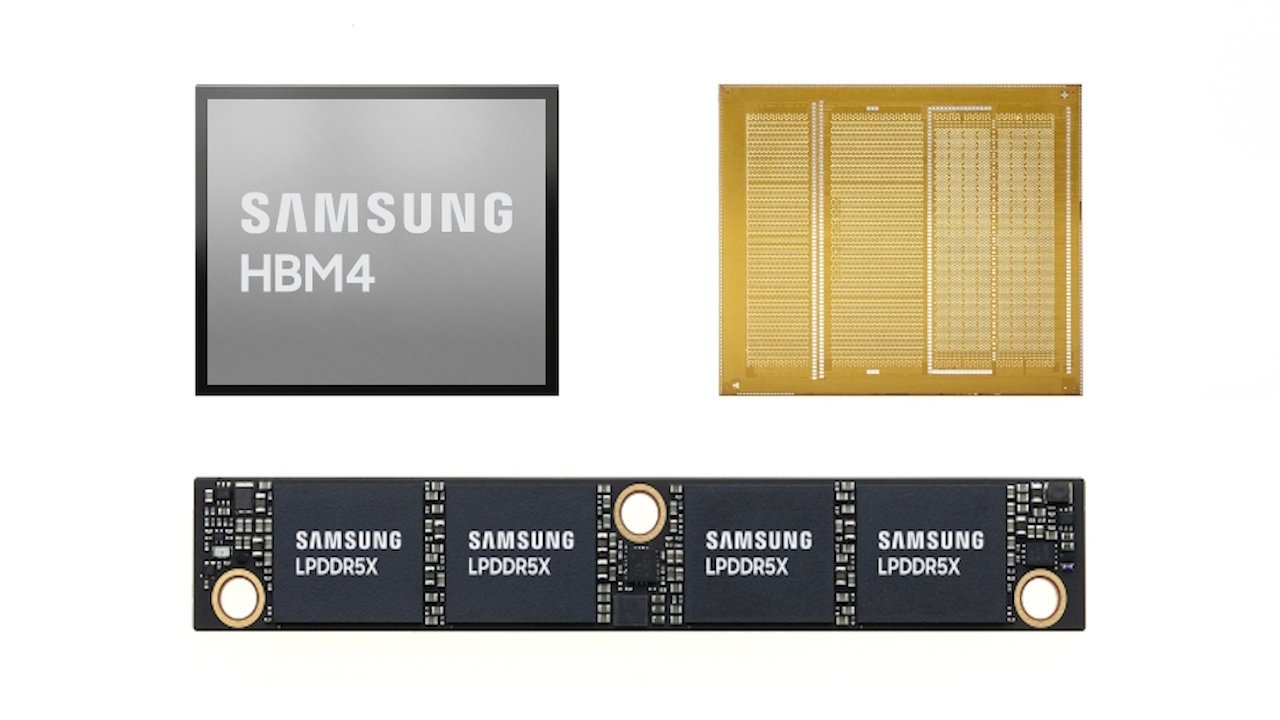
Most of the money goes straight into AI memory chips — specifically a type called HBM (High Bandwidth Memory), the specialized chips that let AI systems like ChatGPT and Claude process massive amounts of data at once. Think of HBM as the short-term memory that lets AI "think" faster.
• HBM4 mass production — already shipping, with speeds 46% faster than industry standard
• HBM4E development — next-gen chips hitting 16 Gbps, unveiled at NVIDIA GTC last week
• Taylor, Texas factory — Samsung's $50B US facility, targeting mass production by 2027
• 2nm chip manufacturing — the next frontier in processor technology
• 250,000 wafers/month — a 47% production capacity increase by year-end
Jensen Huang wrote 'AMAZING HBM4' on Samsung's chips
At NVIDIA's GTC 2026 conference last week, Samsung's booth drew over 3,000 visitors. The highlight: wafers personally signed by NVIDIA CEO Jensen Huang with the messages "AMAZING HBM4" and "Groq Super FAST."
Samsung's HBM4 chips are already in mass production and will power NVIDIA's upcoming Vera Rubin AI platform (launching later this year). The chips deliver 11.7 gigabits per second — nearly 50% faster than the 8 Gbps industry standard. Google is also buying them for its next-generation AI processors.
Why Samsung is playing catch-up
Despite being the world's largest memory chipmaker, Samsung has been losing the AI chip war to rival SK Hynix, which currently supplies about two-thirds of NVIDIA's HBM chips. SK Hynix became NVIDIA's preferred partner early, leaving Samsung scrambling to prove its chips could match the quality.
The $74 billion bet is Samsung's answer. The company is positioning itself as the only chipmaker offering a complete package — memory, chip manufacturing (foundry), and advanced packaging all under one roof. No other company can do that.
What Samsung is also buying
Beyond chips, Samsung signaled plans for major acquisitions in air conditioning (for data center cooling), automotive electronics, medical technology, and robotics. The company already bought FläktGroup, a European cooling company that specializes in keeping data centers — the buildings that run AI — from overheating.
The Texas factory factor
Samsung's Taylor, Texas facility is shaping up to be one of the largest semiconductor plants in the US, with total investment reaching $50 billion. Equipment installation needs to wrap up this year for the 2027 production target. This facility will manufacture advanced chips using 2-nanometer technology — circuits so small that a human hair is 50,000 times wider.
What this means if you work with AI
Every AI model you use — whether it's Claude, ChatGPT, Gemini, or an open-source model running on your laptop — depends on chips like these. More HBM production means:
• Lower costs — more supply = cheaper AI inference for everyone
• Faster AI — HBM4's speed improvements translate directly into quicker responses
• More competition — Samsung challenging SK Hynix keeps prices in check
The $74 billion question: can Samsung close the gap? With HBM4 already shipping, HBM4E in the pipeline, and a massive Texas factory on the way, Samsung is making its most aggressive play yet to become the engine room of the AI revolution.
Related Content — Get Started with Easy Claude Code | Free Learning Guides | More AI News
Stay updated on AI news
Simple explanations of the latest AI developments