The kung fu robots just filed for a $610M IPO
Unitree Robotics filed for a $610M Shanghai IPO today. Revenue jumped 335% to $235M, and their humanoid robots now hold 32% of the global market.
The Chinese robotics company whose humanoid robots performed kung fu on live television in front of 679 million viewers just filed to go public — and the numbers are staggering.
Unitree Robotics submitted its IPO application to the Shanghai Stock Exchange on Friday, seeking to raise 4.2 billion yuan ($610 million). If successful, it would be one of China's biggest onshore tech listings in years.
Revenue tripled in a single year
Unitree posted 1.71 billion yuan ($235 million) in revenue last year — a 335% increase from the year before. Net profit rose nearly eight times to 600 million yuan ($82 million). Gross margins hit 60.3%, up from 56.4% in 2024.
The company only turned profitable in 2024. One year later, it's filing for a blockbuster IPO.
• Revenue: $235M (up 335% year-over-year)
• Net profit: $82M (up ~8x)
• Gross margin: 60.3%
• Humanoid units shipped in 2025: 5,500+
• Global humanoid market share: 32.4%
• IPO target: $610M on Shanghai's Star Market
From viral kung fu to real-world factories
Unitree became a household name in China after its G1 humanoid robots performed fully autonomous martial arts at CCTV's Spring Festival Gala in February. Dozens of robots executed 3-meter backflips, wall-assisted parkour, and synchronized nunchuck routines alongside human dancers — all without human control.
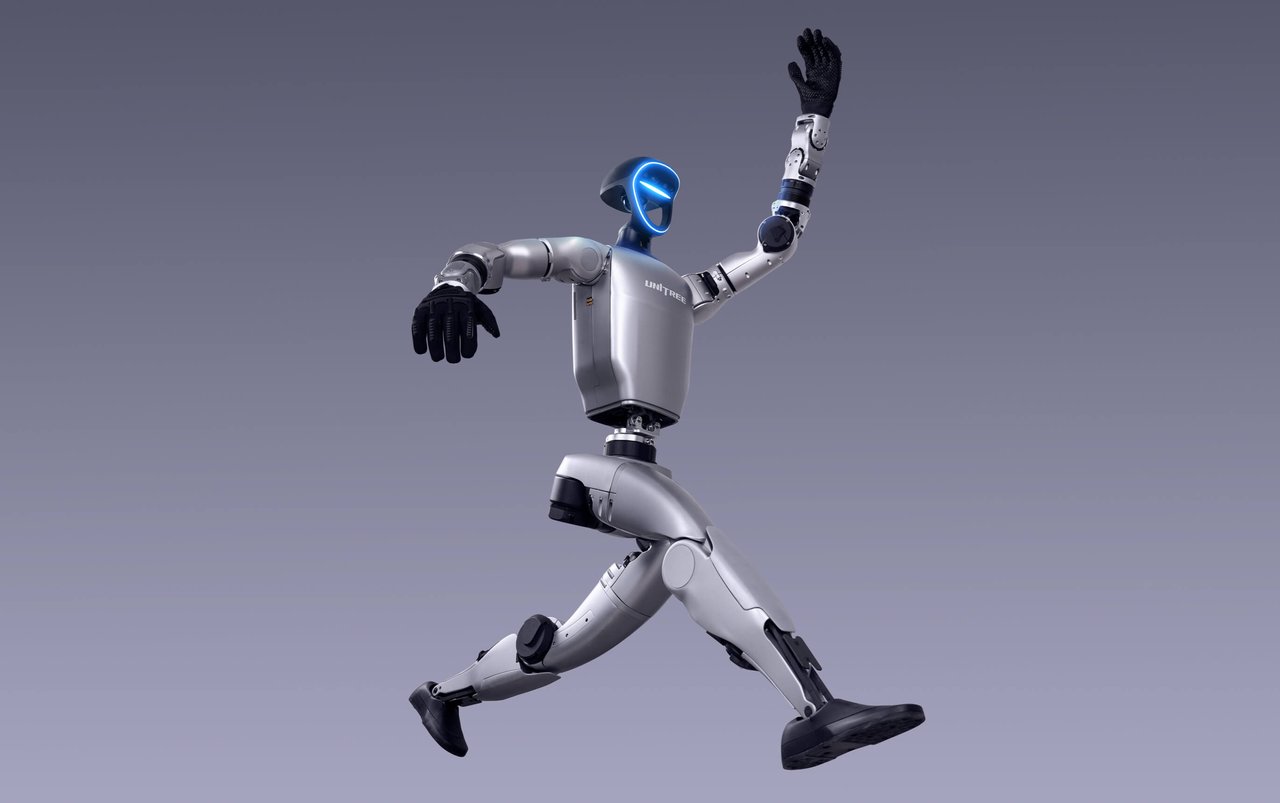
But the company isn't just building show robots. Unitree shipped over 30,000 quadruped (four-legged) robots and 4,000+ humanoid robots between 2022 and September 2025. Its humanoid line now generates more than half of total revenue.
The G1 humanoid starts at $13,500 — a fraction of what competitors like Boston Dynamics charge. Unitree expects to ship 10,000 to 20,000 units in 2026.
A 35-year-old founder who met with Xi Jinping
Unitree was founded in 2016 by Wang Xingxing, who was born in 1990. In February 2025, he attended a symposium chaired by President Xi Jinping as the youngest entrepreneur in the room. Key investors include Tencent, Alibaba, Ant Group, China Mobile, and Geely Capital.
The company previously raised at a $1.7 billion valuation in its Series C round in June 2025. Reports suggest the IPO could value the company at up to $7 billion.
Where the IPO money goes
Unitree plans to invest the IPO proceeds in three areas:
The bigger picture: China's AI robotics race
Unitree's IPO comes as China pours government support into humanoid robotics. The country sees embodied AI (artificial intelligence that lives inside a physical robot body) as the next frontier after chatbots and self-driving cars.
Competitors like UBTech Robotics (already listed in Hong Kong) posted losses of 439 million yuan on 621 million yuan in revenue — making Unitree's profitability especially notable. Startups like Galbot and Agibot are also racing to catch up.
The pressure now is to move beyond flashy demonstrations. Industry analysts say the sector must "demonstrate practical value in industrial settings and ageing-care applications" to justify valuations.
If you're watching the AI robotics space
Unitree's IPO is a test case for whether humanoid robots can transition from viral spectacles to real businesses. A $610M raise with $235M in revenue and $82M in profit suggests the answer — for now — is yes. Watch for the Shanghai Star Market listing in Q2 2026.
Related Content — Get Started with Easy Claude Code | Free Learning Guides | More AI News
Stay updated on AI news
Simple explanations of the latest AI developments