Waymo just proved self-driving AI is 92% safer than humans
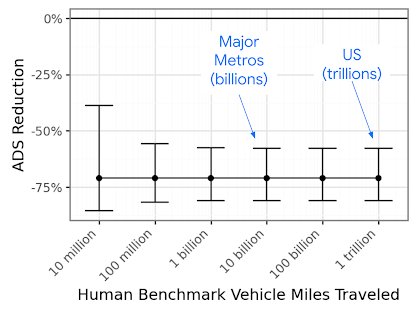
Waymo released safety data from 170.7 million autonomous miles showing 92% fewer serious injury crashes, 83% fewer airbag deployments, and 82% fewer injuries than human drivers.
Waymo, Google's self-driving car division, just published the most comprehensive safety report in autonomous vehicle history. After 170.7 million fully autonomous miles — with no human driver behind the wheel — the data tells a striking story: self-driving AI crashes far less than people do.
The numbers that matter
Compared to human drivers on the same roads, Waymo's AI driver recorded:
92% fewer serious or fatal injury crashes — that's 35 crashes that didn't happen
83% fewer airbag deployments — 230 fewer high-impact collisions
82% fewer injury-causing crashes overall — 544 fewer people hurt
To put that in perspective, Waymo says its AI prevents roughly one serious-injury crash every 8 days at its current fleet size. For pedestrians, cyclists, and motorcyclists — the most vulnerable people on the road — the results are even more dramatic:
- 92% fewer pedestrian injuries
- 85% fewer cyclist injuries
- 81% fewer motorcyclist injuries
Where Waymo is driving — and where it's headed
The 170.7 million miles span four major U.S. metro areas:
🏜️ Phoenix — 68.6 million miles
🌉 San Francisco Bay Area — 53.5 million miles
🌴 Los Angeles — 37.9 million miles
🤠 Austin — 10.7 million miles
And the company is expanding fast. In February 2026, Waymo announced it would begin rides in four new cities simultaneously — Dallas, Houston, San Antonio, and Orlando — bringing its total to 10 metro areas. It also launched its 6th-generation vehicle, which can handle winter weather conditions for the first time.
How the research was done
Waymo compared its crash rates per million miles against police-reported human crash data adjusted for each city's local driving conditions. The methodology has been peer-reviewed and published in traffic safety journals. Waymo also released downloadable CSV files so independent researchers can verify the results themselves — a level of transparency unusual in the autonomous vehicle industry.
The comparison uses data from the NHTSA (National Highway Traffic Safety Administration) Standing General Order reports, which are publicly available.
Why this matters beyond self-driving cars
This report arrives at a pivotal moment. Just this week, Uber announced a $1.25 billion deal with Rivian to build 50,000 AI-powered robotaxis. Tesla faces a potential recall of 3.2 million vehicles over its Full Self-Driving system's struggles with fog and glare. Meanwhile, Waymo is quietly racking up the best safety record in the industry.
For everyday riders, the takeaway is simple: the AI driver is measurably safer than the human driver. If you live in Phoenix, San Francisco, LA, or Austin, you can already hail a Waymo with no human behind the wheel — and the data suggests you're statistically safer doing so than riding with a human driver.
What about remote operators?
Waymo disclosed that roughly 70 remote assistance agents support its fleet of about 3,000 vehicles. These agents don't drive the car remotely — they provide advice when the AI encounters something unexpected, like a blocked road or unusual construction. The car itself always makes the final driving decision.
The bigger picture
170 million miles is no longer a pilot project — it's a dataset large enough to draw real conclusions. As Waymo expands to 10 cities and beyond, every new mile adds more evidence. The question is no longer whether self-driving AI can be safer than humans. Based on this data, it already is.
You can explore the full safety data, including downloadable datasets, at Waymo's Safety Impact hub.
Related Content — Get Started with Easy Claude Code | Free Learning Guides | More AI News
Stay updated on AI news
Simple explanations of the latest AI developments