100 AI trucks just replaced 1,200 drivers at a Chinese mine
A Chinese coal mine deployed 100 autonomous electric trucks that outperform 300 diesel ones — cutting 1,200 driver jobs and hitting 120% productivity.
A massive open-pit coal mine in Inner Mongolia just completed a full year running 100 autonomous electric haul trucks — and the results are staggering. The fleet replaced 300 diesel trucks and the 1,200 drivers who operated them, while delivering 120% of the productivity that human-driven trucks achieved.
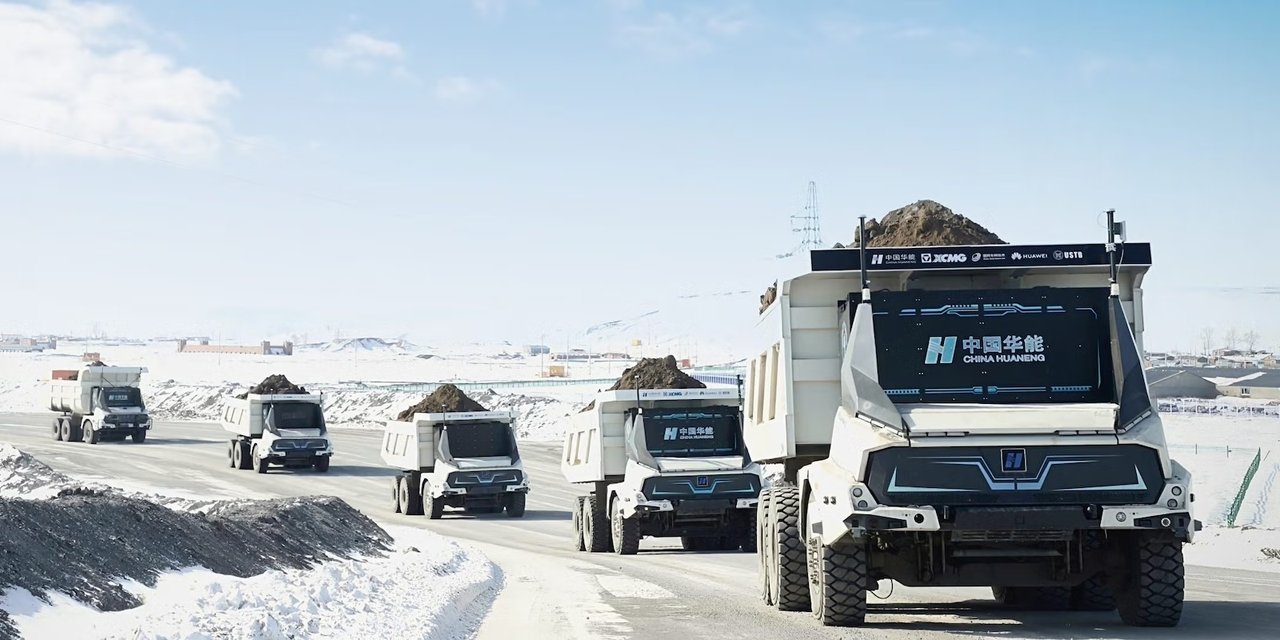
What Happened at the Yimin Mine
Huaneng Inner Mongolia Eastern Energy deployed the fleet at its Yimin open-pit coal mine starting in 2024, reaching the full 100-truck milestone by May 2025. The trucks were built by Huaneng Ruichi and run on Huawei's 5G-Advanced network for real-time autonomous navigation.
Each truck carries up to 90 tons of material per trip, powered by a 568 kWh swappable lithium iron phosphate battery — the same safe chemistry used in most modern EVs. When a truck's battery runs low, it drives itself to a swap station. Five minutes later, it's back to work.
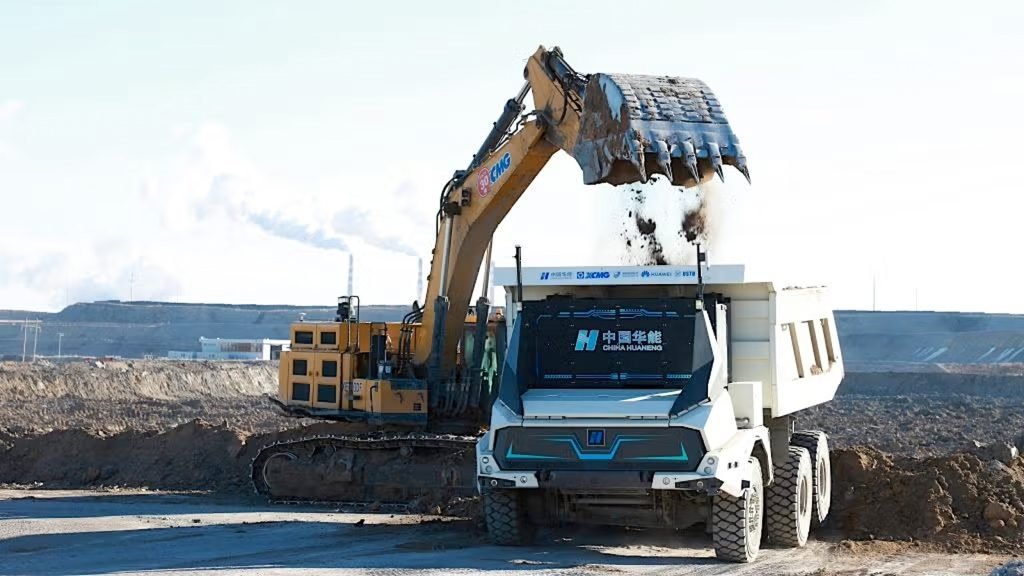
The Numbers That Matter
Before: 300 diesel trucks, 1,200 drivers working 24/7 shifts
After: 100 electric trucks, zero drivers, autonomous around the clock
Productivity: 120% of human-operated benchmark
Battery swap: ~5 minutes per truck, 98%+ success rate
Motor power: Equivalent to 3,000+ horsepower each
According to Li Shuxue, chairman of Huaneng Inner Mongolia Eastern Energy, the fleet set three world records for autonomous electric mining trucks: largest payload, fastest running speed, and lowest operating temperature.
Why 120% Productivity Isn't a Typo
The AI trucks don't need shift changes, bathroom breaks, or lunch. They don't slow down when visibility drops. They follow mathematically optimal routes and maintain consistent speed patterns that human drivers can't match over a 24-hour cycle.
Tang Wensheng, a senior advisor at Yimin, told Electrek: "Up to 100 autonomous mining trucks can automatically have their batteries swapped, with each swap taking just 5-odd minutes, at an operational success rate of over 98%."
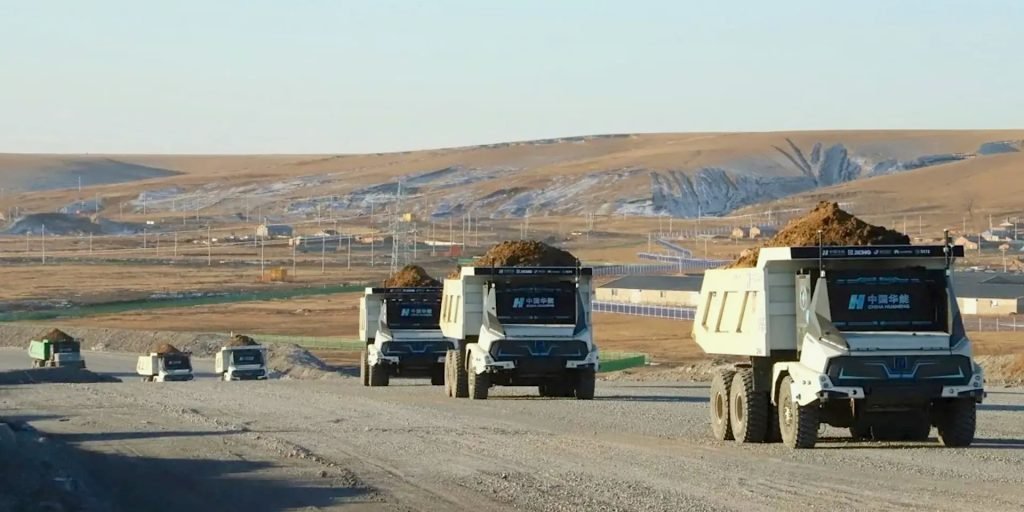
Huawei's Hidden Role
Huawei built the 5G-Advanced network that makes the whole operation possible. The trucks don't rely on pre-programmed routes alone — they communicate in real time with each other and with the mine's central control system, adjusting paths instantly when conditions change.
This is Huawei's push beyond smartphones and telecom into industrial AI infrastructure — and it's a signal that autonomous heavy industry may scale faster in China than anywhere else.
What This Signals for AI Automation
This isn't a lab demo or a pilot program. It's 100 autonomous vehicles running a real mine for a full year. The fact that they outperformed human drivers by 20% — while eliminating diesel costs and 1,200 jobs — makes it one of the clearest examples yet of AI replacing human labor at industrial scale.
If you work in logistics, construction, or heavy industry: autonomous electric fleets are no longer 'coming soon' — they're operating right now, at scale, outperforming human teams.
If you follow AI and automation: this is one of the largest real-world deployments of autonomous vehicles anywhere — and it happened almost silently.
Mining has always been one of the most dangerous jobs on Earth. If AI trucks can do it safer, cheaper, and faster — the question isn't whether other industries will follow, but how fast.
Related Content — Get Started with Easy Claude Code | Free Learning Guides | More AI News
Sources
Stay updated on AI news
Simple explanations of the latest AI developments