95% of UK students just admitted they use AI — universities can't keep up
A survey of 1,054 UK undergraduates reveals AI use jumped from 66% to 95% in two years. One university compared it to giving students a sports car before they've learned to drive.
Nearly every university student in the UK now uses AI — and their schools have no idea what to do about it.
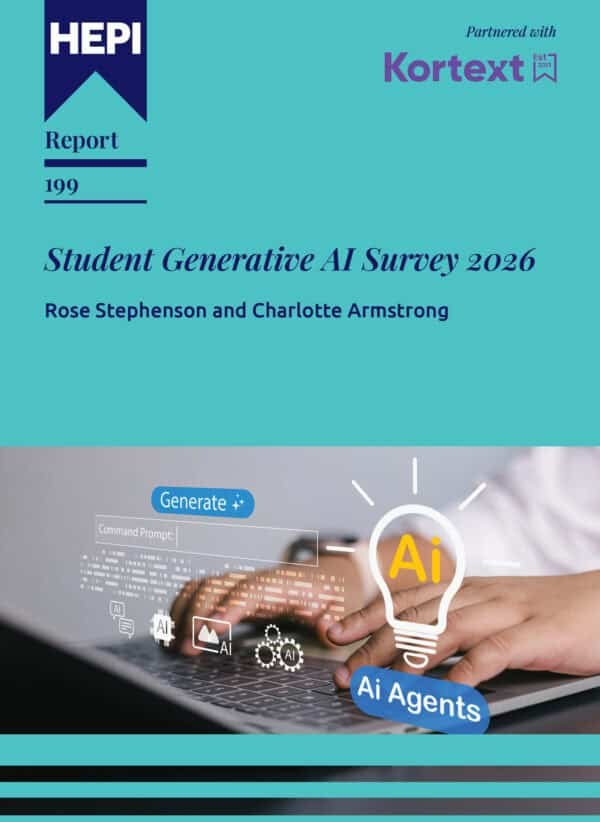
A major survey by the Higher Education Policy Institute (HEPI) found that 95% of UK undergraduates now use generative AI in some form. Just two years ago, that number was 66%. The shift isn't gradual anymore — it's a landslide.

The numbers that should alarm every educator
The HEPI survey, conducted by research firm Savanta with 1,054 full-time undergraduates in December 2025, paints a stark picture of how quickly AI has embedded itself in student life:
94% use AI for assessed coursework — not just casual browsing
61% use it to have concepts explained to them
49% use it to summarize articles they should be reading
25% generate and edit text before submitting it
12% directly paste AI-generated text into their assignments — up from just 3% in 2024
That last number is the one that keeps professors awake at night. In two years, the share of students submitting AI-written work quadrupled.
'Giving students a sports car before they've learned to drive'
Queen Mary University of London ran an experiment that exposed the core problem. Medical students who relied on AI without any oversight performed the worst on exams — but felt the most confident about their answers.
Researchers described it as "giving students a sports car before they've learned to drive." The AI made students feel like experts while quietly eroding the skills they were supposed to be building.
This isn't just a grading issue. In medicine, overconfidence paired with shallow understanding can be dangerous. And the pattern isn't limited to medical schools — 49% of all students surveyed said AI improved their experience, while others said the opposite: "I'm not using my brain at all."
Students are split down the middle
The survey reveals a student body that's deeply divided on what AI is doing to their education:
The optimists: Students report AI helps them "focus on critical analysis and deeper understanding" by "saving hours of tedious work." They see it as a tool that handles busywork so they can think bigger.
The worried: Others fear they're losing the ability to think independently. Nearly two-thirds (65%) say their exam formats have already changed because of AI. Some avoid using AI entirely — one in four cite environmental concerns about the energy AI consumes.
Perhaps most telling: 68% of students say AI skills are essential for their future careers, but fewer than half feel their lecturers are actually helping them develop those skills.
Universities are flying blind
Only 36% of students feel their university encourages AI use. That means nearly two-thirds of institutions are either ignoring AI, banning it, or sending mixed signals — while 95% of their students use it daily.
The gap between student behavior and institutional policy is enormous. A few universities have started responding:
- Aston University made AI training mandatory across every program starting in 2023 — one of the earliest adopters
- Russell Group universities (the UK's top research institutions) saw institutional encouragement rise from 26% to 39% — better, but still a minority
- Only 38% of students report having access to any institutional AI tools at all
The loneliness angle nobody expected
One finding caught researchers off guard: 15% of students use AI for companionship or to address loneliness. Another 5% use AI-only counseling services.
At the same time, 20% of students say AI makes them feel lonelier, while 21% say it makes them feel less lonely. AI isn't just changing how students study — it's changing how they cope with being human.
What this means if you work in education — or have kids who do
The HEPI report makes one thing painfully clear: the question isn't whether students use AI. It's whether anyone is teaching them to use it well.
For educators, the "sports car" problem demands immediate attention. Banning AI clearly isn't working — only 6% of students report zero AI use. The universities getting results are the ones that train students how to think with AI, not just use it.
For parents and students: AI confidence without AI literacy is a trap. The Queen Mary study shows that feeling like you understand something and actually understanding it are two very different things when AI is involved.
The full HEPI Report 199 is available for free download.
Related Content — Get Started with Easy Claude Code | Free Learning Guides | More AI News
Stay updated on AI news
Simple explanations of the latest AI developments