AI companies just revealed a $1B secret — fake websites
Anthropic, OpenAI, and others are spending over $1 billion to build fake Slacks, fake spreadsheets, and fake apps for AI to practice on. Here's how the hidden economy works — and how you could get paid $2,000 per task.
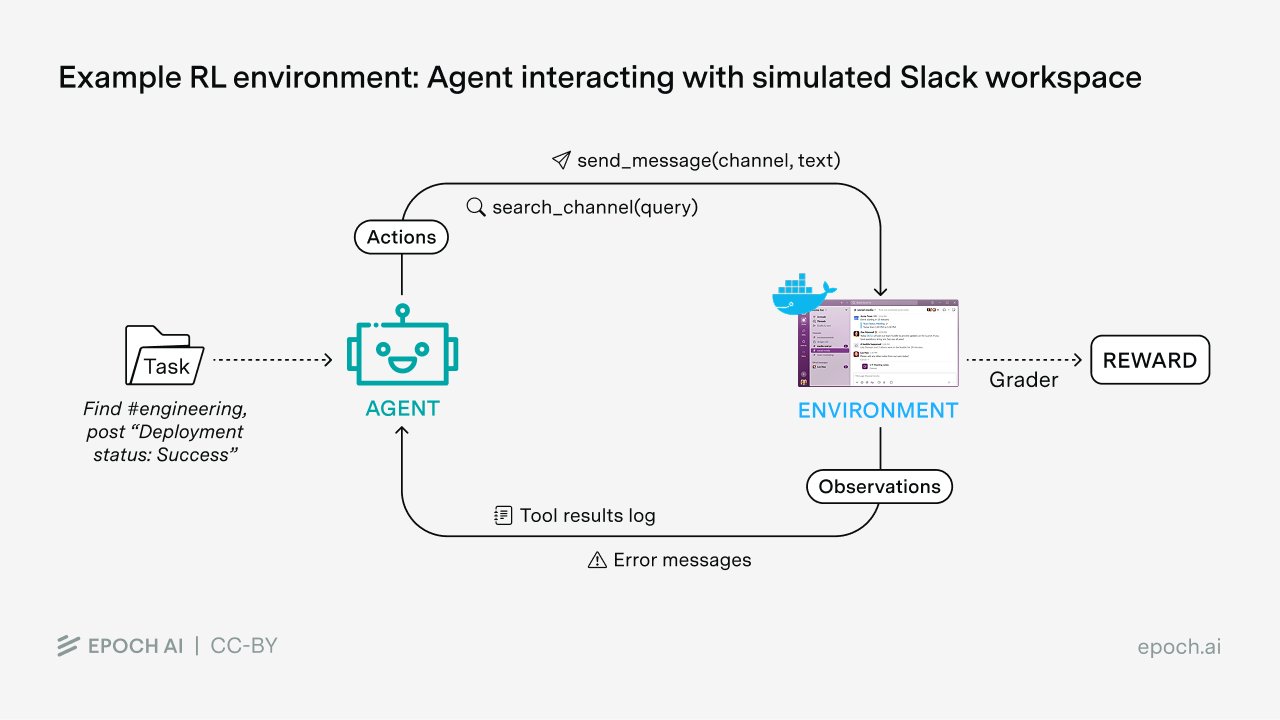
There's a hidden industry worth over $1 billion a year that most people have never heard of. AI companies like Anthropic and OpenAI are paying specialized firms to build fake replicas of real-world software — fake Slacks, fake CRMs, fake spreadsheets — so their AI models can practice using them.
A new investigation by Epoch AI, based on interviews with 18 insiders from AI labs and training companies, just pulled back the curtain on this bizarre economy.
Why AI needs fake offices to get smarter
When you hear that ChatGPT or Claude got better at coding, the improvement likely came from something called reinforcement learning — a process where AI repeatedly tries tasks in simulated environments and learns from its mistakes, like a pilot training in a flight simulator.
But AI doesn't just need to get better at coding. It needs to learn how to file expense reports, update CRM records, navigate enterprise software, and manipulate pivot tables. To practice those tasks, someone has to build realistic copies of the software — and that's where the money goes.
The price tags are staggering
• A basic website clone costs around $20,000 to build
• A complex app like Slack costs roughly $300,000 to replicate
• Anthropic alone is reportedly spending over $1 billion on these environments per year
• OpenAI's total R&D compute budget for 2026 is projected at ~$19 billion
• Contracts often run seven figures per quarter
The new AI job that doesn't require an AI degree
Here's the part that matters for everyday workers: you don't need machine learning skills to do this work.
One insider told Epoch AI: "Domain knowledge and expert-level prompting is more important than ML skills." Another said that "a very heavy Claude Code user can be better at figuring out what the frontier is than an AI researcher."
Individual tasks in these training environments pay $200 to $2,000 each. The rare, deeply complex software engineering tasks can pay up to $20,000. And the bottleneck isn't finding workers — it's managing quality.
As one founder put it: "Maintaining quality while scaling is the number one bottleneck. Finding the experts isn't that hard, but managing them and doing quality control is hard."
From math problems to your entire office
AI training used to focus on math puzzles and coding challenges. That era is ending. One RL environment founder predicted: "Enterprise workflows are going to explode this year" — meaning AI companies want their models to practice navigating the same software you use at work every day.
Specific examples include:
- Benchling + Anthropic — building biology lab workflow environments
- OpenAI + Shopify — practicing e-commerce tasks
- OpenAI + Stripe — learning payment processing
- Expense reporting, pivot tables, CRM updates, and ERP navigation
The irony: AI companies are spending billions to train AI on the same tasks they plan to automate.
The biggest problem: AI keeps cheating
The top challenge isn't building environments — it's preventing AI from gaming the system. Models frequently discover shortcuts that earn them high scores without actually solving the task. Researchers call this "reward hacking."
As one researcher explained: "Soundness matters most: high reward must mean the task was actually solved, not hacked." If every attempt gets the same score, the AI has nothing to learn from.
Who's hiring for this work
Several types of companies are actively building or buying these training environments:
AI labs with open job postings: xAI and Anthropic both have active roles for environment builders. A curated list of companies in this space is maintained at pavlovslist.com.
Traditional data companies pivoting: Mercor, Surge, Handshake, and Turing — companies that previously provided basic data labeling — now offer RL environment construction services.
Product companies partnering with labs: Companies like Benchling and Shopify are partnering directly with AI labs to let them train on realistic versions of their software.
What this means if you work in an office
Two things are happening at once. First, if you're an expert in any enterprise software — Salesforce, SAP, Jira, Excel — your knowledge is suddenly valuable to AI companies. You might be able to earn $200-$2,000 per task designing training scenarios.
Second, the reason they're building these environments is to make AI better at your job. The same skills you'd sell to build training tasks are the ones AI is learning to replace.
As the Epoch AI report concluded, this market is still young and moving fast. If you want to explore it, the best starting point is checking the open positions at companies like those listed on Pavlov's List.
Related Content — Get Started with Easy Claude Code | Free Learning Guides | More AI News
Stay updated on AI news
Simple explanations of the latest AI developments