AI just cut American Airlines' flight warming by 69%
American Airlines tested AI on 2,400 flights to dodge heat-trapping contrails. Result: 62% fewer contrails and 69% less warming — with zero extra fuel cost.
American Airlines just proved that AI can make flying significantly less harmful to the climate — without burning a single extra drop of fuel. In a 17-week trial across 2,400 transatlantic flights, an AI system predicted where heat-trapping contrails (the white lines planes leave in the sky) would form, and rerouted planes to avoid them. The result: 62% fewer contrails and an estimated 69% reduction in warming from those flights.

Those white lines in the sky are warming the planet
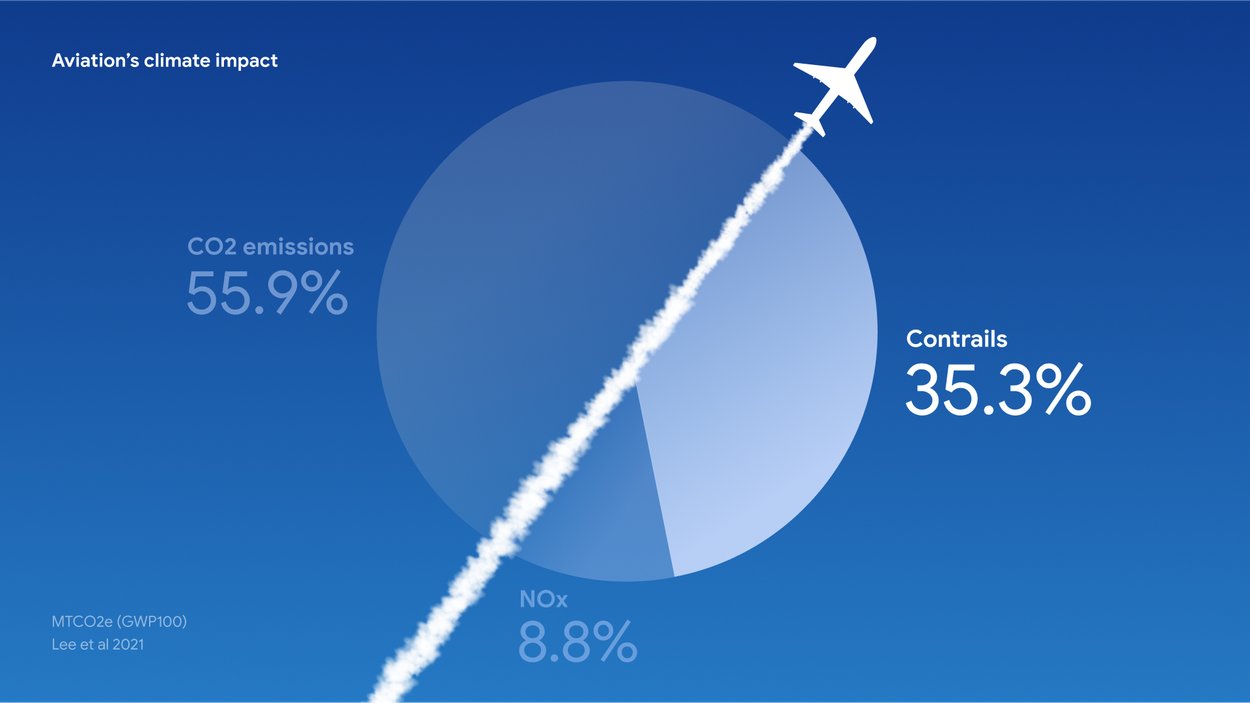
You've probably seen contrails — the white streaks planes leave behind at high altitude. They look harmless, but scientists estimate they're responsible for 1–2% of Earth's total warming. Some studies suggest contrails may contribute as much warming as all the CO₂ from jet fuel combined.
Here's why: when a plane flies through cold, humid air, its engine exhaust creates tiny ice crystals. Those crystals can spread into thin clouds that trap heat — like a blanket over the Earth. The effect lasts hours, sometimes overnight, preventing heat from escaping into space.
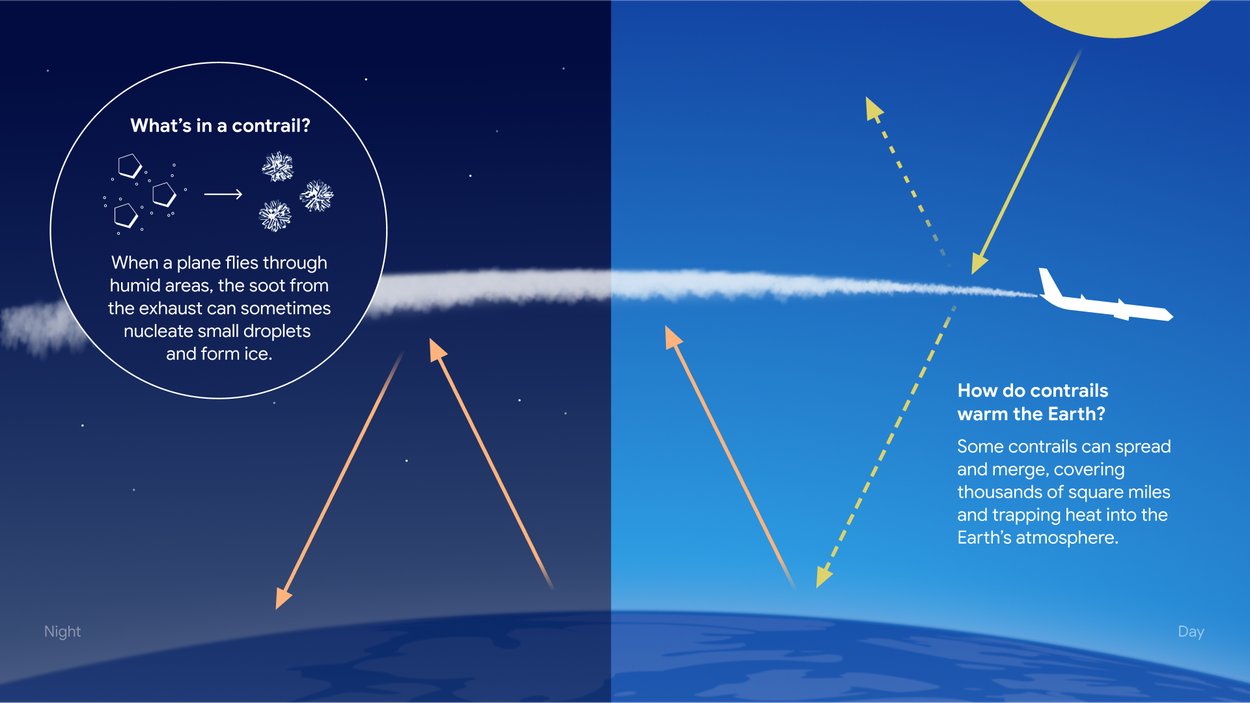
How the AI knows where contrails will form
The AI system — built by Google Research and the nonprofit Contrails.org (part of Bill Gates' Breakthrough Energy) — crunches massive amounts of weather data, satellite imagery, and flight path information to predict exactly which patches of sky will create contrails if a plane flies through.
Those predictions are fed into American Airlines' flight planning software (made by a company called Flightkeys). Dispatchers and pilots can then see a simple overlay: "This route will create contrails. Here's an alternative that won't." Sometimes it's a small altitude change. Sometimes a slight detour.
Trial at a glance
Period: January 15 – May 13, 2025
Flights tested: 2,400 transatlantic (US → Europe)
Flights that used avoidance routes: 112
Contrail reduction: 62% fewer contrails
Warming reduction: ~69% less climate warming
Extra fuel burned: No statistically significant difference
The zero-fuel-cost surprise
The biggest concern airlines have about any operational change is fuel cost. Jet fuel is their largest expense. But the trial found no statistically significant difference in fuel usage between the rerouted flights and the control group. The altitude adjustments and slight detours were so minor that they didn't cost anything extra.
As Google's Dinesh Sanekommu put it: "Aviation is one of the hardest sectors to decarbonize. We think AI can help make that a reality." And American Airlines VP of Sustainability Jill Blickstein confirmed that dispatchers and pilots found it easy to "file and fly alternative plans to avoid contrails."
This is the second trial — and it's getting better
In 2023, an earlier trial with just 70 flights achieved a 54% contrail reduction. This second trial — 34 times larger — improved the reduction to 62%, while also integrating the AI directly into existing flight planning software instead of requiring manual coordination.
Thomas Walker from the Clean Air Task Force called it "a pretty big step in the right direction" and the largest US-based contrail-avoidance trial he's aware of.
Why the North Atlantic matters most
The trial focused on transatlantic flights for a reason: the North Atlantic corridor between the US and Europe is one of the world's busiest flight routes and a known contrail hotspot. The cold, humid air at cruising altitude over the ocean creates ideal conditions for persistent contrails. Fixing this one route has outsized impact.
If you fly, here's what this means
For frequent flyers: This technology could meaningfully shrink aviation's climate footprint without raising ticket prices. The alternative — sustainable aviation fuel (SAF) — would reduce emissions but is far more expensive and in limited supply.
For the aviation industry: The next step is expanding beyond American Airlines. The team wants to work with all major flight planning software providers to build contrail forecasts into every airline's operations. European airlines are already running separate trials.
For climate advocates: Dan Rutherford from the International Council on Clean Transportation said "Small changes in how aircraft are flown to cut contrails may protect our climate even more in the near and medium-term" — making this one of the cheapest, fastest climate wins available.
Try it yourself
You can explore the live contrail forecast map at contrails.webapps.google.com and the global contrail tracking map at map.contrails.org. Developers can also access the Contrails API to build on this data.
Related Content — Get Started with Easy Claude Code | Free Learning Guides | More AI News
Stay updated on AI news
Simple explanations of the latest AI developments