One YouTube channel just posted 10,000 AI videos for kids — in 7 months
AI-generated 'slop' now makes up 21% of YouTube's feed. Experts warn it's wiring children's brains incorrectly at industrial scale.
A single YouTube channel called Jo Jo Funland has published over 10,000 videos in just seven months — that's roughly 50 new videos every single day. For context, Sesame Street has posted about 3,900 videos across its entire 20-year YouTube history.
The difference? Jo Jo Funland's videos are generated almost entirely by AI. And experts say they're not just low-quality — they're actively teaching children dangerous, incorrect information.
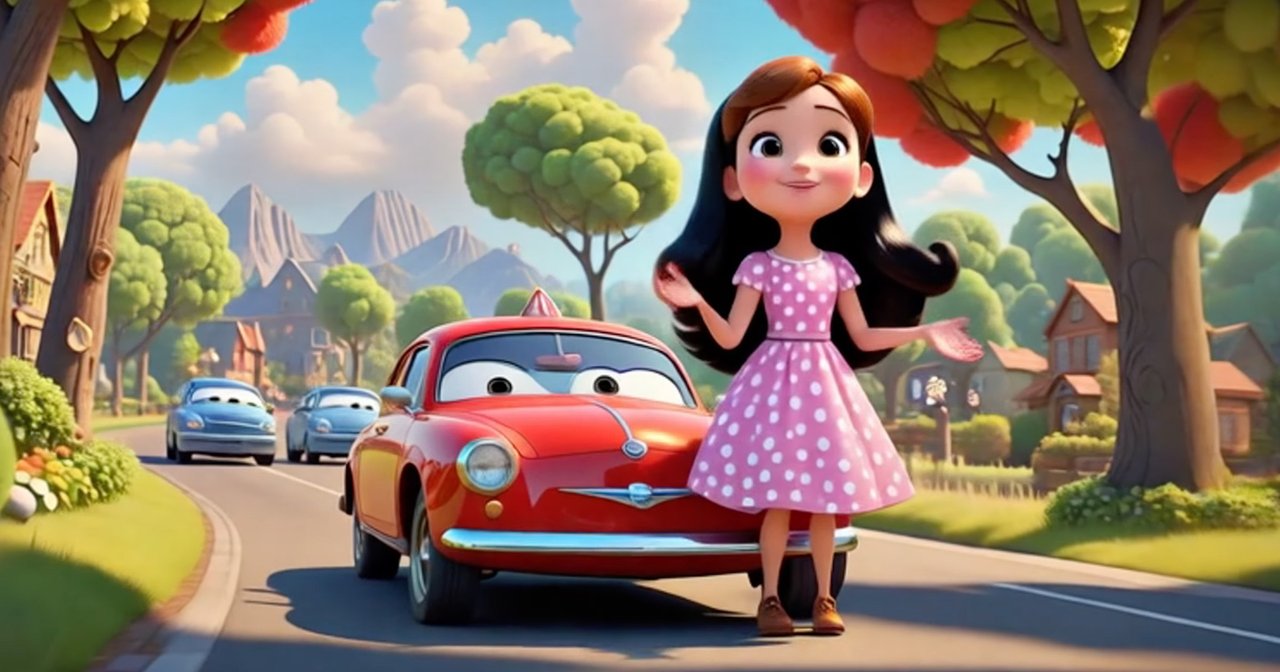
What children are actually watching
Researchers and journalists from Undark, The 74, and Futurism found dozens of AI-generated kids' videos packed with dangerous content:
Dangerous content found in AI kids' videos:
Babies swallowing whole grapes — a leading choking hazard for toddlers
Infants eating honey — which can cause fatal botulism in babies under 1
Children riding in cars without seatbelts, walking in traffic, floating beside moving vehicles
A traffic safety song that teaches "Red means stop, green means right"
A teacher eating raw elderberries — which are toxic when uncooked
"Educational" videos are even worse. One video claims to teach vowels but displays consonants. A "50 States Song" misspells state names as "Louggisslia" and "Oklolodia." A compass video shows more than four cardinal points with indecipherable symbols.
Why this isn't just 'bad TV'
Dr. Dana Suskind, a pediatrics professor at the University of Chicago, warns this is fundamentally different from traditional low-quality children's content:
"This is not neutral content. I think of this as toddler AI misinformation at an industrial scale. Every experience is building a million new neural connections. You will be unintentionally wiring the brain in incorrect ways."
She describes the effect as "brain stunt" — not gradual decline, but incorrect wiring of developing neural pathways. When a toddler watches a video that teaches wrong letters, wrong safety rules, or wrong geography, their brain builds connections around that false information.
Kathy Hirsh-Pasek, a psychology professor at Temple University and senior fellow at the Brookings Institution, puts it bluntly: "We're at the beginning of a monster problem, and we have to get hold of it quickly."
The numbers behind the flood
According to a November 2025 report by Kapwing, between 21% and 33% of YouTube's feed now consists of AI-generated low-quality videos. The researchers surveyed 15,000 of the most popular YouTube channels worldwide and found:
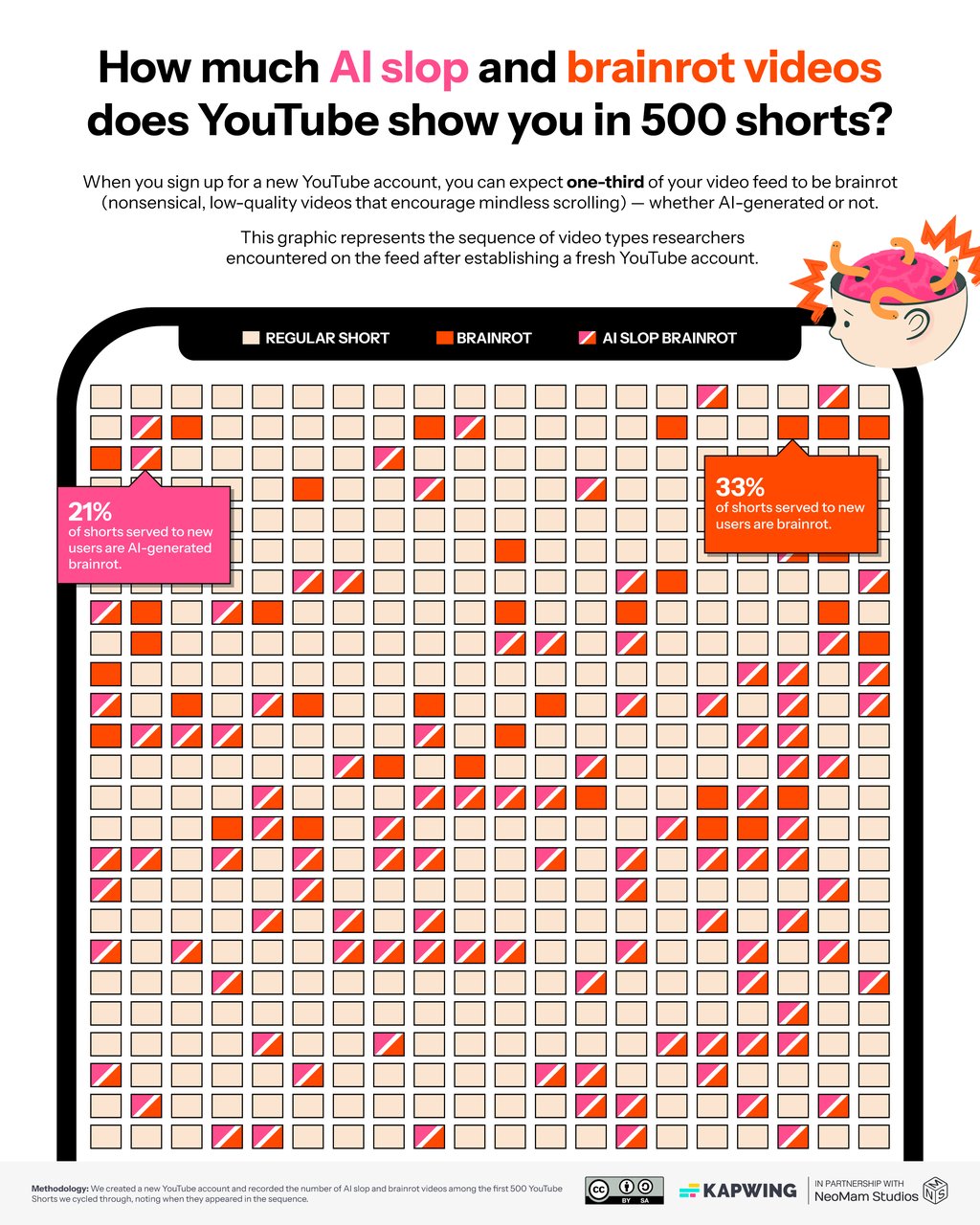
278 channels exclusively feature AI-generated slop content
Those channels have accumulated 63 billion views and 221 million subscribers
They generate an estimated $117 million per year in ad revenue
A New York Times investigation found nearly half of recommended videos for children featured AI visuals
Who's making this — and why
The creators behind these channels use AI for everything: writing scripts, generating visuals, producing audio, and automating uploads. Many operate anonymous "faceless" channels — no human ever appears on screen. Promotional videos teaching this technique have been viewed over 335,000 times.
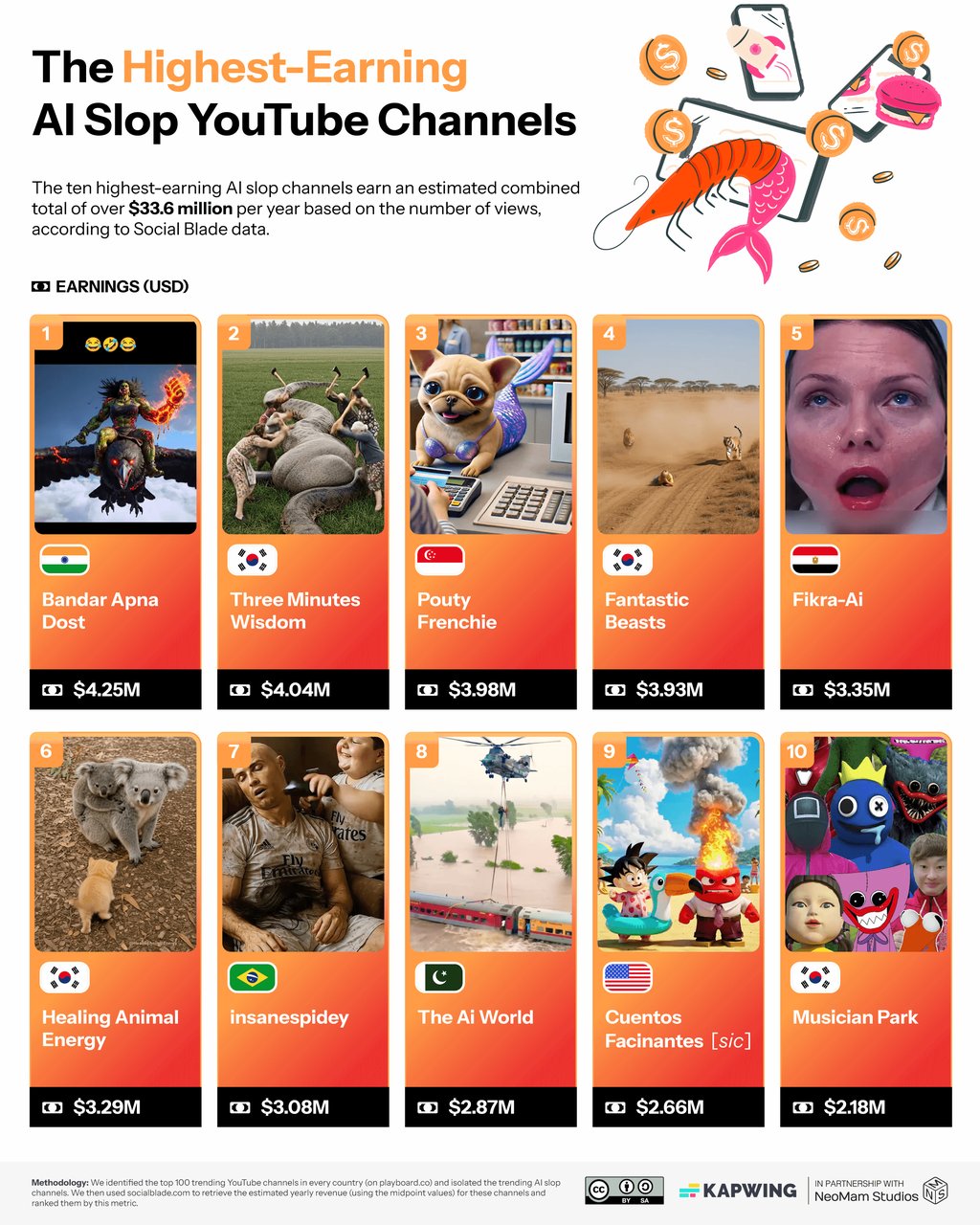
The motivation is simple: money. India's Bandar Apna Dost channel has hit 2.07 billion views with estimated annual earnings of $4.25 million. South Korea's Three Minutes Wisdom pulls in roughly $4 million per year.
Content originates both overseas and domestically. As children's media veteran Carla Engelbrecht explains: "If you're inconsistent, it takes that much longer to learn. Every delay means everything else gets pushed back."
YouTube's labeling loophole
Here's the catch: YouTube only requires creators to disclose AI-generated content when it looks "realistic." Cartoonish, animated videos — exactly the style used in children's content — are exempt. This means most AI-generated kids' videos carry no warning label at all.
YouTube says it maintains quality standards and has a more curated YouTube Kids app with stricter guidelines. But investigators found AI-generated content has already penetrated that platform too. YouTube removed seven channels after being contacted by journalists — a drop in an ocean of thousands.
What parents can do right now
If you have young children watching YouTube:
• Use YouTube Kids instead of regular YouTube — it's more curated, though not perfect
• Watch the first 30 seconds of any new channel before handing over the screen
• Look for inconsistencies — misspelled words, wrong colors, characters changing appearance mid-video
• Check upload frequency — any channel posting 10+ videos daily is almost certainly AI-generated
• Stick to verified channels from known children's media brands (PBS Kids, Sesame Street, etc.)
The responsibility gap is real. YouTube, AI companies, creators, and parents all share blame — but right now, no one is fully accountable. Until regulations catch up, parents are the last line of defense.
Related Content — Get Started with Easy Claude Code | Free Learning Guides | More AI News
Stay updated on AI news
Simple explanations of the latest AI developments