Donald Knuth, 87, just admitted AI solved what he couldn't
The most respected computer scientist alive named his newest paper after Claude — because the AI cracked a math problem he'd been stuck on for weeks.
Donald Knuth — the 87-year-old Stanford professor often called the 'father of computer science' — just did something nobody expected. He named his newest research paper "Claude's Cycles" after the AI that solved a math problem he couldn't crack.
The paper opened with two words: "Shock! Shock!"
Knuth is the author of The Art of Computer Programming, widely considered the most important book in computer science history. He won the Turing Award (the 'Nobel Prize of computing') in 1974 and invented the TeX system that scientists worldwide use to write papers. When someone at his level publicly credits an AI, the entire field pays attention.
The puzzle that stumped a legend
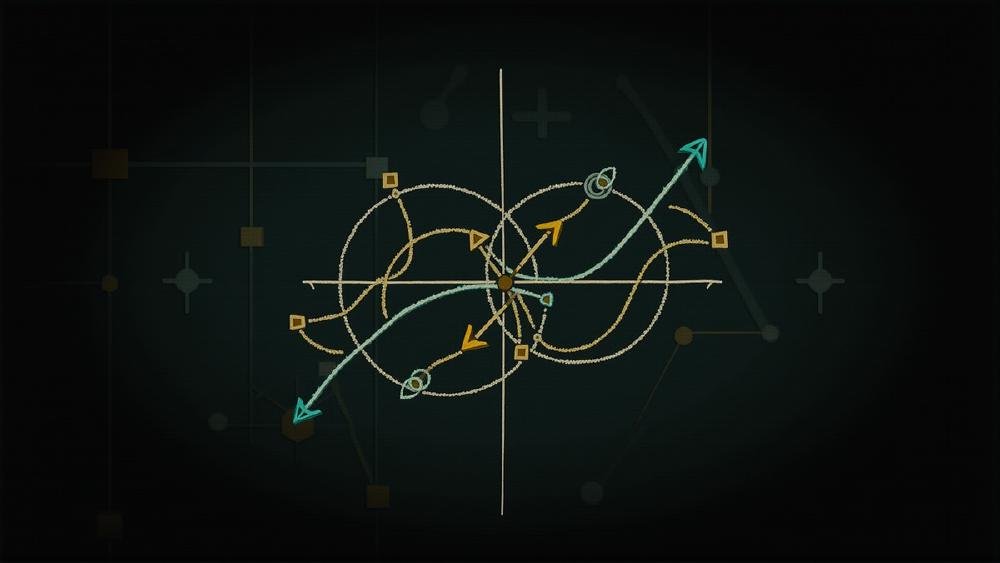
Knuth was working on a problem for a future volume of his masterwork. Imagine a three-dimensional grid — like a Rubik's Cube with m × m × m points. Each point connects to three neighbors. The challenge: find three paths that each visit every single point exactly once, using every connection in the grid, with no overlaps.
Mathematicians call these "Hamiltonian cycles" (paths that visit every point in a network exactly once and return to the start). Knuth had solved the smallest version — a 3×3×3 cube with 27 points. His colleague Filip Stappers used computers to verify solutions up to 16×16×16 grids. But nobody could find a general rule that works for any size.
Knuth had been stuck for weeks.
31 explorations. One hour. Problem solved.
Claude Opus 4.6 — Anthropic's most powerful AI model — tackled the problem through 31 guided explorations over roughly one hour. It didn't just guess. It systematically worked through different strategies:
Steps 1–2: Tried simple mathematical formulas and brute-force searching — both failed
Step 3: Analyzed simpler 2D versions of the problem and discovered "snake-like paths"
Steps 4–14: Tested Gray codes (a special ordering system), random search, and simulated annealing (a method that mimics how metals cool to find optimal arrangements)
Step 15 — the breakthrough: Claude recognized the problem was actually a Cayley digraph (a structure from group theory) and proposed a "fiber decomposition" approach
Step 31: Discovered the "bump rule" — a simple formula that determines which direction to go based on coordinates
Claude verified its solution worked for cubes of size 3, 5, 7, 9, and 11. Knuth then proved it works for all odd-numbered sizes — and discovered there are exactly 760 valid solutions of this type.
What Knuth actually said
Knuth's reaction was remarkable for someone who had previously been skeptical of AI:
"A joy it is to learn not only that my conjecture has a nice solution but also to celebrate this dramatic advance in automatic deduction and creative problem solving."
And in his closing line — the one that sent shockwaves through the community:
"It seems I'll have to revise my opinions about 'generative AI' one of these days."
The paper's title is a deliberate double reference — "Claude's Cycles" honors both Claude the AI and Claude Shannon, the founder of information theory. Within hours, the paper racked up 635,000 views and 6,000 likes — extraordinary numbers for a mathematics paper.
What AI still can't do
Before anyone declares math is "solved" — important caveats:
- Claude needed human guidance. Filip Stappers continuously prompted and directed Claude throughout the 31 explorations. This wasn't a single "solve this" prompt.
- Claude found the pattern, not the proof. Knuth had to write the rigorous mathematical proof himself. The AI discovered what works — the human proved why it works.
- It failed on even numbers. The even-dimension case (m = 2, 4, 6...) remains completely unsolved. Claude made no meaningful progress on it — and actually degraded in quality as its context window (working memory) filled up.
A new way to do math?
The Hacker News discussion (841 points, 362 comments) captured the significance perfectly: this is the first time AI has genuinely contributed to original mathematical research at the highest level.
The dynamic that emerged — humans propose problems, AI explores structures at superhuman speed, humans formalize proofs — could become a new research paradigm. As one commenter put it: "Humans lack speed for exploration. LLMs lack judgment for direction-setting. Together they excel."
Read the paper yourself
Knuth's "Claude's Cycles" is a concise 5-page paper available free on his Stanford faculty page: cs.stanford.edu/~knuth/papers/claude-cycles.pdf
You don't need a math degree to appreciate the opening — Knuth's writing style is famously approachable.
If the 'father of computer science' is reconsidering his views on AI after 60+ years of expertise — that's a signal worth paying attention to.
Related Content — Get Started with Easy Claude Code | Free Learning Guides | More AI News
Sources
Stay updated on AI news
Simple explanations of the latest AI developments