This AI just tripled to $5.5B — and lawyers are worried
Legora raised $550M and tripled its valuation to $5.55B in 5 months. Tens of thousands of lawyers already use it daily across 800 firms worldwide.
Legora, a Swedish AI platform built specifically for lawyers, just raised $550 million in Series D funding — tripling its valuation to $5.55 billion in just five months. That's up from $1.8 billion last October.
Tens of thousands of lawyers across 800 firms in 50+ countries now use Legora daily for tasks that used to take junior associates days: reviewing contracts, drafting documents, researching precedents, and comparing clauses across hundreds of files at once.

What Legora actually does
Think of Legora as an AI paralegal (a legal assistant who does research and document prep) that never sleeps. Here's what it handles:
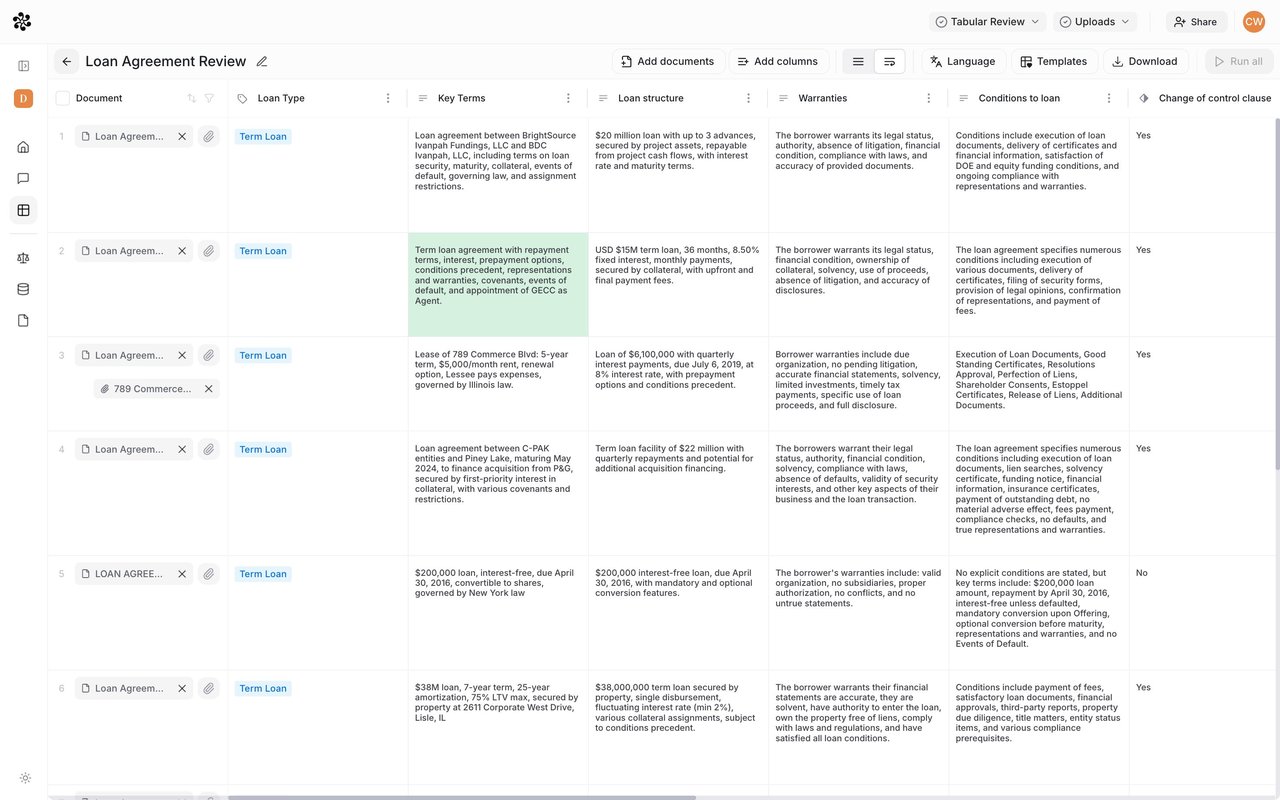
Tabular Review — Drop hundreds of contracts into Legora. It turns them into an interactive spreadsheet where each document becomes a row. AI extracts key data, compares clauses, and flags inconsistencies across every file.
Research — Ask a legal question in plain English. Legora searches internal firm documents, legal databases, and the web simultaneously, then verifies citations and summarizes the answer with sources.
Drafting — Works directly inside Microsoft Word. It suggests relevant language from precedent documents, rewrites sections, and applies firm-specific templates (called "Playbooks") automatically.
Workflows — Multi-step AI processes that automate entire legal procedures. Describe what you need in plain English — the AI handles the rest, from research to draft to review.
Who's behind it — and who's investing
Legora was founded in Sweden and is a Y Combinator alum. The $550M round was led by Accel, with participation from Benchmark, Bessemer Venture Partners, General Catalyst, Salesforce Ventures, Menlo Ventures, and former Goldman Sachs CEO Lloyd Blankfein.
The platform is built primarily on Anthropic's Claude and uses Azure OpenAI Service for additional capabilities. It holds ISO 27001 and ISO 42001 certifications (the new international standard specifically for AI management systems), plus SOC 2 compliance.
The company is expanding aggressively in the U.S. with new offices in Houston and Chicago, alongside existing ones in New York and Denver. It plans to grow to 300+ U.S. employees by end of 2026.
Should lawyers be worried?
That depends on the kind of lawyer. Legora isn't replacing the partner who argues your case in court. It's replacing the 50 hours of document review that a junior associate used to bill at $400/hour.
"Legora has proven to be the right tool for our objectives and needs, both in terms of efficiency and security," says Andy Ramos, partner at Pérez-Llorca, one of Spain's top law firms.
Jan Dernestam, Managing Partner at Mannheimer Swartling, called it "both thrilling and innovative, and the best we have seen so far."
The valuation tripling in 5 months tells the real story: law firms aren't experimenting with AI anymore. They're paying billions for it.
The bigger picture
Legal AI is now one of the fastest-growing sectors in enterprise software. Legora's 3x valuation jump puts it alongside companies like Replit ($9B) and Scale AI as proof that AI tools for specific professions — not general-purpose chatbots — are where the real money is flowing.
If you work in law, accounting, or any document-heavy profession: this is the kind of AI that's coming for the repetitive parts of your job. The firms that adopt it early bill faster, review more thoroughly, and can take on more clients with fewer junior staff. The ones that don't? They're competing against firms that just got a $5.55 billion AI co-worker.
Related Content — Get Started with Easy Claude Code | Free Learning Guides | More AI News
Stay updated on AI news
Simple explanations of the latest AI developments