Scale AI just ranked every voice AI — the results are brutal
Voice Showdown tests 11 voice AI models across 60+ languages using real conversations. GPT Realtime ignores non-English speakers 20% of the time.
If you've ever talked to an AI assistant and wondered why it sometimes sounds great and sometimes awful, Scale AI just gave you the answer. Their new benchmark, Voice Showdown, is the first to test voice AI models using real human conversations — not scripted lab tests — and the results reveal massive gaps between how these models actually perform.
The benchmark tested 11 leading voice AI models across 60+ languages, drawing from over 29 million real prompts collected from 300,000+ users on Scale's ChatLab platform. The headline finding: GPT Realtime responds in English to non-English prompts roughly 20% of the time on languages like Hindi, Spanish, and Turkish.
How Voice Showdown actually works
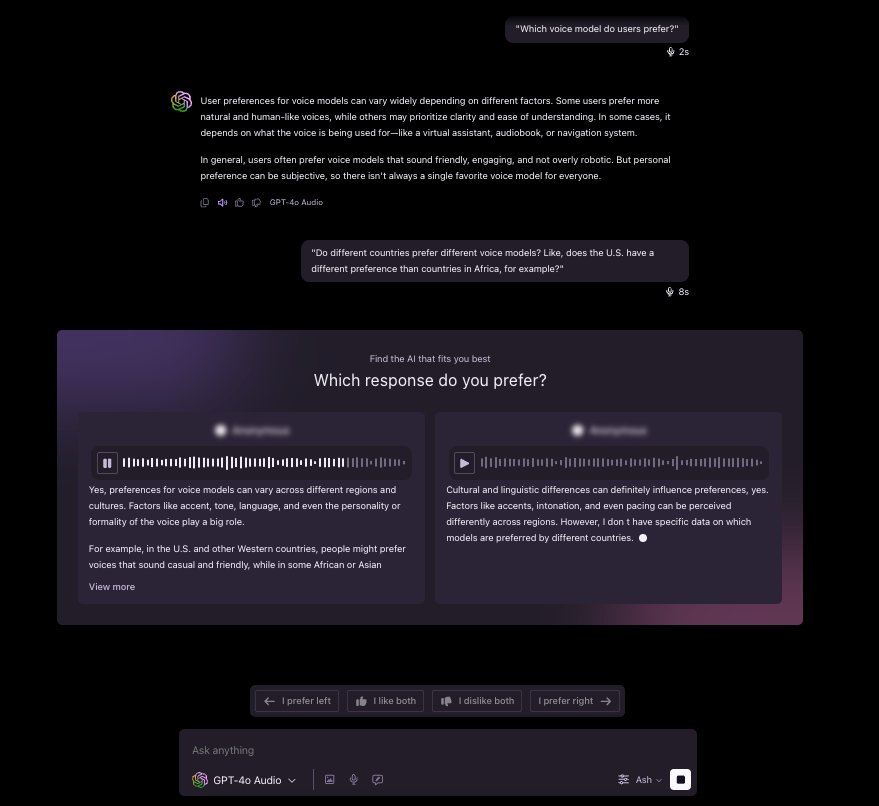
Unlike typical benchmarks that use synthetic (computer-generated) test audio, Voice Showdown embeds its tests directly into real conversations. While a user is talking to one voice model on ChatLab, the system occasionally plays a second model's response to the same question — and the user picks which one they prefer.
This happens on fewer than 5% of voice prompts, so users barely notice. But the data it generates is far more reliable than lab tests because it captures how people actually talk to AI — including background noise, accents, half-finished sentences, and follow-up questions.
The system tests two modes:
Dictate mode: You speak, and two AI models send back written text responses. You pick the better one.
Speech-to-Speech mode: You speak, and two AI models respond with voice. To prevent you from recognizing a model by its voice, the system swaps voices between responses.
Who's winning — and who's failing
The results vary dramatically by language and mode:
Dictate mode leaders: Google's Gemini 3 Pro and Gemini 3 Flash dominate text response quality across most languages.
Speech-to-Speech leaders: Gemini 2.5 Flash Audio and GPT-4o Audio are statistically tied at the top — but rankings shift dramatically depending on which language you speak.
Also competitive: Grok Voice rounds out the top tier.
The voice you choose matters more than you'd think
One of the most surprising findings: for a single model, the best voice option wins 30 percentage points more often than the worst voice. That means if you're using a voice AI and it sounds bad, switching to a different voice character within the same model could dramatically improve your experience.
Short conversations (under 10 seconds) tend to fail on audio understanding and speech quality. Longer ones (over 40 seconds) fail on content quality — the AI understands you fine but gives worse answers. Most models perform best on the first exchange and decline as the conversation continues, though some actually improve with context.
Why non-English speakers should pay attention
The biggest performance gaps show up in multilingual support. GPT Realtime's 20% English-default rate on non-English prompts means one in five times you speak Hindi or Spanish to it, it just answers in English anyway. For the hundreds of millions of people who primarily speak languages other than English, this is a dealbreaker.
Google's models currently handle multilingual conversations more reliably, though no model scored perfectly across all 60+ tested languages.
Try it and shape the rankings
Voice Showdown isn't a static report — it's a live leaderboard. Anyone can join ChatLab's public waitlist and contribute to the rankings by having real voice conversations with AI models. Your preferences directly influence the scores.
Scale AI plans to expand testing to full-duplex conversations next — where you can interrupt the AI mid-sentence, talk over it, or change topics abruptly, mimicking how real conversations actually work.
Related Content — Get Started with Easy Claude Code | Free Learning Guides | More AI News
Stay updated on AI news
Simple explanations of the latest AI developments