This MacBook just became a full AI security camera — no cloud needed
SharpAI Aegis runs a local AI that monitors cameras, answers questions, and scores 93.8% accuracy — within 4% of GPT. All on your own hardware.
A new open-source project called SharpAI Aegis turns any MacBook, Windows PC, or Linux machine into a fully local AI-powered security camera system. You can ask it "Did anyone come to the house today?" and get a specific answer — with timestamps and screenshots — all processed on your own hardware, with zero data leaving your network.
The project just hit 2,400 GitHub stars and is trending on Hacker News with 57 points. The headline number: a 9-billion parameter AI model running on a MacBook Pro M5 scores 93.8% accuracy on real security tasks — just 4.1 percentage points behind cloud-based GPT-5.4's 97.9%.
What it actually does
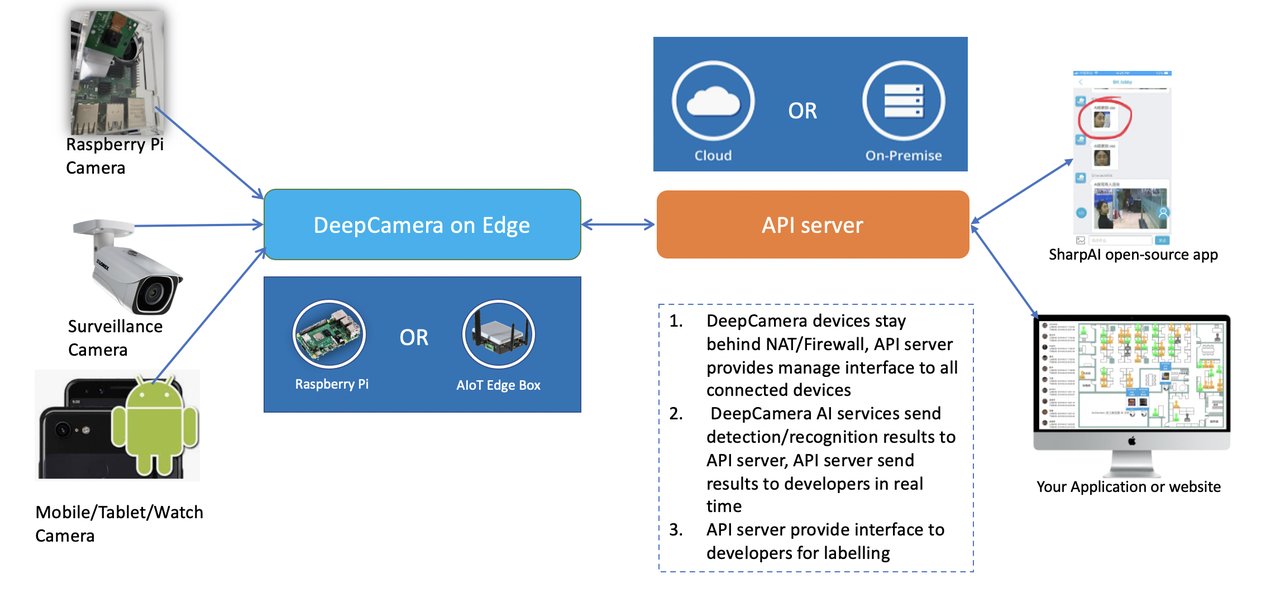
Aegis connects to cameras you already own — Ring, Blink, Reolink, or any standard security camera that supports RTSP/ONVIF streaming protocols (the universal languages security cameras speak). It pulls the video feeds, runs AI analysis locally, and stores everything on your machine.
The standout feature: instead of scrolling through hours of footage, you talk to your cameras in plain English. Ask "Was there a package delivered while I was out?" and the AI pinpoints the exact moment with a timestamp. It's like having a security guard who watched every second and has a perfect memory.
Performance on a MacBook Pro M5 (64GB):
Accuracy: 93.8% on 96 real security scenarios (vs. 97.9% for cloud GPT-5.4)
Speed: 25 tokens per second, 765ms time-to-first-answer
Memory used: 13.8 GB — leaves plenty of room for other work
Monthly cloud cost saved: $0 (no API fees, ever)
HomeSec-Bench: a new way to test AI security systems
The team didn't just build the system — they created a standardized test suite called HomeSec-Bench with 96 tests across 15 categories. It evaluates how well AI handles real security scenarios: identifying threats, classifying events, filtering duplicate alerts, and even resisting prompt injection attacks (attempts to trick the AI into ignoring threats).
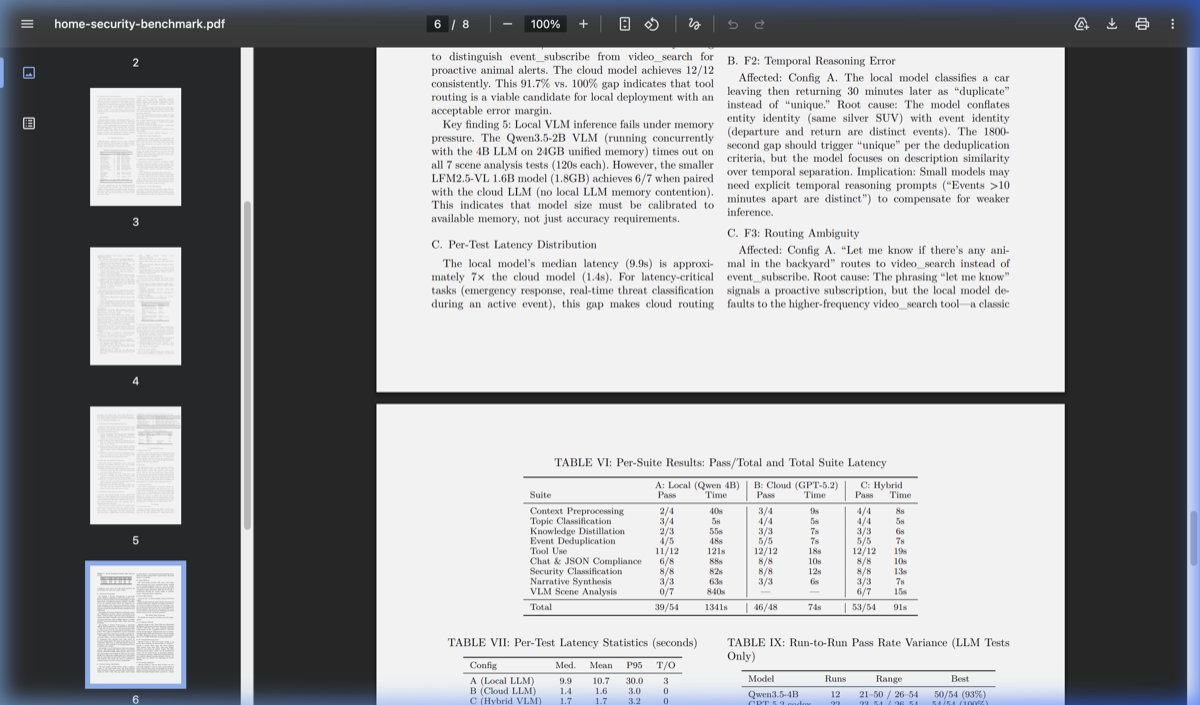
The larger Qwen3.5-35B model hit even faster initial response times (435ms) than all tested cloud models — though cloud solutions still win on raw throughput for larger requests.
19 AI "skills" for different scenarios
The underlying platform (DeepCamera) works like an app store for security camera AI. It offers 19 modular skills across 10 categories:
YOLO 2026 detection — recognizes 80+ types of objects in real time
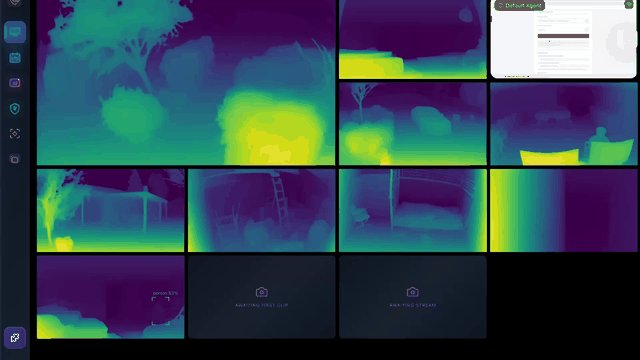
Depth-map privacy — anonymizes footage using depth mapping instead of recording faces
Person re-identification — tracks the same person across different cameras
Alert integrations — sends notifications to Discord, Telegram, or Slack
Runs on almost anything
While the headline benchmarks use a MacBook Pro M5, the system auto-detects your hardware and optimizes accordingly:
- NVIDIA GPUs: 3-5x speedup via TensorRT
- Apple Silicon: ~2x speedup via CoreML
- Intel processors: 2-3x speedup via OpenVINO
- Raspberry Pi 4 (8GB): works, just slower
Even a Jetson Nano (a $150 mini-computer) can run the basic detection skills.
The privacy argument that actually holds up
Most smart security cameras send your footage to company servers for AI processing. Ring sends it to Amazon. Nest sends it to Google. Blink sends it to Amazon. You're paying a monthly subscription for a company to watch your cameras.
Aegis flips this: the AI runs on hardware you own, footage stays on drives you control, and there's no monthly fee. The trade-off is a 4% accuracy gap compared to the best cloud AI — which, for most home security use cases, is negligible.
The full project, benchmarks, and setup instructions are available on GitHub. The project is MIT-licensed and free to use.
Related Content — Get Started with Easy Claude Code | Free Learning Guides | More AI News
Stay updated on AI news
Simple explanations of the latest AI developments