This AI robot just started building solar farms 24/7
Terabase Energy's Terafab V2 uses AI-powered robots to build solar farms around the clock — installing 20 MW per week with zero panel breakage.
A robot that builds solar farms around the clock just hit the market. Terabase Energy announced that its next-generation Terafab V2 — an AI-powered automated construction platform — has completed field testing and is now ready for commercial shipment. It's the world's first system that can assemble and install solar panels at factory speed, outdoors, in extreme conditions.
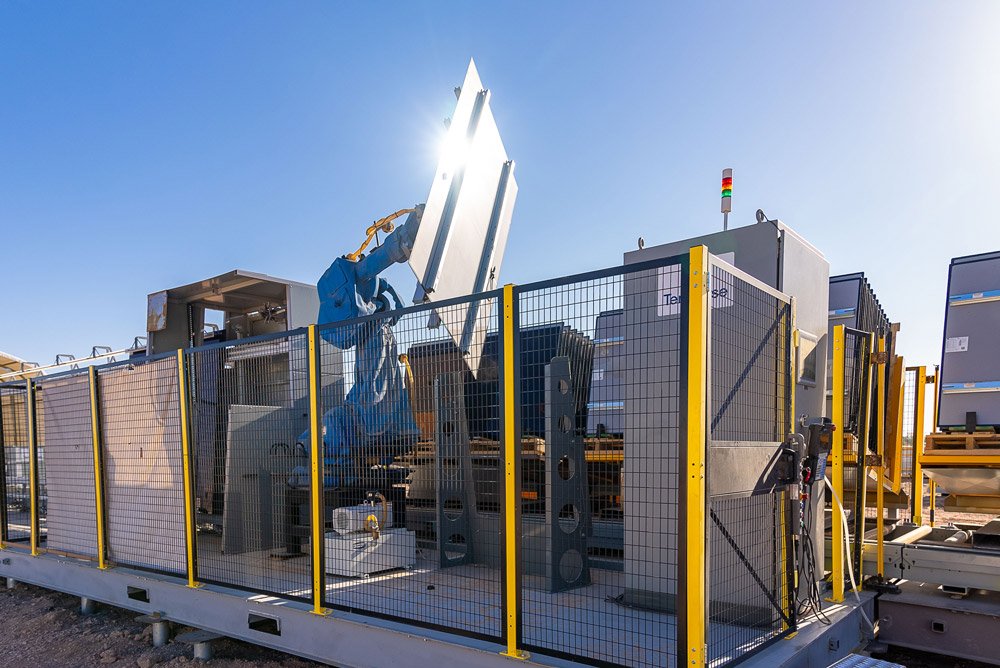
A factory that drives to the job site
Traditional solar farm construction works like this: steel frames go up first, then workers manually lift and bolt each glass panel one by one. It's slow, physically demanding, and error-prone. Terafab flips that process entirely.
Instead, panels are pre-assembled onto steel frames inside a mobile factory tent with built-in quality checks at every step. Once assembled, a fleet of autonomous rovers carries the completed units to their installation points. The entire process runs on an AI-powered Manufacturing Execution System (MES) that optimizes every step in real time.
Key numbers:
• 2-minute cycle time per unit — running 24 hours a day, 7 days a week
• 20+ megawatts installed per week from a single production line
• ~1 gigawatt per year per factory — enough to power roughly 750,000 homes
• 16,000 panels installed in a row without breaking a single one
• 10 GW annual capacity planned at their Northern California facility within 12 months
Why this matters right now
The world needs solar farms faster than humans can build them. AI data centers alone are driving unprecedented demand for electricity — and solar is the fastest new power source to deploy. But construction crews can't keep up. There aren't enough skilled workers, the job is physically dangerous (workers lift heavy glass and steel in desert heat), and manual quality control misses defects that cause problems years later.
Terafab V2 tackles all three problems at once. The AI catches defects immediately during assembly. The robots eliminate heavy lifting. And the 24/7 operation means projects finish weeks or months faster than traditional methods.
CEO Matt Campbell put it simply: "Every week we shave off a construction schedule means earlier revenue for project owners, lower financing costs, and faster delivery of clean electrons to the grid."
Already proven in the field
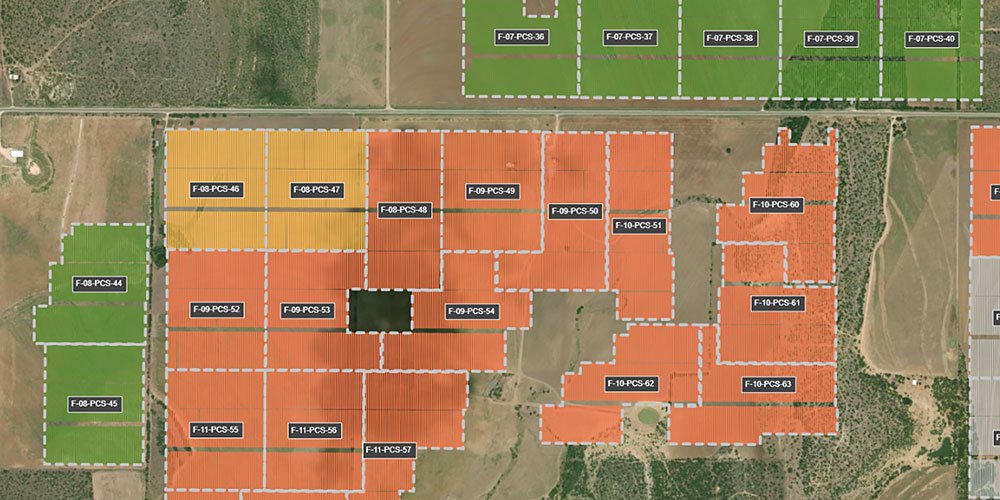
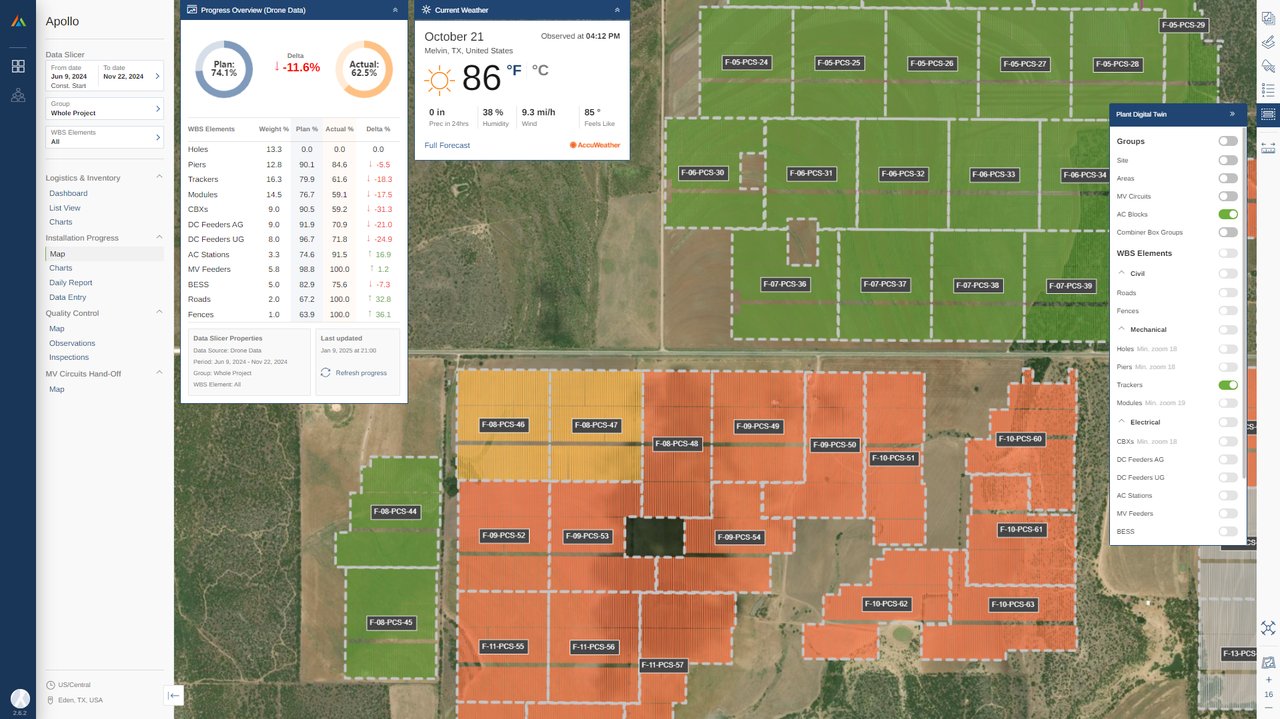
This isn't a concept demo. The first-generation Terafab has already been deployed on five real solar projects, including a 225 MW project in Arizona called White Wing Ranch, where it installed 17 MW of panels. The system handled desert dust, extreme heat, wind, rain, and mud — conditions that slow down human crews dramatically.
Terabase raised a $130 million Series C from SoftBank Vision Fund 2 to scale up manufacturing. The entire system is designed and built in the United States, making it both a clean energy solution and a domestic manufacturing story.
The bigger picture: AI meets physical infrastructure
Terafab is part of a growing trend called "physical AI" — where artificial intelligence moves beyond screens and chat windows into the real world. Unlike chatbots that generate text, these systems make decisions in real time about physical objects: where to place a panel, how to adjust for wind, when a defect needs attention.
The autonomous rovers that deliver assembled panels to their final positions are expected to operate fully without human intervention in the near future. When that happens, a solar farm could essentially build itself — from the moment materials arrive to the moment the first electrons flow.
If you work in energy, construction, or project management: Terafab represents the kind of AI automation that's already reshaping entire industries. The construction labor shortage isn't going away — but robots that work 24/7 in 120°F heat without breaks might be the answer. Learn more at terabase.energy.
Related Content — Get Started with Easy Claude Code | Free Learning Guides | More AI News
Stay updated on AI news
Simple explanations of the latest AI developments