YouTube just asked 2 billion users to spot AI fakes
YouTube now asks viewers if videos 'feel like AI slop.' Research shows 1 in 5 videos shown to new users is AI-generated, earning channels $117M a year.
YouTube just rolled out a new survey that pops up while you're watching videos. The question: "Does this feel like AI slop?" You rate it from "Not at all" to "Extremely." It's the first time the platform has directly asked its 2 billion users to help identify AI-generated junk — and the reason is staggering.
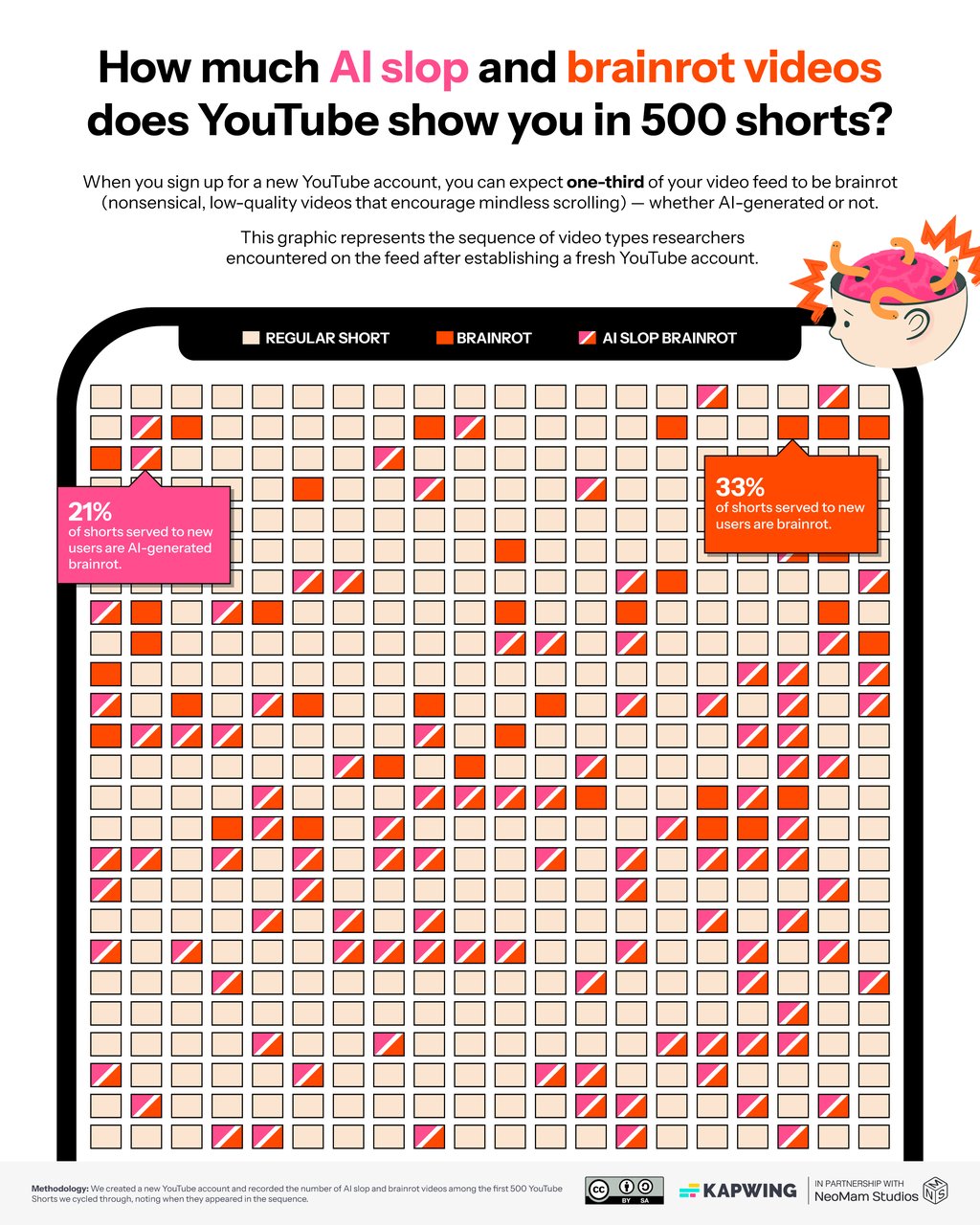
A report by Kapwing found that 21% of the first 500 videos recommended to a brand-new YouTube account were AI-generated. Another 33% qualified as "brainrot" — mindless, repetitive content designed to hold eyeballs. In other words, more than half of what YouTube shows new users is either fake or junk.
A $117 million problem YouTube can't ignore
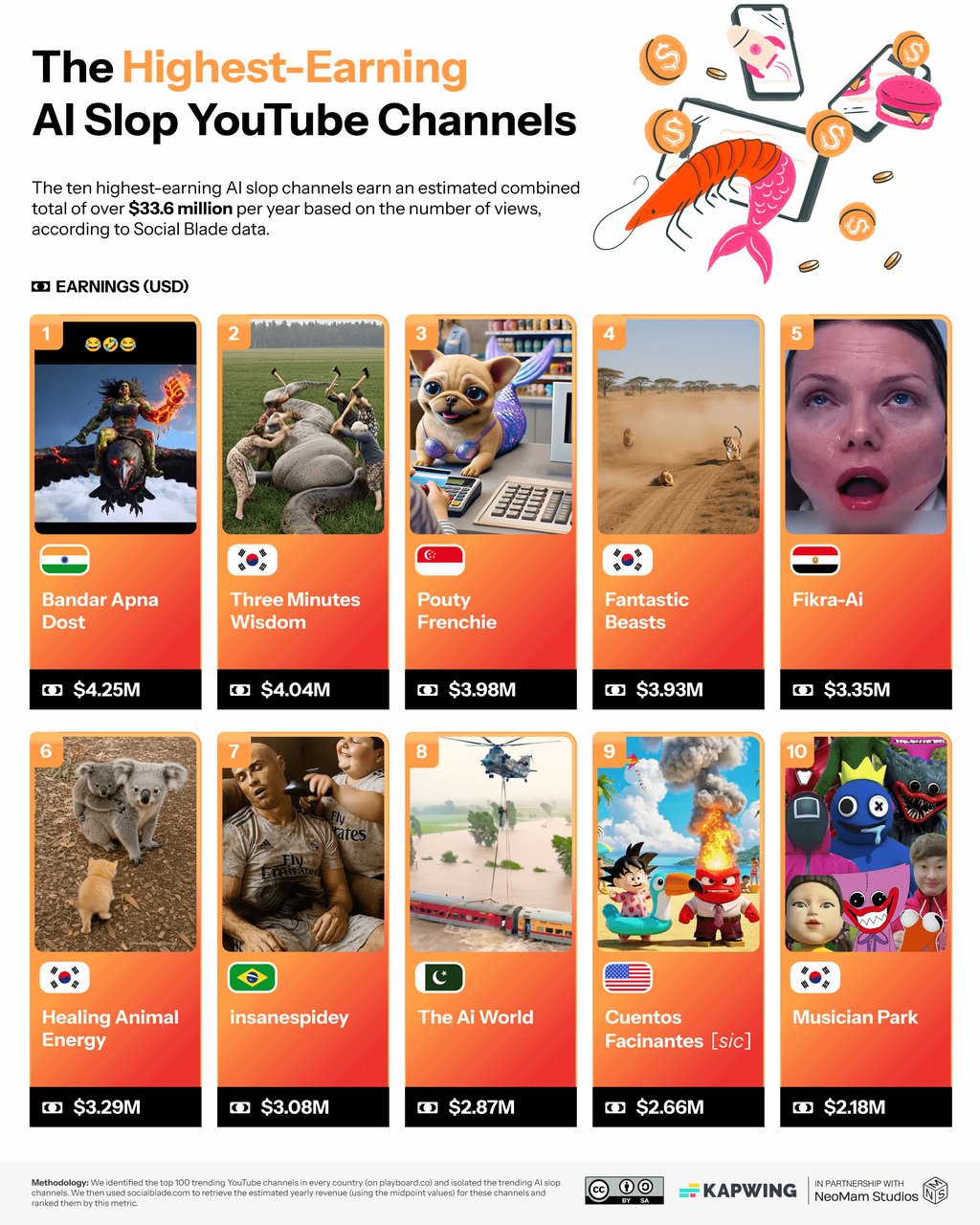
Kapwing surveyed 15,000 of the world's most popular YouTube channels — the top 100 in every country — and found 278 of them contain nothing but AI slop. Together, these channels have racked up 63 billion views, 221 million subscribers, and an estimated $117 million in yearly ad revenue.
The highest-earning AI slop channel, India's "Bandar Apna Dost" (animated monkey scenarios), pulls in an estimated $4.25 million per year from 2 billion views. The top 10 AI slop channels alone earn a combined $33.6 million annually.
Which countries are most affected?
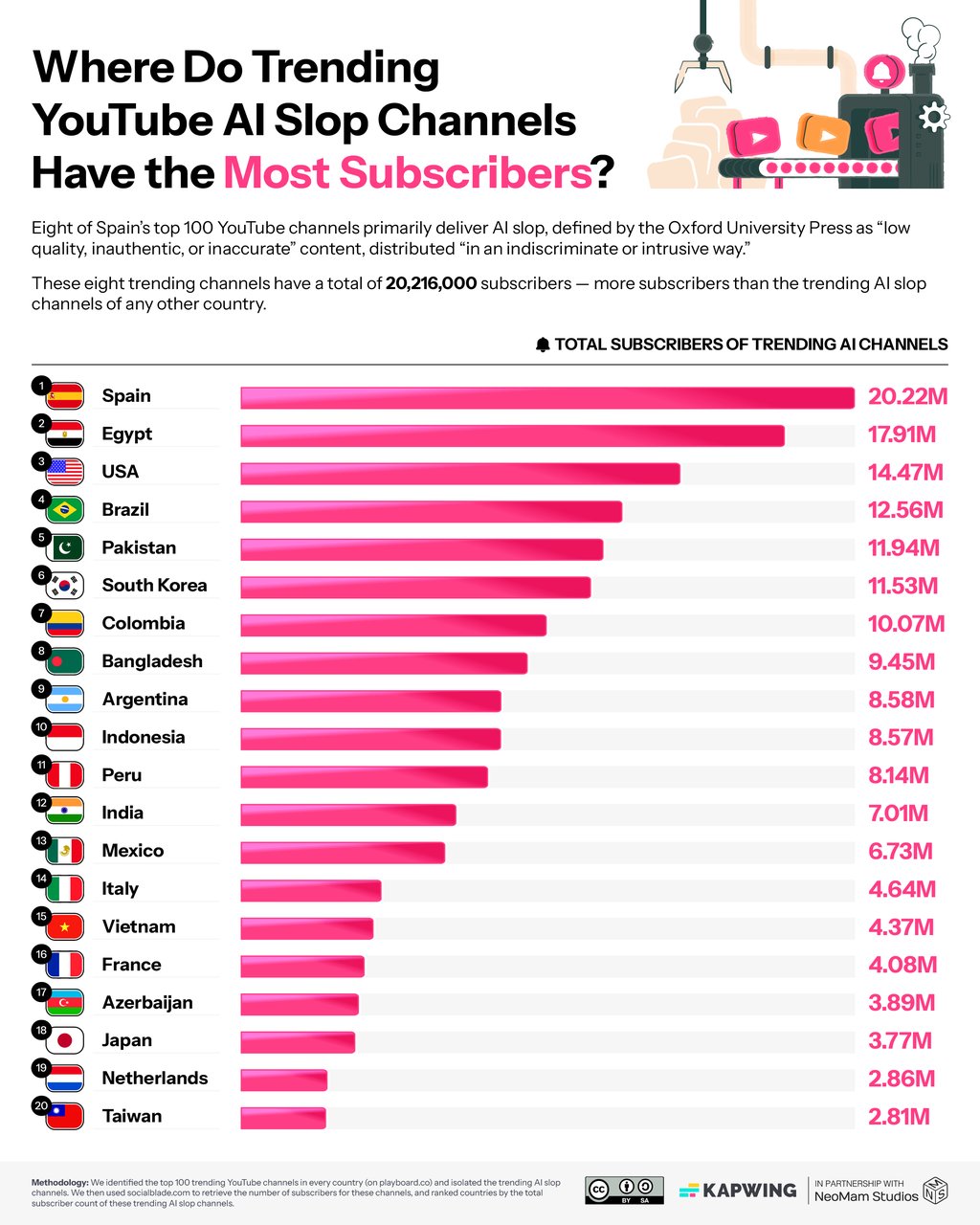
Top countries by AI slop subscribers:
🇪🇸 Spain — 20.2 million subscribers (8 channels)
🇺🇸 United States — 14.5 million subscribers (9 channels)
🇧🇷 Brazil — 12.6 million subscribers
Top countries by views:
🇰🇷 South Korea — 8.45 billion views (11 channels)
🇵🇰 Pakistan — 5.34 billion views
🇺🇸 United States — 3.39 billion views
How the survey actually works
The pop-up appears on YouTube's mobile app, first spotted around March 17, 2026. When you're rating a video, YouTube now adds an extra question: "Does this feel like AI slop?" or "How much does this video feel like low-quality AI?"
You get five options: Not at all, Slightly, Moderately, Very much, Extremely. YouTube hasn't explained what happens to videos that get consistently flagged — whether they'll be demoted in recommendations, demonetized, or removed entirely.
The catch: are users training Google's AI instead?
Not everyone buys YouTube's stated goal. Users on X raised a pointed concern: what if this feedback is being used to train Google's own AI video tools? If YouTube learns exactly what humans consider "slop," that data could theoretically help products like Google's Veo video generator create content that's harder to spot.
As one user put it: "They're turning 2 billion users into unpaid AI trainers."
Digital Trends called it "outsourcing the AI slop problem" — arguing that YouTube, one of the richest companies on Earth, shouldn't need users to do the detection work when it has the AI capabilities to do it internally.
What this means for creators and viewers
If you watch YouTube daily: You'll likely see this survey soon. Rating honestly helps real creators get more visibility — but be aware your feedback may have dual purposes.
If you're a content creator: AI slop channels are competing for the same ad dollars. YouTube CEO Neal Mohan named combating AI slop a top priority for 2026 in his annual letter, so expect stricter enforcement coming. Original content should benefit from this crackdown.
If you're a marketer or brand: Ad placements next to AI slop waste your budget. If YouTube follows through, brand-safe placements should improve — but there's no timeline yet.
YouTube hasn't made an official announcement about this feature. For now, it's quietly rolling out to mobile users while the platform figures out what to do with the data it collects.
Related Content — Get Started with Easy Claude Code | Free Learning Guides | More AI News
Stay updated on AI news
Simple explanations of the latest AI developments