BBC just exposed 60 AI accounts exploiting Black women
A BBC investigation found 60 AI-generated fake Black women on TikTok and Instagram funneling users to explicit content. TikTok banned 20 accounts within days.
The BBC just uncovered a network of 60 fake accounts on Instagram and TikTok using AI-generated Black female avatars to funnel millions of users toward paid explicit content. One stolen video alone racked up 173 million views on Instagram — 47 times more than the real creator's original post.
TikTok banned 20 of the accounts within two days of the BBC's inquiry. Meta, which owns Instagram, said it was "investigating" but has not confirmed any action.
How the scheme works
The BBC, working with analysts Jeremy Carrasco and Angel Nulani from the independent AI publication Riddance, identified the accounts across both platforms. Nearly all were on Instagram, with about a third mirrored on TikTok.
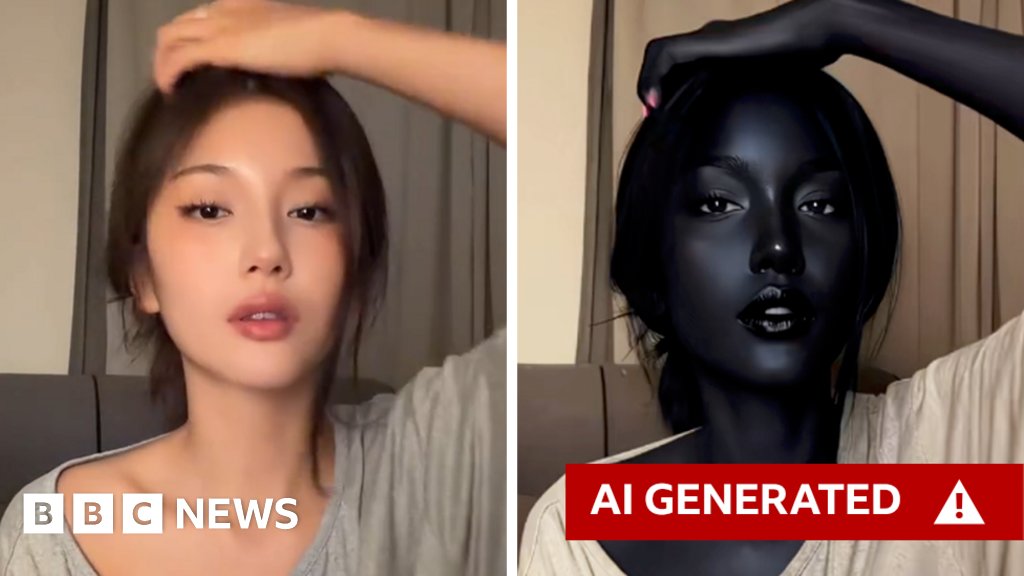
The accounts feature AI-generated characters with exaggerated body shapes, unnaturally dark skin tones that have been digitally manipulated, and are often shown in revealing clothing. AI makes it easy to remove natural undertones from images to create skin tones that don't exist in real life — effects that used to require animation or body painting.
Account names use racial terms like "black", "noir", "dark", and "ebony". Several include posts about white men, such as "loves white men" and "why I need a white guy in my life". Many of the accounts follow and like each other, creating an interconnected network.
A real creator's videos — stolen and superimposed
One of the most disturbing cases involves Riya Ulan, a real model based in Malaysia. One of the fake accounts — which amassed 3 million followers within weeks of its creation in December — stole her videos, overlaid an AI-generated face with an artificially dark skin tone onto her body, and replicated her movements, clothing, and backdrops.
"I was angry," Riya told the BBC. "It doesn't mean that you can just take it and steal it and post it as your own." One manipulated video hit 35 million views on TikTok and 173 million on Instagram. Her original? A fraction of that.
While the three stolen videos themselves aren't sexual, other videos on the same fake account show the AI character in revealing clothing or performing provocative actions — all linked to paid adult content.
Riya says she reported the account to both platforms multiple times, but nothing was removed until the BBC contacted the companies directly.
Why experts call it a new form of exploitation
"I believe these accounts are racist because their existence perpetuates a long history of the exploitation of Black people," says Nulani, one of the researchers. "Their use of caricatures, race-play terminology and unrealistic depictions of Black women prove they're not concerned with our safety or wellbeing, but our ability to be capitalised as part of the online porn machine."
Carrasco, who critiques AI trends on social media, points out that while the fetishization existed before AI, the technology "gives it new purchase." The key difference: "There's no shame… that's something AI uniquely exploits." An AI avatar has no social consequences — no real person faces backlash or stigma.
Moroccan model and content creator Houda Fonone calls the trend "erasure": "Silky hair, extremely thin bodies and impossibly flawless skin… it's as if Black beauty can only be accepted when 'refined'." She warns this risks reinforcing stereotypes while "our stories and real-life experiences are replaced by an artificial image."

TikTok acted fast — Instagram barely responded
After the BBC sent both platforms examples of the accounts it identified, the responses were starkly different:
What you can check right now
If you're a content creator, you can check whether your videos have been stolen and reposted by AI accounts:
- Reverse image search your profile photos and video thumbnails on Google Images
- Search your username + variations on TikTok and Instagram to find copycats
- Report AI-generated accounts that don't label themselves as AI — both platforms require disclosure
- If a report goes ignored, contact the platform's press team directly — as the BBC investigation showed, that gets faster results than the standard report button
For everyone else: if an account looks too perfect, has unnaturally smooth skin, mismatched features, or gained millions of followers in weeks with no prior history — it's likely AI-generated. Don't engage, don't share, and report it.
Related Content — Get Started with Easy Claude Code | Free Learning Guides | More AI News
Sources
Stay updated on AI news
Simple explanations of the latest AI developments