ByteDance just open-sourced its AI super agent
DeerFlow 2.0 hit #1 on GitHub with 33K stars. It researches, writes code, builds slides, and runs from Telegram — all in sandboxed containers.
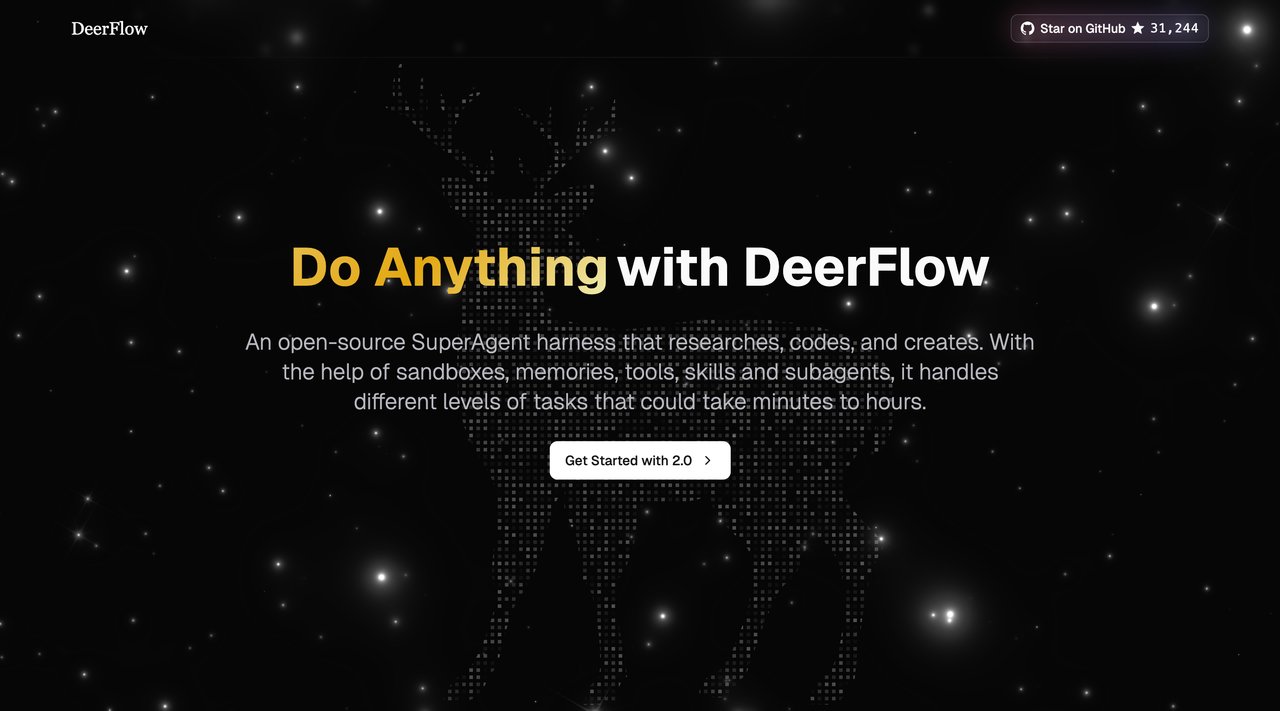
DeerFlow 2.0 — ByteDance's open-source AI agent — just hit #1 on GitHub Trending with 33,600 stars. It's not another chatbot. It's a "super agent" that can research topics, write and execute code, generate slide decks, create images, and build websites — all running inside secure, isolated containers (sandboxed environments that prevent AI from accidentally breaking your system).

What DeerFlow actually does
Think of DeerFlow as a project manager that breaks big tasks into smaller ones and assigns them to specialized AI workers. You give it a complex request — like "research the top 10 competitors in my market and create a presentation" — and it:
- Decomposes the task into independent subtasks
- Spawns sub-agents that work on each piece simultaneously
- Runs code safely inside Docker containers (isolated virtual environments)
- Remembers your preferences across sessions with long-term memory
- Delivers the final result — a report, slide deck, website, or code project
Message it from Telegram or Slack
The standout feature for non-developers: you can control DeerFlow from messaging apps. It integrates with Telegram, Slack, and Feishu/Lark — so you can assign tasks from your phone without touching a terminal or code editor.
Each chat channel gets its own session, so you can have separate projects running in different Telegram groups or Slack channels simultaneously.
Skills that load on demand
DeerFlow uses a "progressive skill loading" system. Instead of loading every capability at once (which wastes AI tokens and money), it only activates the skills a task needs:
Research & Reports — deep web research with BytePlus InfoQuest search integration
Slide Creation — generates presentation decks with AI-generated visuals
Code Execution — writes, runs, and tests code in sandboxed Docker containers
Image & Video Generation — creates visual content as part of larger workflows
How to try it yourself
DeerFlow requires Docker and basic command-line skills. If you're comfortable with that:
git clone https://github.com/bytedance/deer-flow.git
cd deer-flow
make config
make docker-start
Then open http://localhost:2026 in your browser. You'll need an API key from OpenAI, DeepSeek, or any OpenAI-compatible provider.
For Telegram integration, add your bot token in the config.yaml file — it uses long-polling, so no public server or domain needed.
Who this is for
Freelancers and small teams who can't afford enterprise AI platforms will find the most value here. DeerFlow runs on your own hardware, uses your own API keys, and stores everything locally. It's MIT-licensed (completely free, forever) with 1,637 commits from an active community.
Claude Code users get a bonus: DeerFlow includes a "claude-to-deerflow" skill that lets you send tasks, check status, and manage threads without leaving the Claude Code terminal.
With 33,600 GitHub stars and 4,100 forks, this is ByteDance's most popular open-source AI project — and it's growing by 1,500+ stars per day.
Related Content — Get Started with Easy Claude Code | Free Learning Guides | More AI News
Stay updated on AI news
Simple explanations of the latest AI developments