This free course teaches you to build your own AI research assistant
A 7-week open-source course trending on GitHub teaches anyone to build a production AI research assistant — using only local AI, no paid APIs required.
A free, open-source course called Production Agentic RAG just hit 4,500+ GitHub stars — and it's trending today. It teaches you to build a complete AI research assistant from scratch, week by week, using only free tools that run on your own computer.
The best part: no paid AI subscriptions required. Everything runs locally through Ollama, so your data never leaves your machine.
What You Actually Build
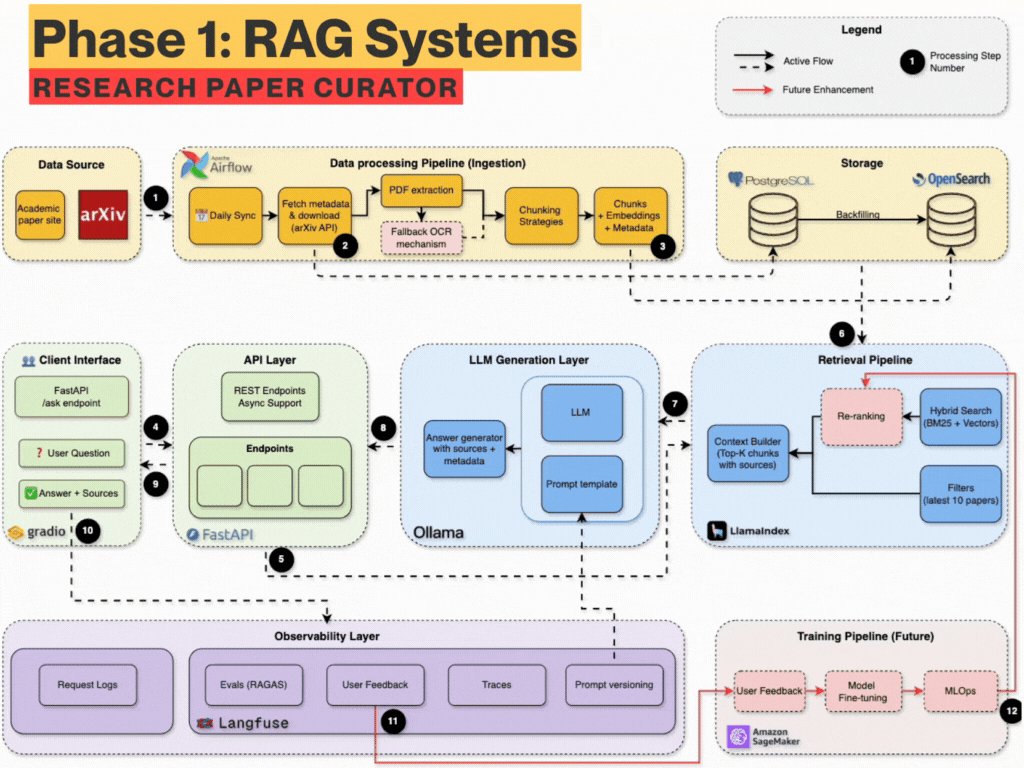
The course walks you through building an arXiv Paper Curator — an AI that automatically fetches academic papers, reads and understands them, and answers your research questions in plain language. Think of it as building your own private ChatGPT that's an expert on any research topic you feed it.
This isn't a toy demo. By the end, you have a system with:
A search engine that combines keyword matching with AI-powered understanding — so it finds papers even when you don't know the exact terms
A chat interface where you ask questions and get answers with source citations from actual papers
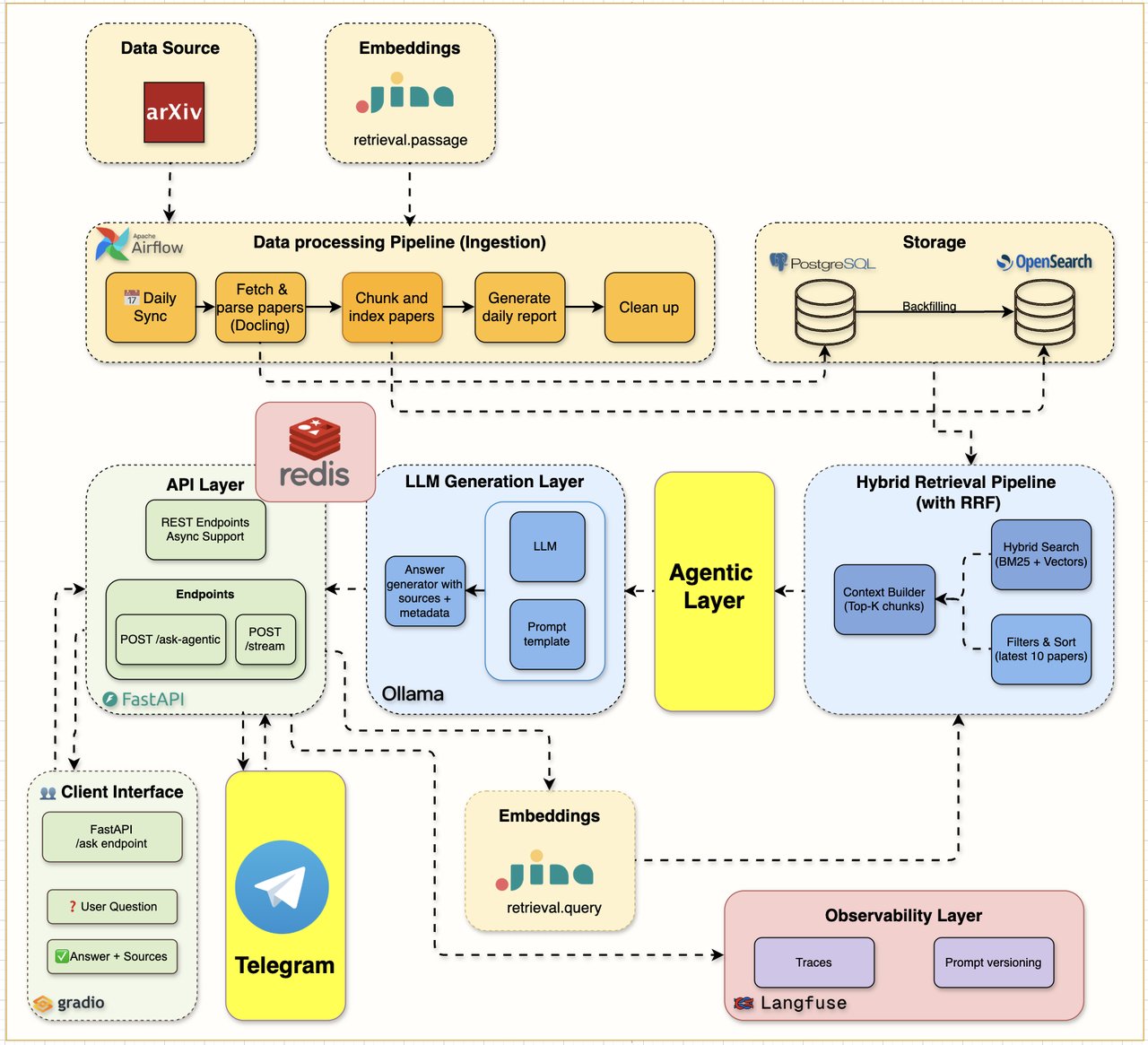
A Telegram bot so you can query your AI research assistant from your phone
Production monitoring that tracks what your AI is doing, how fast it responds, and where it might be wrong
7 Weeks, One Skill Per Week
The course is structured so each week adds one new capability. You don't need to understand everything at once — each week builds on the last.
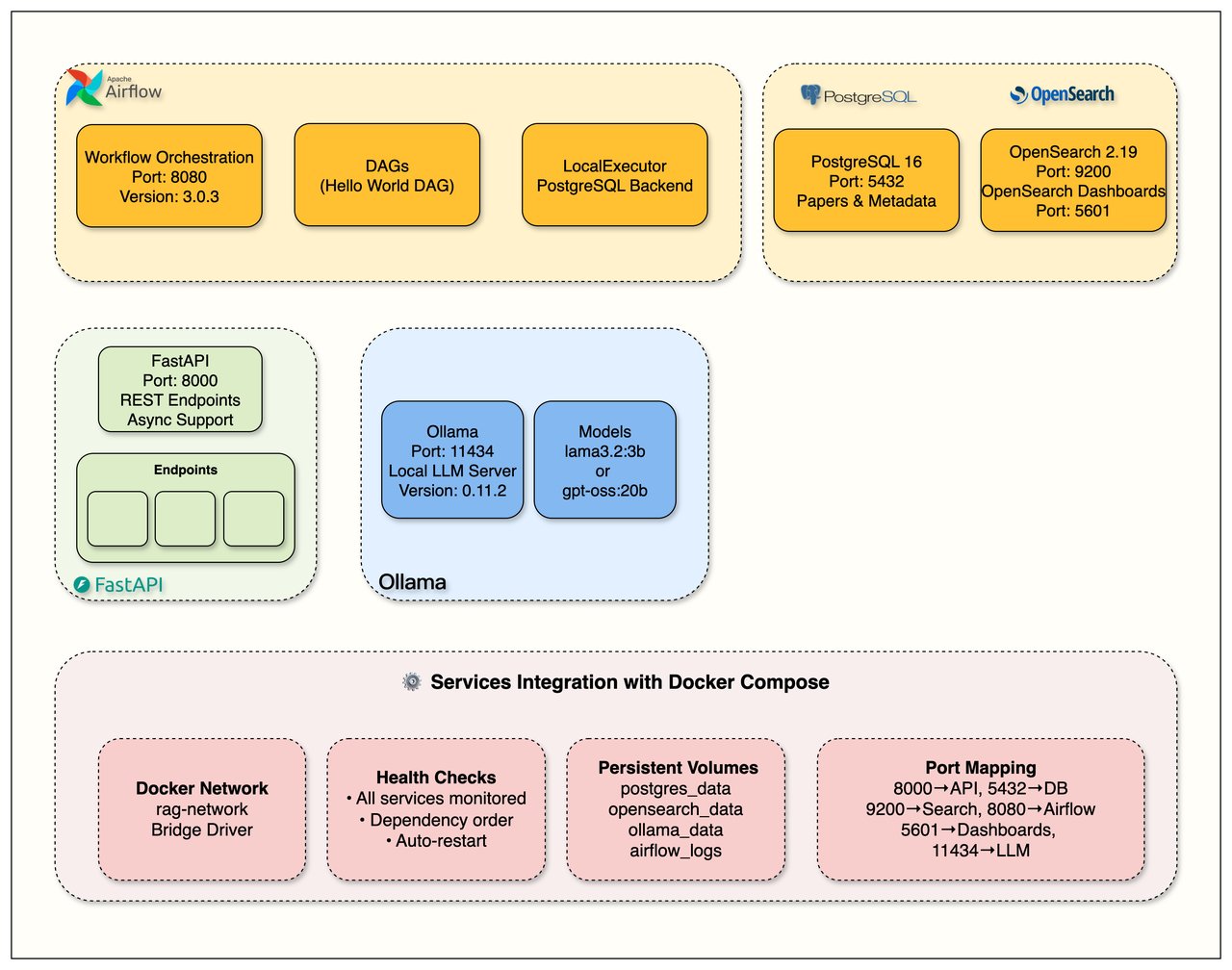
Week 1: Set up the foundation — all the services your AI needs, running in Docker containers (think of them as pre-packaged mini-computers)
Week 2: Build data pipelines that automatically fetch and read research papers from arXiv
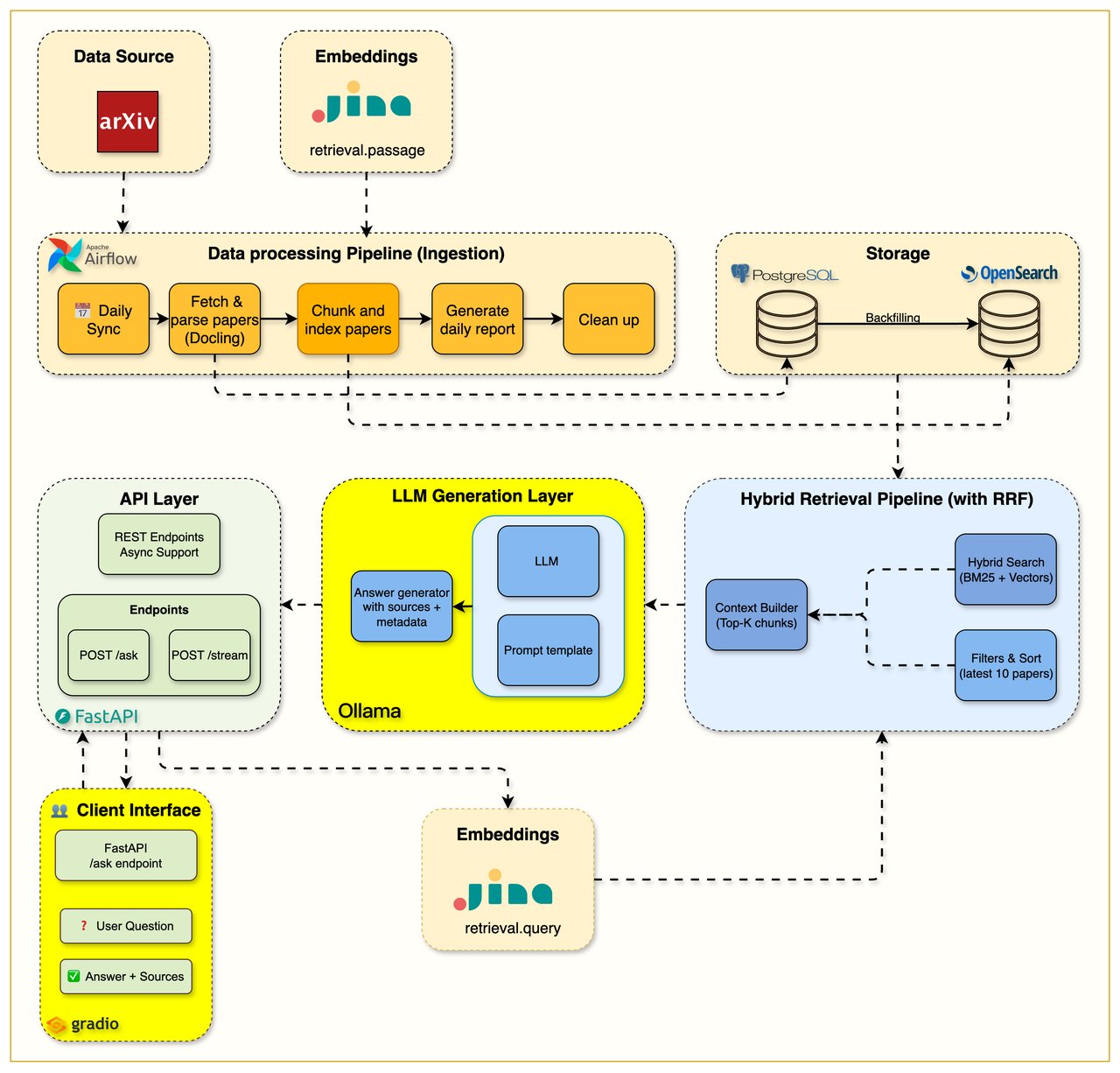
Week 3: Add keyword search — the proven foundation that even Google started with
Week 4: Upgrade to hybrid search — combining keywords with AI-powered semantic understanding
Week 5: Connect a local AI model that reads papers and answers your questions with streaming responses
Week 6: Add monitoring and caching — make your AI faster and trackable
Week 7: Build an agentic system with a Telegram bot — your AI can now decide what tools to use and you can chat with it from your phone
Who This Is For
Developers who've heard about RAG (Retrieval-Augmented Generation — the technique that lets AI answer questions using your own documents) but never built one properly. This course teaches the real-world approach: start with keyword search, add AI layers on top.
Researchers and students who want their own AI that actually reads and understands papers, instead of hallucinating answers.
Anyone curious about how AI search tools like Perplexity work — this course shows you the plumbing behind those products.
Try It Yourself
You'll need Docker Desktop, Python 3.12+, and a machine with 8GB+ RAM. The setup:
git clone https://github.com/jamwithai/production-agentic-rag-course.git
cd arxiv-paper-curator
cp .env.example .env
docker compose up --build -d
Once running, you get a web interface at localhost:7861, API docs at localhost:8000/docs, and a monitoring dashboard at localhost:3000.
Why This Course Is Different
Most AI tutorials skip straight to the "cool" parts — connecting an LLM and calling it done. This course takes the opposite approach. It spends the first three weeks building a proper search foundation before adding any AI. That's how companies like Google, Perplexity, and Anthropic actually build these systems.
It also runs entirely on your machine. No OpenAI API key, no cloud costs, no data leaving your laptop. The course uses Ollama for local AI inference, OpenSearch for search, and PostgreSQL for storage — all free, all open-source.
The repo includes Jupyter notebooks for each week, so you can follow along step by step. Each week also has an accompanying blog post explaining the concepts before you write code.
Related Content — Get Started with Easy Claude Code | Free Learning Guides | More AI News
Stay updated on AI news
Simple explanations of the latest AI developments