George Hotz just put a 120B-parameter AI in a $12K box
Tinybox V2 lets you run 120-billion-parameter AI models offline for $12K — no cloud subscription, no data leaving your home. Here's what you get.
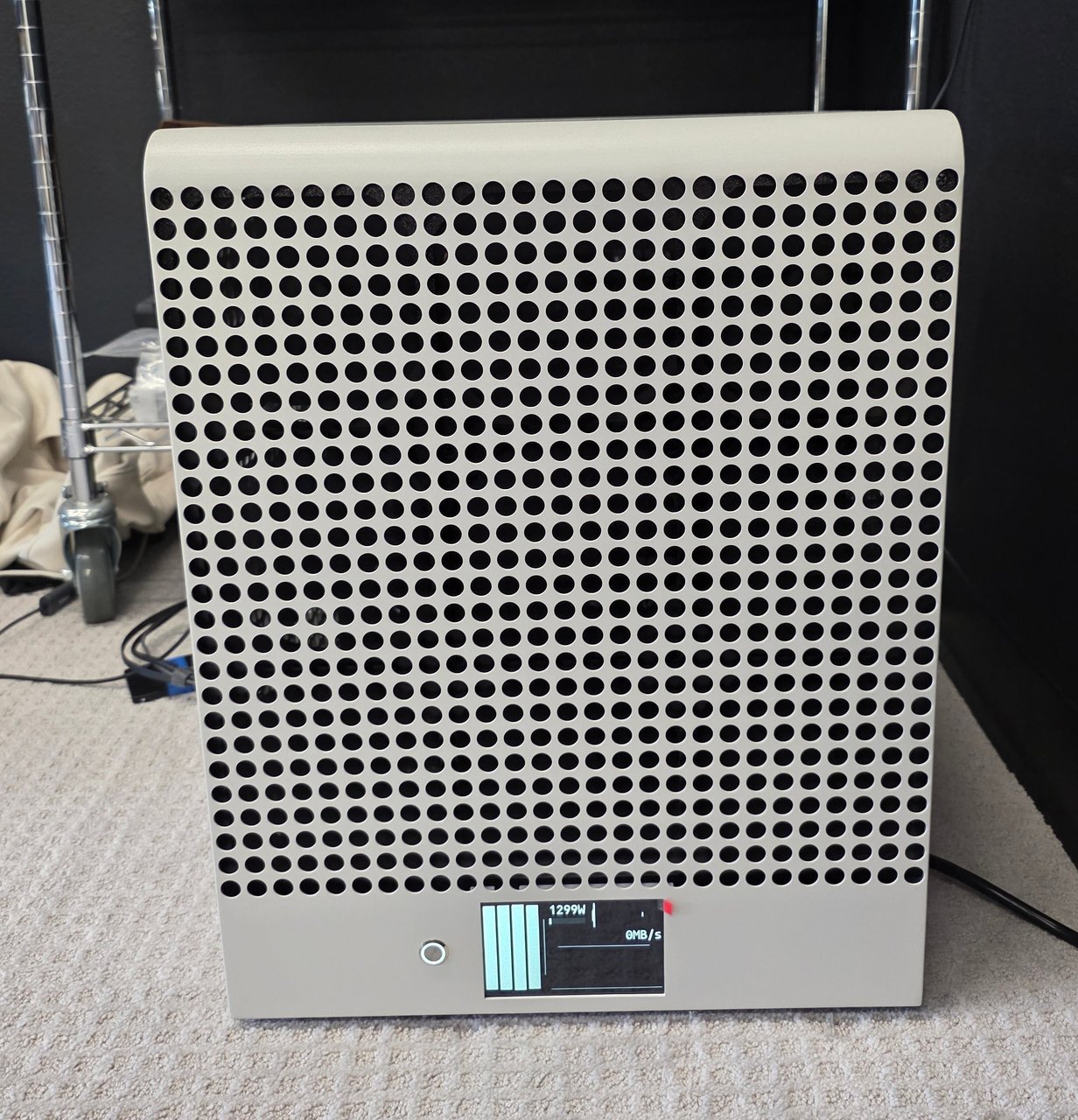
George Hotz — the hacker who jailbroke the first iPhone at 17 and later built the self-driving car startup comma.ai — just started shipping a new generation of AI computers you can buy off a shelf and plug into your home or office. No cloud. No subscription. No data leaves your building.
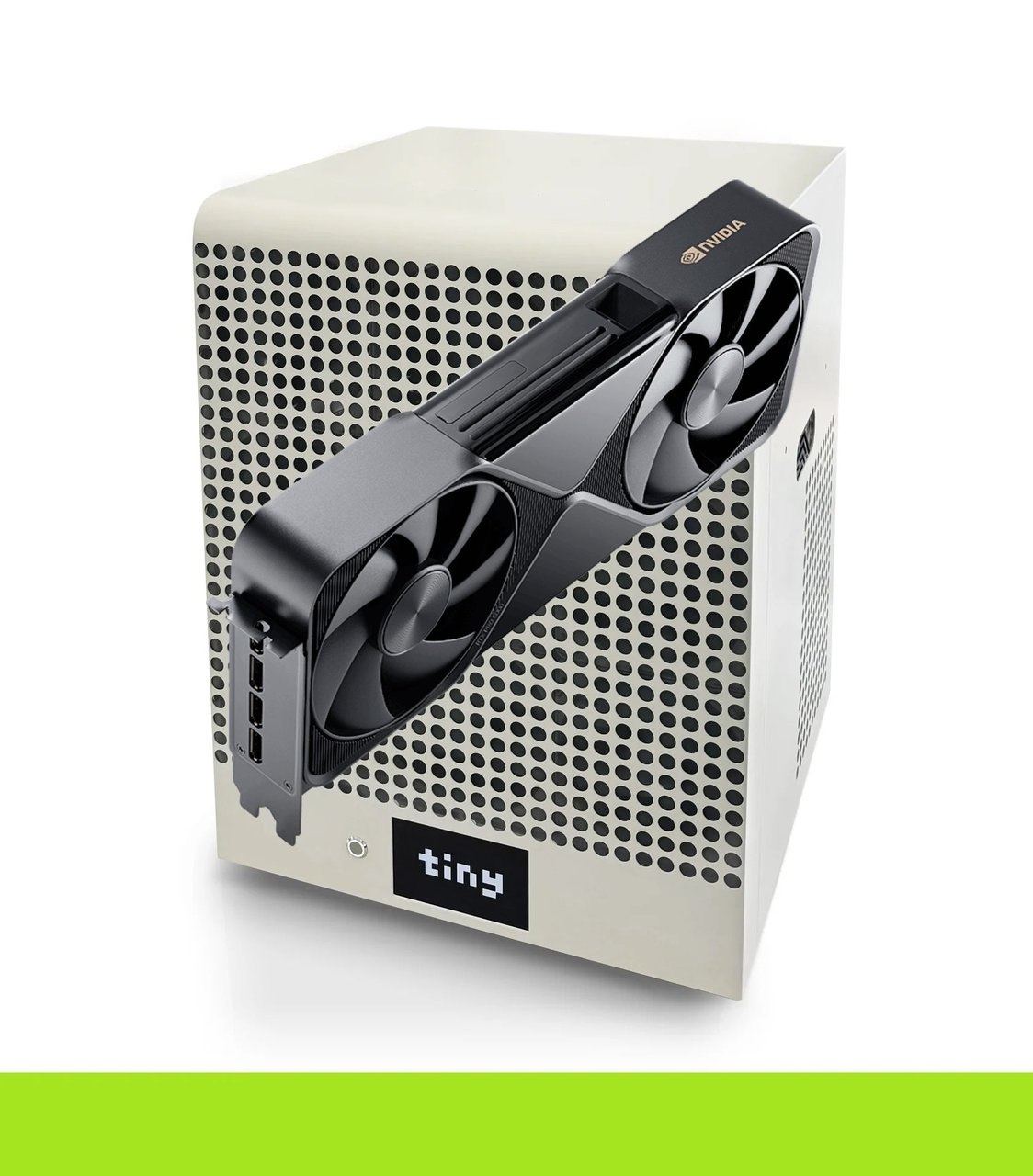
The product is called Tinybox, made by his company tiny corp. The V2 lineup starts at $12,000 and goes up to $65,000 for the version with Nvidia's latest Blackwell GPUs — enough raw power to run AI models with over 120 billion parameters entirely on your desk.
What's inside each box
Tinybox Red V2 — $12,000
- 4x AMD Radeon 9070XT GPUs — 64 GB total GPU memory (VRAM)
- 778 TFLOPS of computing power (the number that determines how fast AI models run)
- 32-core AMD EPYC processor, 128 GB system RAM, 2 TB storage
- Single 1,600-watt power supply — plugs into a standard outlet
Tinybox Green V2 Blackwell — $65,000
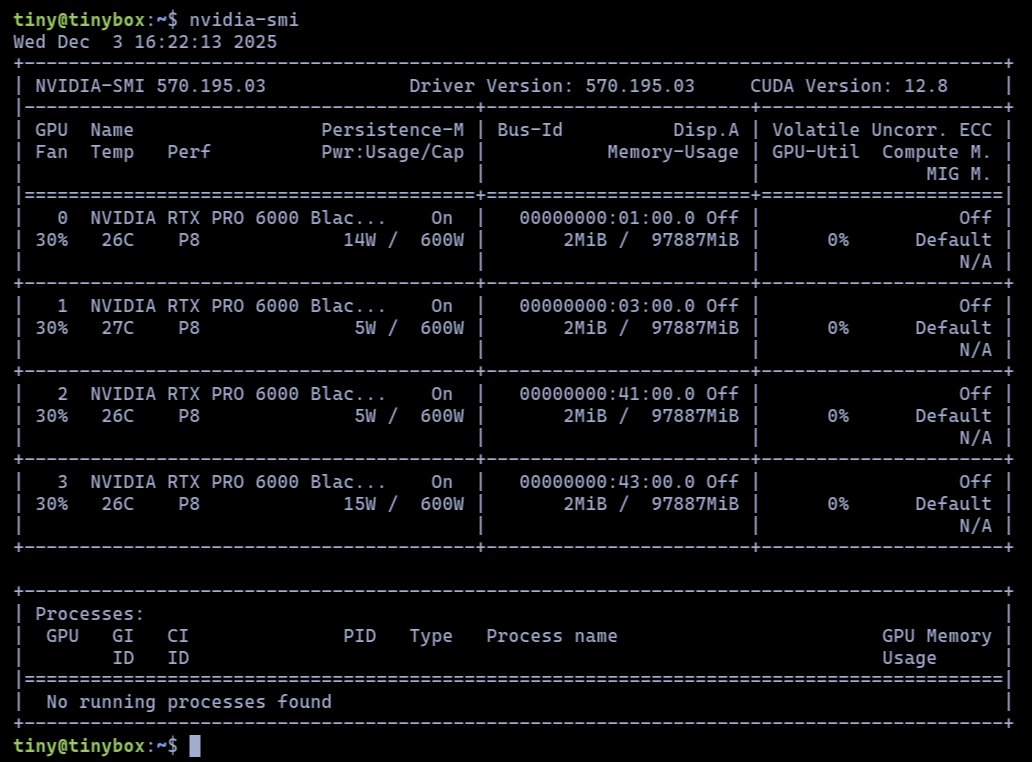
- 4x Nvidia RTX PRO 6000 Blackwell GPUs — 384 GB total GPU memory
- 3,086 TFLOPS of computing power — roughly 4x the Red
- 32-core AMD Genoa processor, 192 GB system RAM, 4 TB RAID storage
- Dual 1,600-watt power supplies
For context, 384 GB of GPU memory is enough to load a 120-billion-parameter AI model — something comparable to the mid-range models that power tools like ChatGPT and Claude — and run it at full speed with no internet connection.
Why someone would buy this instead of using ChatGPT
Three reasons keep coming up in the Hacker News discussion (112+ points):
1. Privacy. Nothing leaves your building. No API calls, no cloud logs, no third-party data processing. For lawyers, doctors, financial firms, and anyone handling sensitive data — this is the point.
2. No recurring costs. A ChatGPT Team plan costs $25-30/user/month. A company of 50 people spends $18,000/year on subscriptions alone. The Tinybox is a one-time purchase that runs unlimited queries.
3. No internet required. The box runs entirely offline. Remote offices, classified environments, field deployments — anywhere connectivity is unreliable or forbidden.
The skeptics have a point
Not everyone on Hacker News is convinced. One commenter noted you could build a comparable machine for under $9,000 using off-the-shelf parts. Another pointed out that the $12,000 Red V2 with 64 GB of GPU memory requires "very heavy quantization" (a compression technique that trades quality for size) to fit a 120B model — making the output noticeably worse than the cloud version.
The $65,000 Blackwell version avoids this compromise with 384 GB of VRAM, but at that price, you're well into small-business server territory. George Hotz's pitch is that even at $65K, the Tinybox beats comparable Nvidia DGX systems that cost 10x more — a claim backed by the company's MLPerf Training 4.0 benchmarks.
Who this actually makes sense for
Small AI startups that need to train and fine-tune models without paying cloud GPU rental ($2-8/hour on AWS). Law firms and healthcare companies that can't send client data to OpenAI's servers. Research labs running hundreds of experiments overnight. And AI hobbyists who want a local powerhouse without building from parts.
Tiny corp ships worldwide via UPS within a week of payment (wire transfer only). The software stack runs on tinygrad, their open-source deep learning framework with 31,600 GitHub stars.
The bigger picture
The Tinybox sits in a growing wave of "own your AI" products. Companies like tiny corp are betting that as AI models get smaller and more efficient, more organizations will want to run them in-house rather than pay per-token to cloud providers. The $10 million Exabox — promising 1 exaflop of performance by 2027 — hints at where this is heading.
As one commenter put it: "there's a good argument that the future of AI is in locally-trained models for everyone." At $12K, that future just got a specific price tag.
Related Content — Get Started with Easy Claude Code | Free Learning Guides | More AI News
Stay updated on AI news
Simple explanations of the latest AI developments