NotebookLM-py just automated Google's AI notebook
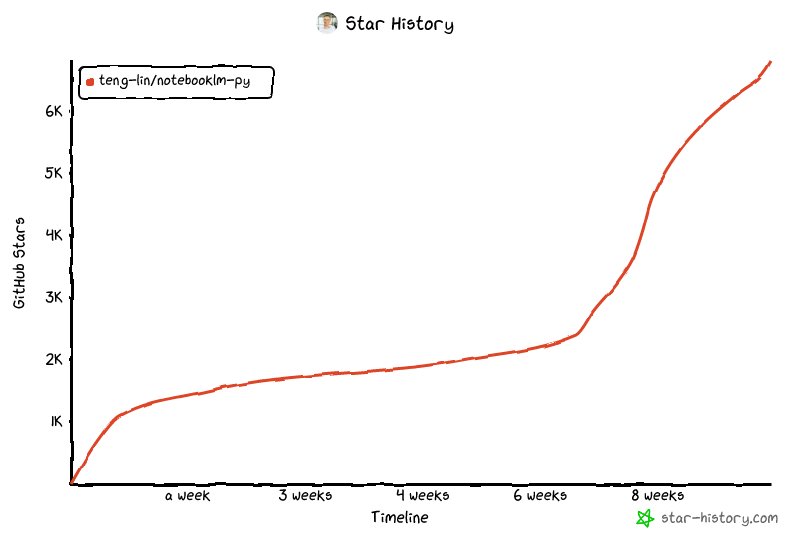
An unofficial Python API for Google NotebookLM lets you auto-generate podcasts, slide decks, and quizzes from any document — 6,800 GitHub stars and climbing.
Google's NotebookLM — the AI tool that reads your documents and turns them into podcasts, quizzes, and study guides — just got an unofficial command-line upgrade. NotebookLM-py is a Python library and CLI that gives you full programmatic access to NotebookLM's features, including capabilities the web interface doesn't even expose.
The project hit 6,800 GitHub stars and is trending today with 230+ new stars in the past 24 hours. It's MIT-licensed and works on macOS, Linux, and Windows.
What you can automate
NotebookLM's web app lets you upload documents and generate AI summaries, audio overviews (think AI podcasts), and study materials. But everything is manual — click, wait, download, repeat.
NotebookLM-py removes that bottleneck. With a single command or a few lines of Python, you can:
Generate content at scale:
- AI podcasts in 50+ languages — feed it URLs, PDFs, or YouTube links and get an audio overview in minutes
- Slide decks — downloadable as editable PowerPoint files, not just images
- Quizzes and flashcards — exported as JSON, Markdown, or HTML for easy import into study apps
- Infographics, mind maps, and data tables — structured data you can actually reuse
Features the web UI doesn't have
This is where it gets interesting. NotebookLM-py unlocks several capabilities Google hasn't built into the web interface:
- Batch downloads — grab all generated content at once instead of clicking one by one
- Mind map JSON extraction — get structured data from mind maps, not just a visual image
- Programmatic slide revision — tell the AI to revise specific slides without regenerating the whole deck
- Source full-text access — read back the full text of uploaded documents through the API
- Web and Drive research agents — the tool can search the web or your Google Drive and auto-import relevant sources into a notebook
Three ways to use it
1. Command line (fastest for quick tasks)
pip install notebooklm-py
notebooklm login
notebooklm create "My Research"
notebooklm source add "https://example.com/article"
notebooklm generate audio "make it engaging and conversational" --wait
notebooklm download audio ./my-podcast.mp3
2. Python API (for automation scripts)
from notebooklm import NotebookLM

async with NotebookLM() as nlm:
    nb = await nlm.create_notebook("Weekly Report")
    await nb.add_source(url="https://company-blog.com/update")
    audio = await nb.generate_audio("summarize for executives")
    await audio.download("report.mp3")
3. AI agent integration
If you use Claude Code or Codex, you can install NotebookLM as a skill (a packaged set of capabilities your AI coding agent can call):
notebooklm skill installThis lets your coding agent create notebooks, add sources, and generate content on your behalf — all from a chat conversation.
Who this is for
Students and researchers: Auto-generate study guides, flashcard decks, and audio summaries from academic papers. Export quizzes to Anki or other study apps.
Content creators: Turn blog posts, reports, or YouTube videos into AI podcasts in 50+ languages — then download and publish anywhere.
Teams and managers: Automate weekly briefing podcasts from internal docs. Generate slide decks from meeting notes. Build a research pipeline that runs while you sleep.
The caveat
NotebookLM-py uses undocumented Google APIs — meaning Google hasn't officially approved or published these endpoints. They could change or break without notice. The project maintainers are upfront about this: it's best suited for personal projects, research, and prototyping rather than production systems you can't afford to have break.
That said, with 6,800 stars and an active community of 874 forks, it's clearly solving a real problem. If Google ever releases an official API, this project will have paved the way.
Related Content — Get Started with Easy Claude Code | Free Learning Guides | More AI News
Stay updated on AI news
Simple explanations of the latest AI developments