Engineers just cut AI's energy use by 99% — it actually works better
Tufts University engineers built an AI system that uses 99% less energy during training and outperforms standard models — a breakthrough as AI data centers now consume over 10% of US electricity.
AI data centers now consume more than 10% of all US electricity — over 415 terawatt hours in 2024 alone — and that number is expected to double by 2030. But a team at Tufts University just demonstrated something that could change the trajectory: an AI system that uses 99% less energy during training, finishes in 34 minutes instead of 36 hours, and actually outperforms the standard approach.
What they built — and why it matters
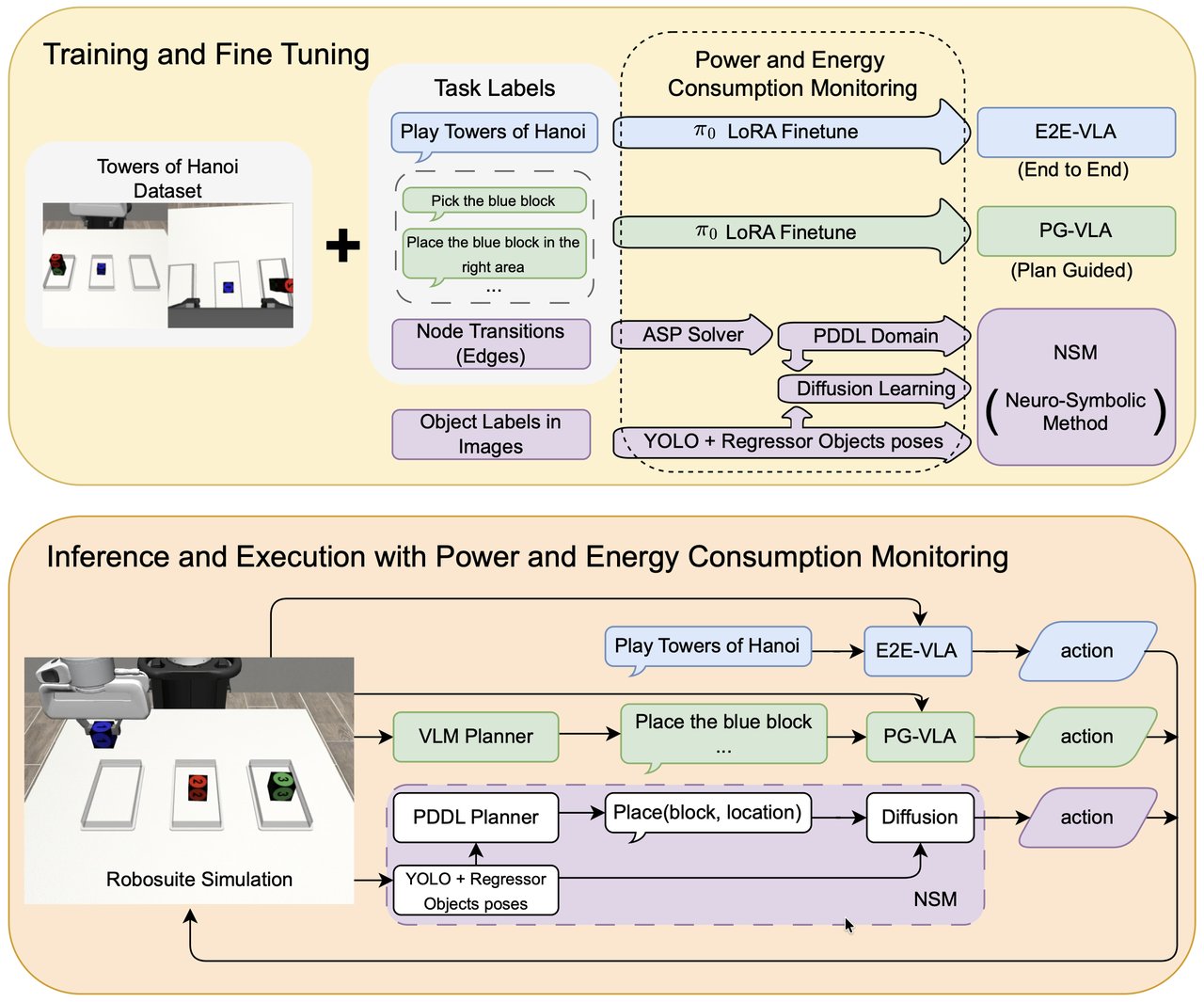
Matthias Scheutz, the Karol Family Applied Technology Professor at Tufts School of Engineering, led a team that combined two types of AI into one system. Instead of relying solely on neural networks (the technology behind ChatGPT and most modern AI), they added symbolic reasoning — essentially giving the AI a set of logical rules to follow, similar to how humans break down problems into steps.
Think of it this way: standard AI learns by trial and error, like a toddler stacking blocks thousands of times until it figures out what works. The Tufts approach gives the AI an instruction manual first, then lets the neural network handle the fine details. The result? Dramatically less wasted effort.
The numbers are staggering
Training energy: 1% of what standard AI models require
Running energy: 5% of standard models
Training time: 34 minutes vs. 36+ hours
Accuracy on standard test: 95% vs. 34%
Accuracy on harder, unseen test: 78% vs. 0% (standard models failed every single attempt)
The team tested their system on the Tower of Hanoi puzzle — a classic problem where a robot arm must move stacked discs between pegs following specific rules. When they gave both systems a harder version they'd never seen before, the standard AI failed every single time. The neuro-symbolic system solved it 78% of the time.
"A neuro-symbolic VLA can apply rules that limit trial-and-error during learning and reach solutions much faster," Scheutz told Tufts Now.

Why this could reshape the AI industry
Right now, training and running AI is an electricity arms race. Companies like Microsoft, Google, and Amazon are building nuclear reactors and massive power plants just to keep their AI systems running. SoftBank just broke ground on a $500 billion AI campus. Samsung is investing $74 billion in AI chips.
If the neuro-symbolic approach scales to larger, more complex AI systems, it could fundamentally change the economics of AI. Instead of needing a data center the size of a city block, some AI tasks could run on far more modest hardware — opening the door for smaller companies, universities, and even individuals to compete.
Who should pay attention
If you run a business using AI tools: Energy costs are a growing share of AI expenses. This research suggests a future where AI is both cheaper and more reliable — worth tracking as commercial implementations emerge.
If you care about AI's environmental footprint: The International Energy Agency estimates AI power consumption will double by 2030. Solutions like this could be the difference between AI helping or hurting climate goals.
If you're in robotics or automation: The research was specifically tested on robot manipulation tasks. A robot that trains in 34 minutes instead of 36 hours and uses 99% less energy could make factory automation far more practical for smaller manufacturers.
Where to learn more
The full research paper, titled "The Price Is Not Right," was authored by Timothy Duggan, Pierrick Lorang, Hong Lu, and Matthias Scheutz. It will be presented at the IEEE International Conference on Robotics and Automation (ICRA) in Vienna this June. The project website has additional details.
Related Content — Get Started with Easy Claude Code | Free Learning Guides | More AI News
Stay updated on AI news
Simple explanations of the latest AI developments