Zuckerberg just built an AI to do his job — and graded employees on using it
Meta's CEO is building a personal AI agent to bypass management layers. Internal bots now talk to each other, and every employee's AI usage is graded.
Mark Zuckerberg is building a personal AI agent to help him run Meta — and he's not waiting for anyone else to catch up. According to a Wall Street Journal report, the system is already in training and can retrieve answers that would normally require coordinating across multiple teams. In effect, Zuckerberg is building an AI that replaces the chain of command between him and any piece of information inside Meta.
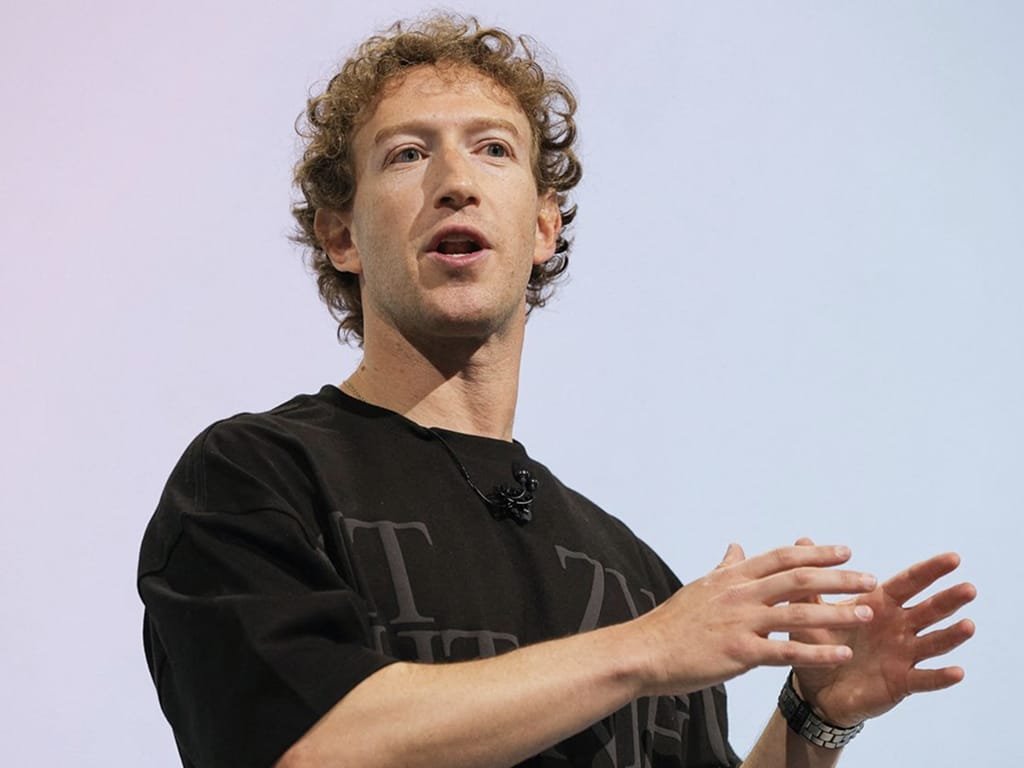
His exact words on a January earnings call: "We're investing in AI-native tooling so individuals at Meta can get more done. We're elevating individual contributors and flattening teams." Translation: fewer managers, more people doing actual work — with AI filling the gap.
Two internal tools every Meta employee now uses
The CEO agent is just the tip. Meta has already rolled out two AI systems across its 78,000-person workforce:
MyClaw — a personal AI assistant that accesses your chat logs, work files, and can communicate with your colleagues or their AI agents on your behalf.
Second Brain — built on Anthropic's Claude, it indexes entire project libraries and answers complex questions about them. Employees internally describe it as an "AI chief of staff."
Here's the part that changes things: these bots don't just help individuals. They've started talking to each other autonomously. Meta employees have set up an internal message board specifically for their personal AI agents to interact — meaning decisions and information are flowing through bot-to-bot channels that no human initiated.
AI adoption is now mandatory — and graded
This isn't optional. Meta has tied AI tool usage directly to employee performance evaluations. Every one of its roughly 78,000 workers is now graded on how effectively they use AI in their daily work. The company has also restructured teams to have 50 individual contributors per manager — a ratio that would be impossible without AI handling coordination tasks that managers used to do.
The bigger picture: every tech CEO says AI can replace them
Zuckerberg isn't alone in thinking this way. The CEOs of the three biggest AI companies have all said, on the record, that AI could do their jobs:
- Anthropic CEO Dario Amodei called AI a "general labour substitute"
- Google CEO Sundar Pichai said AI could replace him within a year
- OpenAI CEO Sam Altman stated AI "would be capable of doing a better job being the CEO of a major company than any executive"
But Zuckerberg is the first to actually build it and use it. The system functions as both a chief of staff and an analyst — cutting through Meta's sprawling org chart to surface context, team decisions, and cross-product signals in seconds.
What this actually means if you manage people
Meta's moves signal a clear direction: middle management is the first layer AI will compress. If you're a team lead, project manager, or department head, this is the most concrete example yet of a Fortune 10 company actively replacing coordination roles with AI.
The company has also acquired two AI agent startups in the past three months — Manas AI (a Singapore startup building personal AI agents) and Scale AI (at a reported $14.5 billion valuation) — doubling down on the infrastructure to make this permanent.
Reuters reports Meta may cut up to 20% of its workforce (roughly 15,000 people) to offset AI spending. The pattern is becoming hard to ignore: invest in AI tools, mandate their use, measure who adapts, then restructure around whoever's left.
Whether you're at Meta or not, the playbook is now public.
Related Content — Get Started with Easy Claude Code | Free Learning Guides | More AI News
Stay updated on AI news
Simple explanations of the latest AI developments