Nvidia's CEO says he hates AI slop — gamers disagree
Jensen Huang told Lex Fridman 'I don't love AI slop' — then defended DLSS 5, the feature gamers call 'sloptracing' for AI-filtering faces.
Nvidia CEO Jensen Huang just went on the Lex Fridman podcast and said something that caught the gaming world off guard: "I don't love AI slop myself." The problem? He said it while defending DLSS 5 — the exact technology gamers are accusing of pumping AI slop directly into their games.

What DLSS 5 Actually Does to Your Games
DLSS (Deep Learning Super Sampling) is Nvidia's technology that uses AI to make games look better in real time. Previous versions upscaled lower-resolution images to look sharper — a welcome performance boost. But DLSS 5 goes much further. It uses generative AI (the same kind behind image generators like Midjourney) to actively change how things look in-game: materials, lighting, shadows, skin textures, and facial features.
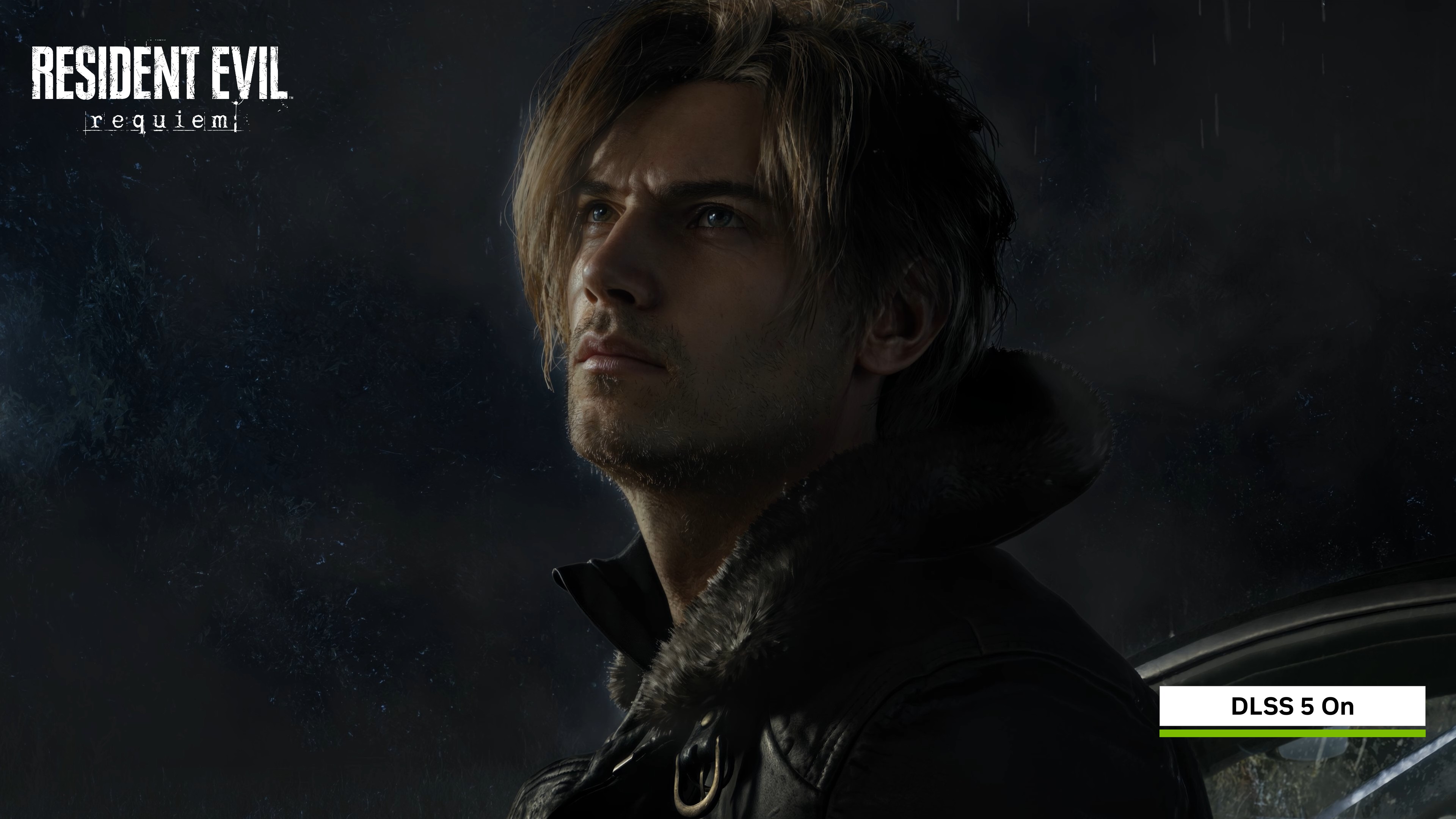
The results? Characters that look like they've been run through a smartphone beauty filter. The gaming community immediately dubbed the effect "yassified" — overly polished, unnervingly smooth, and stripped of the artists' original intent.
The Resident Evil Incident That Started It All
Nvidia chose Resident Evil Requiem as the showcase for DLSS 5 at GTC 2026 (Nvidia's annual technology conference). The before-and-after screenshots of protagonist Grace Ashcroft became instantly infamous. Her face looked smoother, her features subtly altered — prompting one character to be mocked for a "giga-nostril" where the AI misinterpreted shadows as facial features.
The backlash was so severe that even Capcom's own developers said they were shocked to see their game used this way. One veteran game developer's reaction went viral: "No, no, no, no, no, no, no, no, no, no."
The community's verdict:
"Why does every character look like they walked out of a beauty filter app?"
"The obsession with fidelity over art direction is reaching terminal levels."
"Everything looks high quality, but nothing feels right."
New term coined: "sloptracing" — a play on raytracing, Nvidia's own lighting technology
Huang's Defense — and the Employee Who Contradicted Him
Initially, Huang dismissed the criticism outright, telling Tom's Hardware that gamers are "completely wrong" and that developers retain full artistic control over how DLSS 5 is implemented.
On the Lex Fridman podcast, he softened considerably — acknowledging that "all of the AI-generated content increasingly looks similar" and claiming he's "empathetic" to concerns. His key argument: DLSS 5 is different from typical AI because it's anchored to the game's 3D geometry and lighting data.
Then an Nvidia employee publicly contradicted him, revealing that DLSS 5 actually works from 2D frame data — not 3D geometry as Huang claimed. This undermined his entire argument about why DLSS 5 preserves artistic control.
The $3,000 Question
There's another issue: Digital Foundry's demo of DLSS 5 required two RTX 5090 GPUs running simultaneously — hardware worth roughly $3,000+. For most PC gamers, the technology is currently out of reach even if they wanted it.
DLSS 5 is scheduled to launch in fall 2026. Given the backlash, the question isn't whether the technology works — it's whether gamers will actually want AI repainting their games, or whether they'll demand the option to keep it off.

Related Content — Get Started with Easy Claude Code | Free Learning Guides | More AI News
Stay updated on AI news
Simple explanations of the latest AI developments