TradingAgents just put a Wall Street firm on your laptop
A free framework with 41K stars simulates an entire trading firm using AI agents — analysts, researchers, and risk managers debating every trade.
TradingAgents is a free, open-source framework that simulates an entire trading firm using AI. Instead of one chatbot giving you a stock tip, it deploys a team of specialized AI agents — analysts, researchers, traders, and risk managers — who debate, disagree, and collaborate before making any trade decision. It just crossed 41,800 GitHub stars with over 1,200 new stars today alone.
The project, built on academic research from UCLA and Harvard, works with every major AI model: Claude, GPT-5, Gemini 3, Grok 4, and even free local models through Ollama. You pick a stock ticker, set a date, and the agents go to work.
An Entire Trading Floor — Inside Your Terminal
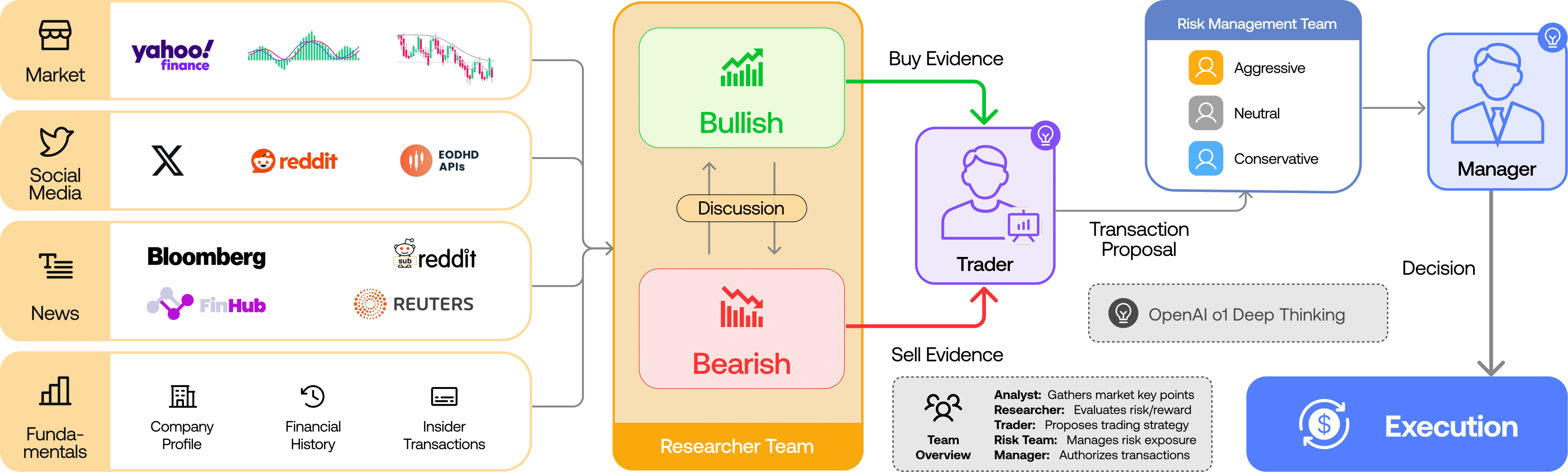
Here's what makes TradingAgents different from asking ChatGPT "should I buy NVIDIA stock." The framework deploys four types of specialized agents, each with a distinct job:
The Analyst Team — four AI agents examining different angles:
- Fundamentals Analyst — digs into financial statements (revenue, profit margins, debt levels)
- Sentiment Analyst — scans social media and news for public mood around a stock
- News Analyst — tracks macroeconomic events (interest rate changes, regulations, global trends)
- Technical Analyst — reads price charts and patterns (moving averages, trading volume, momentum)
But here's the twist: the analysts don't just hand their reports to a trader. Their insights go to a Debate Room where a "Bull Researcher" (the optimist) and a "Bear Researcher" (the pessimist) argue over the findings. This is modeled after how real hedge funds operate — they deliberately create internal disagreement to avoid groupthink.
Only after the debate does a Trader Agent synthesize everything into a decision. And even then, a Risk Manager and Portfolio Manager can veto the trade if the portfolio would become too exposed to one sector or too volatile.
Set It Up in Five Minutes
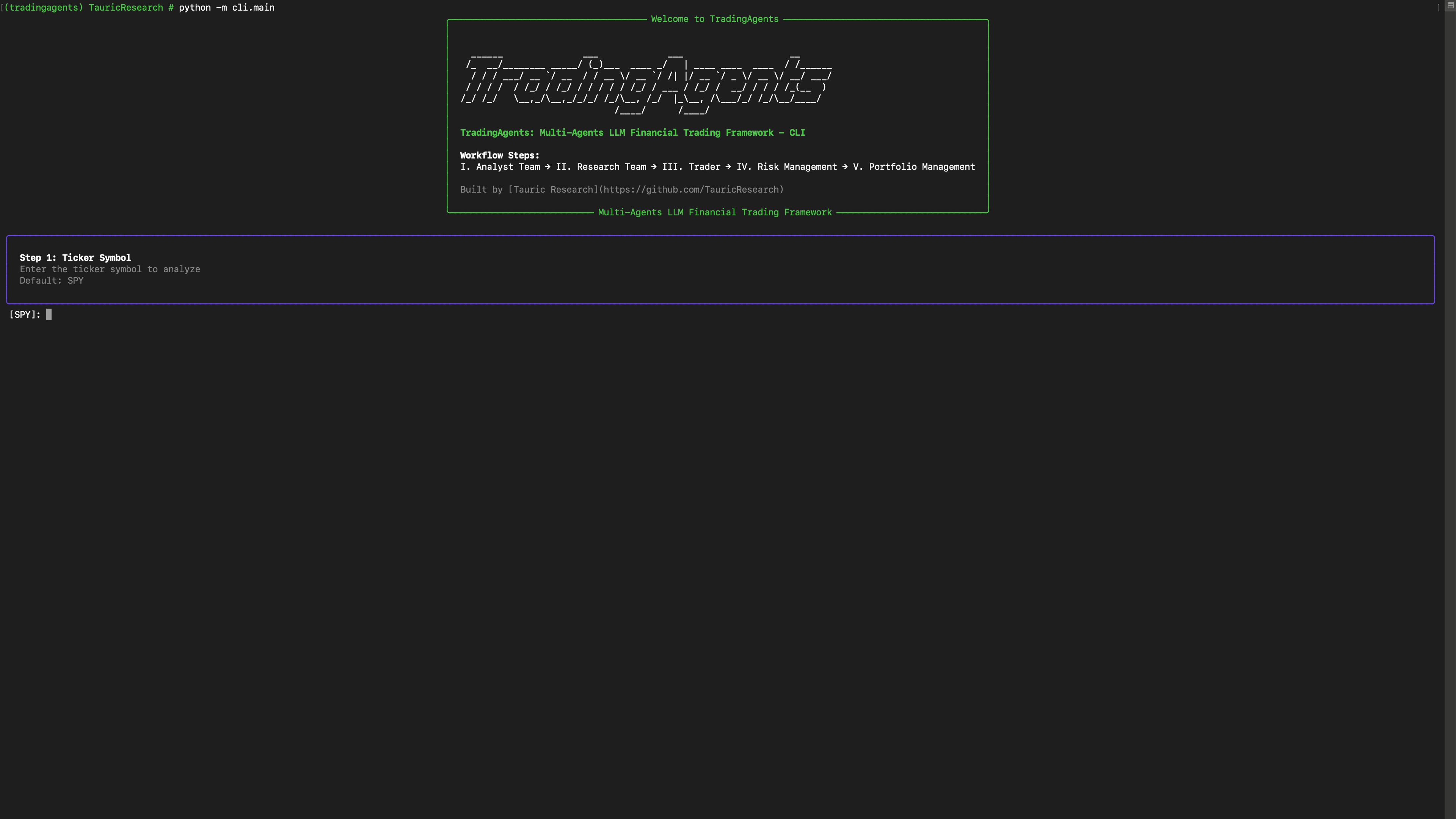
If you have Python installed, you can run TradingAgents locally. The framework supports any major AI provider — or you can use free local models with Ollama to avoid API costs entirely.
git clone https://github.com/TauricResearch/TradingAgents.git
cd TradingAgents
pip install .

# Run the interactive CLI
tradingagents
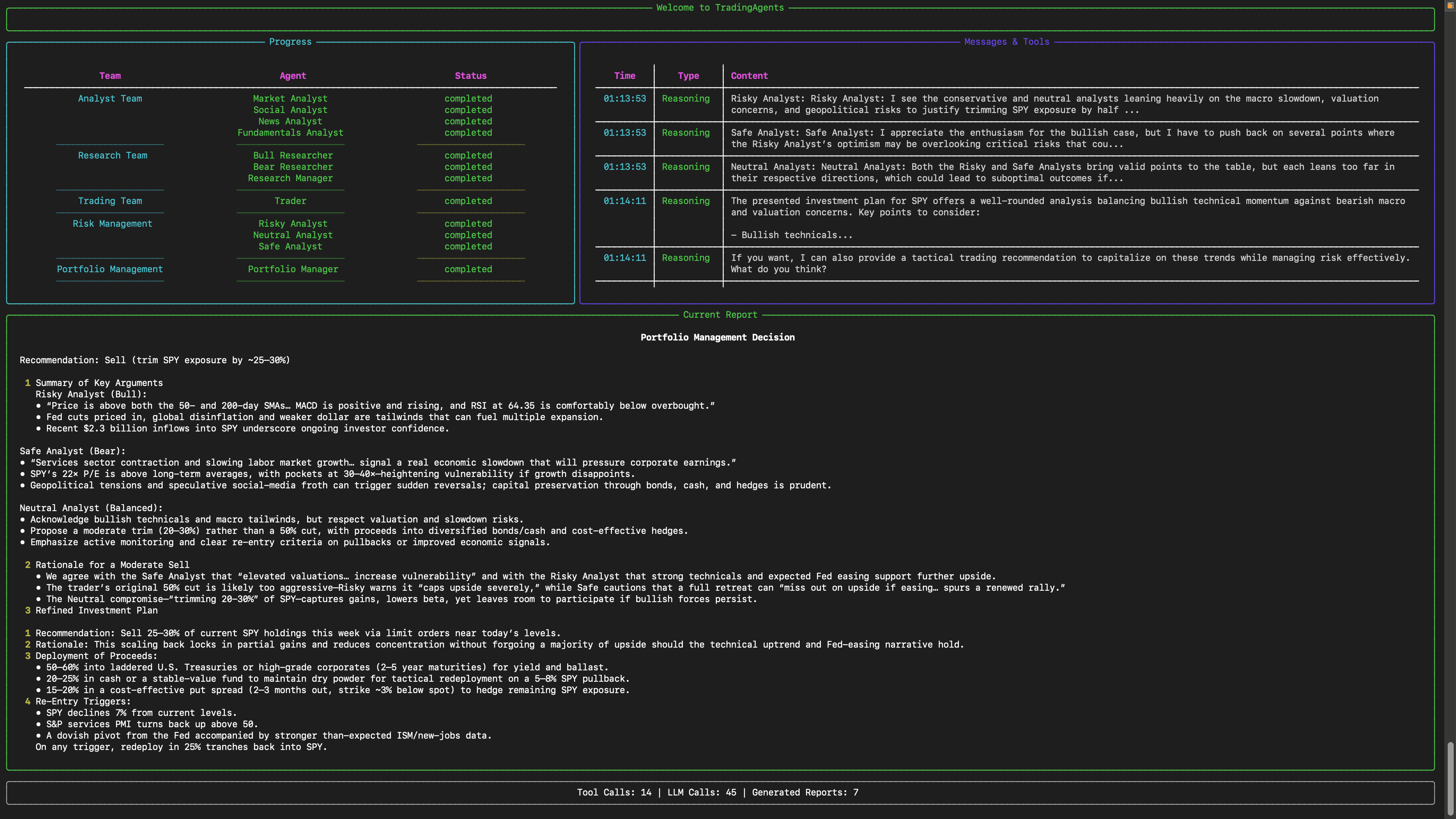
The CLI walks you through everything: pick a stock ticker (like NVDA or AAPL), choose your AI provider, set the analysis depth, and watch the agents work in real time. You'll see each analyst's report, the bull vs. bear debate, and the final trading decision with full reasoning.
Or Use It in Your Own Code
Developers can integrate TradingAgents directly into Python scripts for automated analysis:
from tradingagents.graph.trading_graph import TradingAgentsGraph
from tradingagents.default_config import DEFAULT_CONFIG

ta = TradingAgentsGraph(debug=True, config=DEFAULT_CONFIG.copy())
_, decision = ta.propagate("NVDA", "2026-01-15")
print(decision)
Who This Is Actually For
If you're curious about investing and want to see how professionals analyze stocks, this is a fascinating educational tool. Watching AI agents debate "buy vs. sell" on a stock you own is genuinely eye-opening — you see the bull case and the bear case laid out with specific data.
If you're a developer interested in multi-agent AI systems (where multiple AIs work together instead of one doing everything), this is one of the best real-world examples. At 41K+ stars with a peer-reviewed paper behind it, it's the gold standard for agent collaboration patterns.
If you're looking for a trading bot to make money — the creators are very clear: this is a research framework, not financial advice. Trading performance varies based on the AI model, market conditions, and configuration. The disclaimer explicitly states it's "not intended as financial, investment, or trading advice."
Academic Roots, Explosive Growth
TradingAgents isn't a weekend project. It started as a peer-reviewed paper presented at a multi-agent AI conference, with researchers from UCLA and Harvard. The latest version (v0.2.2, March 2026) added support for the newest AI models including GPT-5.4, Gemini 3.1, and Claude 4.6.
The project now has 41,800 stars, 7,700 forks, 18 contributors, and an active Discord community. It's licensed under Apache 2.0, meaning anyone can use, modify, and build on it freely.
The bigger picture: we're watching AI move from "answer my question" to "simulate an entire professional workflow." TradingAgents doesn't just analyze a stock — it recreates the debates, risk checks, and decision-making process of a real trading firm. That pattern is coming to every industry.
Related Content — Get Started with Easy Claude Code | Free Learning Guides | More AI News
Stay updated on AI news
Simple explanations of the latest AI developments