9.3 million office jobs are now 'high-risk' from AI
Tufts University's first-ever AI Jobs Risk Index finds 9.3M U.S. jobs at displacement risk in 2-5 years, targeting writers, programmers, and analysts.
The First Official Map of AI Job Risk in America
On March 24, 2026, researchers at Tufts University's Fletcher School released something that had never existed before: a comprehensive, data-driven index that maps exactly which American jobs are most vulnerable to being replaced by AI tools — ranked by occupation, industry, city, and state.
The report, called the American AI Jobs Risk Index, was led by Bhaskar Chakravorti, Dean of Global Business at the Fletcher School, and his team at Digital Planet (Tufts University's research lab focused on the global digital economy). It draws on 15 years of labor market data and the most current research on how AI is actually being adopted by businesses right now.
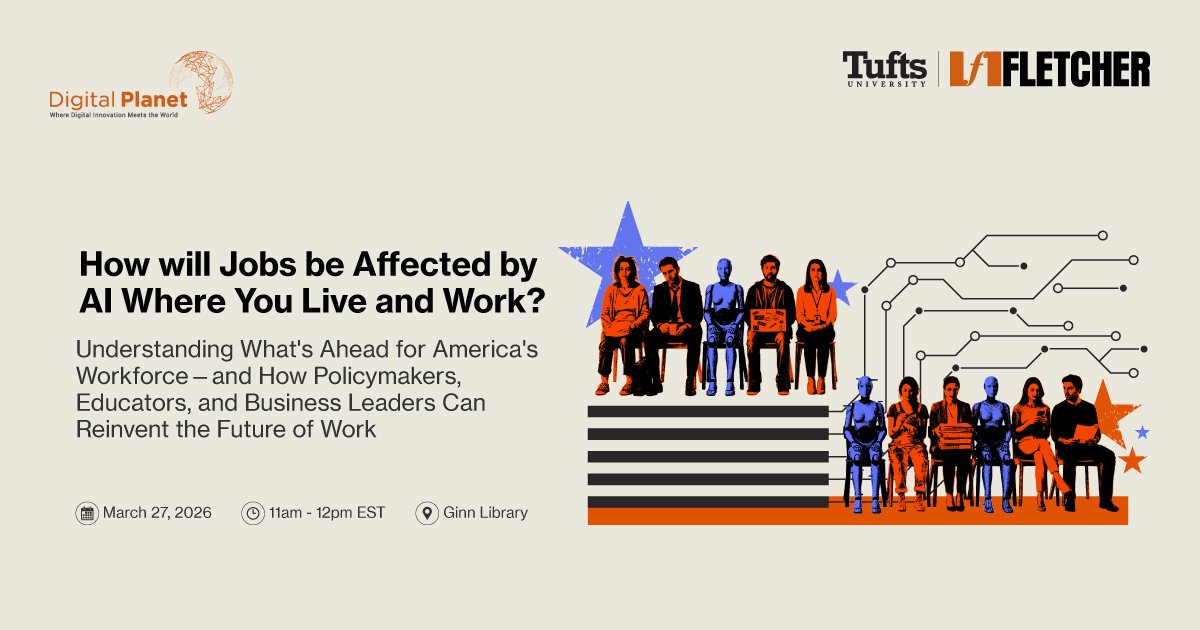
The headline finding: approximately 9.3 million U.S. jobs are at risk of displacement (permanent replacement or elimination by AI tools) within the next two to five years. Depending on how fast companies adopt AI, that number could range from a low of 2.7 million to a high of 19.5 million jobs.
Which Jobs Are Actually at Risk — and by How Much
The index does not just wave its hands at vague categories. It assigns specific displacement probability scores to nearly 800 occupations — that is, a percentage estimate of how likely each job type is to be substantially reduced or eliminated as AI adoption accelerates. Here are the highest-risk occupations:
- Historians: 67% of their tasks expected to be automatable by AI
- Writers and Authors: 57% displacement risk
- Computer Programmers: 55% displacement risk
- Web and Digital Interface Designers: 55% displacement risk
- Data Scientists and Financial Risk Specialists: similarly high exposure
In contrast, physical jobs that require hands-on work show almost no vulnerability. Roofers, welders, stonemasons, miners, and machine operators all face less than 1% displacement risk. Surgical assistants, massage therapists, and fast food workers are also in the very low-risk category.
The Industries Facing the Most Pressure
The report also breaks down risk by industry sector. While the overall average across all industries is about 6% displacement risk, certain sectors face far steeper exposure:
- Information sector (media, publishing, software): 18% industry-wide displacement risk
- Finance and Insurance: 16% displacement risk
- Professional, Scientific, and Technical Services: 16% displacement risk
These three sectors employ a significant share of college-educated white-collar workers — the exact demographic most likely to have felt safe from automation until now. The researchers point out that AI is particularly effective at augmentation (making workers more productive) in these fields, and that augmentation and displacement often go hand-in-hand: once AI makes one worker as productive as three, businesses need fewer workers.
In total, occupations vulnerable to AI-driven displacement account for an estimated $757 billion in annual U.S. wages and salaries. The broader income range at risk spans from $200 billion to $1.5 trillion per year — roughly equivalent to Belgium's entire national economy at the high end.
The Geographic Twist: Tech Cities Are the Most Vulnerable
One of the most striking findings is where the risk is concentrated geographically. You might expect that rural manufacturing towns or low-wage service areas would suffer most. The data says the opposite.
The regions of the United States most deeply invested in developing and deploying AI — Silicon Valley, Boston, Washington D.C., Seattle — also face the highest projected risk of workforce displacement from the very technology they are building.
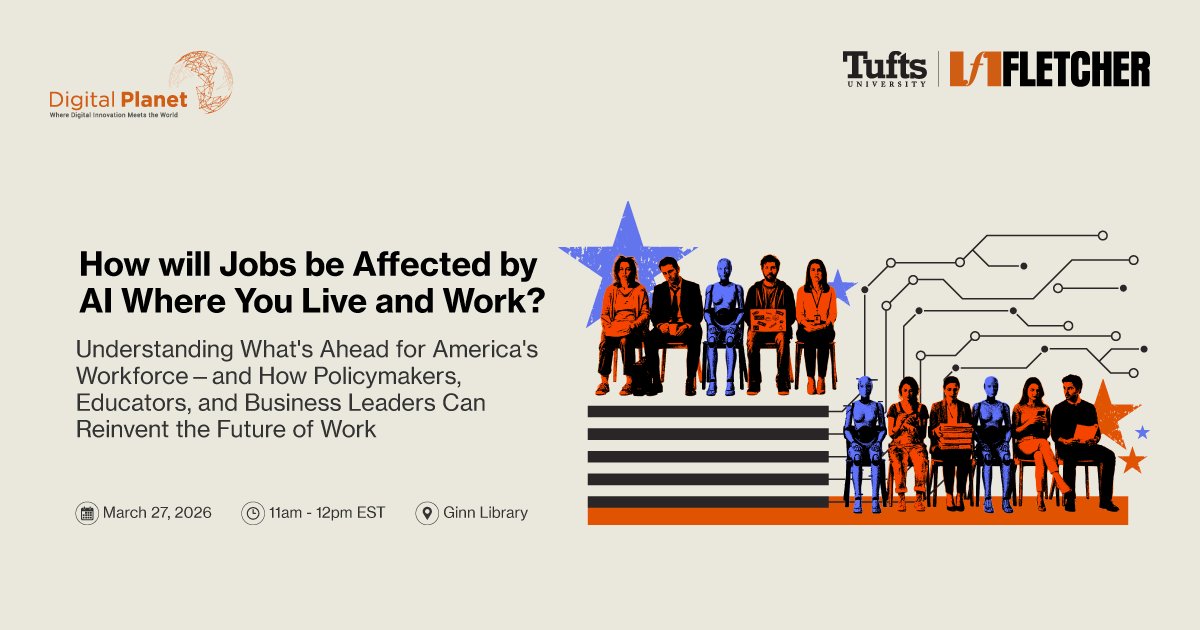
The report calls these areas the "Wired Belts" — a deliberate reference to the Rust Belt (the industrial Midwestern regions that lost millions of manufacturing jobs in previous decades). The Tufts team argues that a new wave of economic disruption is coming, but this time it will hit knowledge-economy cities instead of factory towns.
- San Jose (Silicon Valley): 9.9% of all local jobs at risk — highest of any metro area
- Washington D.C.: 11.3% at the state level — highest state-level figure
- Top vulnerable states: Massachusetts, Virginia, Maryland, Washington, Colorado
- University towns like Durham-Chapel Hill, Boulder, Ann Arbor, Ithaca, and Madison rank among the top 25 most at-risk metros
- Major income losses: New York, Los Angeles, Washington, Chicago, Dallas, San Francisco, and Boston each face at least $20 billion in projected annual income losses
The 33 "Tipping Point" Occupations to Watch
Perhaps the most actionable finding from the report is the identification of 33 "tipping point" occupations — job categories that are currently under relatively low risk but could rapidly shift to high risk depending on how fast AI adoption accelerates across their industry.
These 33 occupations account for 4.9 million workers combined. Under the slow-adoption scenario, they face less than 10% displacement risk. Under the fast-adoption scenario, that figure jumps above 40%. The difference is driven by whether employers choose to use AI to make workers more efficient (augmentation) or to reduce headcount (substitution).
Researcher Bhaskar Chakravorti summed up the situation directly: "AI is not just automating routine tasks — it is moving up, targeting the cognitive and analytical work that defines high-skill, high-wage careers."
How the Index Was Built — and Why It Matters
Earlier studies on AI job risk, including influential reports from McKinsey and the World Economic Forum, typically estimated how many job tasks could theoretically be automated. The Tufts index takes a different approach: it estimates the probability that AI exposure actually translates into real job losses, then connects those estimates to income data and geographic concentration.
The methodology (the set of rules and formulas researchers used to calculate these numbers) draws on approximately 800 detailed occupational profiles from the U.S. Bureau of Labor Statistics (BLS), layered with data on current AI capability levels and adoption rates by industry. By connecting occupation-level AI exposure to actual workforce and salary data, the index provides a more grounded estimate than theoretical task-automation studies.
The report also notes that states facing the highest AI job exposure are now legislating on AI at 4 times the rate of lower-exposure states — a sign that policymakers are already responding to the pressure, even as a December 2025 executive order directed federal challenges to some state-level AI regulations.
What This Index Means If You Work in a High-Risk Field
If you are a writer, programmer, designer, analyst, or work in finance, this report is worth taking seriously — not as a reason to panic, but as a realistic map of the terrain ahead.
A few concrete steps suggested by researchers and career experts following the report:
- Start using AI tools in your current role now — workers who can direct and validate AI output will be harder to replace than those who simply produce the same output manually
- Develop skills that require human judgment: client relationships, ethical decision-making, creative direction, and cross-disciplinary problem-solving
- Track which of the 33 "tipping point" occupations are close to your own — if your sector's AI adoption accelerates, your risk profile could change quickly
- The full interactive index and methodology is available at digitalplanet.tufts.edu
The full report, titled "Will Wired Belts Become the New Rust Belts? AI and the Emerging Geography of American Job Risk", is available publicly from the Fletcher School at Tufts University. The Futurism article covering the report frames it as the clearest signal yet that AI disruption is no longer a future concern — it is already being tracked and measured in real-time.
Related Content — Get Started with Easy Claude Code | Free Learning Guides | More AI News
Stay updated on AI news
Simple explanations of the latest AI developments