108K jobs just vanished — but AI is only 7% of the reason
January 2026 saw 108,435 job cuts — the worst since 2009. Yet only 7,624 blamed AI. Companies are using AI as cover for financial trouble.
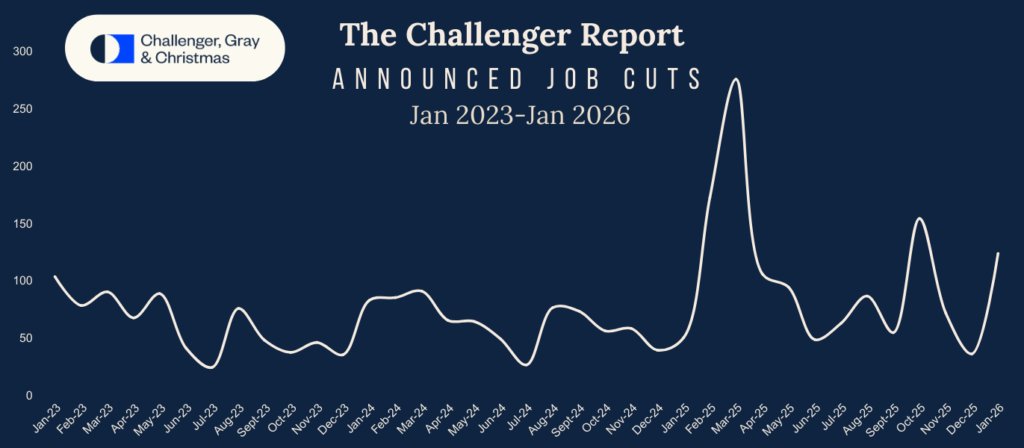
In January 2026, American employers announced 108,435 job cuts — the highest January total since the Great Recession in 2009. Headlines screamed about robots replacing workers. But dig into the data, and a very different picture emerges: only 7% of those cuts actually cited AI as the reason. The rest? Old-fashioned contract losses, market downturns, and corporate restructuring.
The real story isn't about machines taking jobs. It's about companies dressing up bad news as innovation.

The Numbers Behind the Panic
The 108,435 figure comes from Challenger, Gray & Christmas, the firm that has tracked layoff announcements since the 1990s. That number represents a 118% increase from January 2025 (49,795 cuts) and a staggering 205% jump from December 2025 (35,553 cuts).
But here's the breakdown that most headlines ignored:
- Contract loss: 30,784 cuts (28% of the total) — led by UPS eliminating 30,000 jobs as it unwound its Amazon partnership, expecting $3 billion in savings
- Market conditions: 28,392 cuts (26%)
- Restructuring: 20,044 cuts (18%) — including Amazon's 16,000-job management overhaul
- AI: 7,624 cuts (just 7%)
Remove the two mega-events — UPS and Amazon — and the month looks far less alarming. Those two companies alone accounted for 46,000 layoffs, neither driven by artificial intelligence.
The 30:1 Gap Between AI Hype and AI Reality
A Harvard Business Review survey of 1,006 global executives found something remarkable: 60% of companies made preemptive workforce cuts in anticipation of AI. But only 2% cut jobs based on actual AI implementation results. That's a 30-to-1 gap between what companies think AI will do and what it has actually done.
Researchers at Oxford Economics put it bluntly: "We suspect some firms are trying to dress up layoffs as a good news story rather than a bad one."
Nearly 60% of hiring managers privately admit they emphasize AI's role in layoffs because it sounds better than confessing to financial constraints. Wall Street rewards "AI efficiency" narratives with higher stock prices. Saying "we're cutting costs because revenue is down" doesn't have the same ring as "we're leveraging AI to transform our workforce."
Forrester Research calls this "AI washing" (the practice of exaggerating AI's involvement in business decisions to appear innovative) — and estimates that roughly half of all AI-attributed layoffs will be quietly reversed through rehiring, often offshore or at lower salaries.
Klarna: The Cautionary Tale Everyone Should Study
No company illustrates the danger better than Klarna, the Swedish buy-now-pay-later giant. In 2025, Klarna fired 700 customer service workers, proudly announcing that AI chatbots (automated programs that handle customer conversations) could do the work. CEO Sebastian Siemiatkowski became the poster child for AI-driven efficiency.
Then reality hit. Customer satisfaction cratered. Complaints surged. By early 2026, Klarna began quietly rehiring humans. Siemiatkowski admitted: "We went too far." The AI-driven cost-cutting, he conceded, "led to lower quality" and damaged customer trust.
Klarna isn't alone. The HBR survey found that 55% of employers who executed AI-driven layoffs now report regretting those decisions. The pattern is consistent: announce AI replacements for the press release, discover the technology isn't ready, rehire quietly without fanfare.
Major 2026 AI-Cited Layoffs So Far
Despite the evidence that AI washing is widespread, some of the largest companies in the world continue the pattern:
Company         | Announced Cuts | Context
----------------|----------------|---------------------------
Oracle          | 25,000         | Cloud restructuring
Amazon          | 16,000         | Management layers
Meta            | ~15,000        | 20% of workforce target
Pinterest       | 15% of staff   | AI-driven reorganization
Dow             | ~4,500         | Chemical sector downturn
HP              | 4,000–6,000    | Print division decline
Workday         | ~1,750         | SaaS market correction
CrowdStrike     | ~500           | Cybersecurity reshuffling
Chegg           | 45% of staff   | Education market collapse
CrowdStrike's CEO framed the cuts as responding to a "market and technology inflection point, with AI reshaping every industry." Whether 500 cybersecurity jobs were genuinely replaced by AI — or whether the company faced ordinary business pressures — remains unclear.
The Scarier Number Isn't 108,435
While everyone focused on layoffs, they missed the more troubling data point: only 5,306 new hires were announced in January 2026 — the lowest January total since Challenger began tracking in 2009, down 13% year-over-year.
Andy Challenger, the firm's chief revenue officer, noted: "This is a high total for January. It means most of these plans were set at the end of 2025, signaling employers are less-than-optimistic about the outlook for 2026."
The layoff tracker TrueUp paints an even grimmer picture for tech specifically: 171 separate layoff events have hit 59,121 tech workers since January 2026 — an average of 704 jobs lost per day, outpacing all of 2025's pace of 674 per day.
Meanwhile, the biggest tech companies are pouring record sums into AI infrastructure. Google plans to spend up to $185 billion on AI in 2026, roughly double its $90 billion in 2025. The money is flowing — just not toward hiring humans.

DOGE Cuts Dwarf AI Layoffs by 5 to 1
There's another elephant in the room. In 2025, government efficiency initiatives (DOGE-attributed cuts, named after the Department of Government Efficiency) accounted for 293,753 layoffs — roughly 5 times larger than AI's contribution of 54,836. Yet DOGE layoffs receive a fraction of the media attention.
Since 2023, AI has been cited in a cumulative 79,449 job cut announcements — only 3% of all US layoffs in that entire period. Even in 2025, when AI-cited cuts surged to 54,836 (over 12 times the number from two years prior), they still represented just 4.5% of the total.
The data tells a consistent story: AI is a real but relatively small factor in today's labor market disruption. The bigger forces — contract losses, government restructuring, market conditions, and plain old corporate belt-tightening — are far more responsible for the jobs vanishing from the economy.
What This Actually Means for You
If you're worried about AI taking your job, the data suggests a more nuanced reality. AI is changing how work gets done — HBR estimates 10–15% individual productivity gains from AI in programming, for example — but it is not yet the mass displacement engine that headlines suggest. The real risk right now isn't a robot sitting in your chair. It's a company using "AI" as a convenient excuse during a financial restructuring, and a hiring freeze that makes finding the next job harder than it should be.
For anyone navigating this market, the takeaway is clear: learn to work alongside AI tools rather than fear replacement by them. The companies that regret their AI layoffs — 55% of them — learned the hard way that human judgment still matters. That's your competitive advantage. Use it.
Related Content — Get Started | Guides | More News
Stay updated on AI news
Simple explanations of the latest AI developments