xAI Loses All 11 Co-Founders as Musk Admits 'Built Wrong'
All 11 xAI co-founders are gone. Elon Musk admits the $250B AI company 'was not built right' — as rivals offer departing talent $300M packages.
Elon Musk recruited 11 elite AI researchers — many from Google DeepMind, Microsoft, and OpenAI — in July 2023. He promised they'd build "truth-seeking AI." Thirty-three months later, every single one has walked away. The last co-founder, Ross Nordeen (Musk's 36-year-old right-hand operator), left on Friday, March 28, 2026.
The departure caps the most dramatic founding-team collapse in Silicon Valley history — and it's happening inside a company valued at $250 billion, sitting atop the world's largest AI supercomputer.
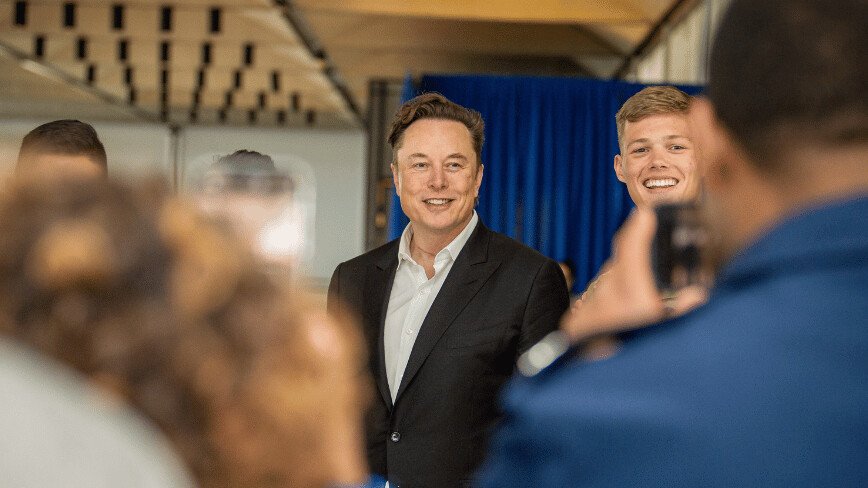
xAI: $250 Billion Raised, Zero Co-Founders Left
The numbers are staggering. xAI raised a $20 billion Series E (a single fundraising round where investors buy company shares) in January 2026, backed by Nvidia, Cisco, Fidelity, Qatar Investment Authority, and BlackRock. Tesla poured $2 billion of its own cash into xAI that same month. On February 2, SpaceX acquired xAI in an all-stock deal — the largest merger by valuation in history — creating a combined entity worth $1.25 trillion.
Then Musk told an all-hands meeting that xAI "was not built right first time around" and "is being rebuilt from the foundations up." He characterized the departures as "push, not pull" — claiming he initiated the exits rather than losing talent. As The Next Web put it: "Problems at xAI are not principally financial or infrastructural. They are organisational."
xAI Co-Founder Departures: A 33-Month Exodus Timeline
The exodus didn't happen overnight. It built momentum over nearly three years, then avalanched in early 2026:
Mid-2024   Kyle Kosic        → Left for OpenAI
Feb 2025   Christian Szegedy  → Departed
Aug 2025   Igor Babuschkin    → Left to launch a VC firm
Jan 2026   Greg Yang          → Departed (health reasons)
Feb 10     Tony Wu            → Reasoning team lead, resigned
Feb 11     Jimmy Ba           → Left within 24 hours of Wu
Mid-Mar    Manuel Kroiss      → Pretraining team lead, gone
Mar 28     Ross Nordeen       → Last co-founder out the door
─────────────────────────────────────
Result:    11 of 11 co-founders gone (100%)
Jimmy Ba's departure stung especially hard. He co-authored the Adam optimization paper (a foundational algorithm used to train virtually every modern AI model) — one of the most-cited AI papers ever with over 95,000 citations. On his way out, Ba posted on X that he would "continue to stay close as a friend of the team." The diplomatic tone barely masked the damage.
The C-suite (top executive leadership) losses extend beyond co-founders. xAI has also lost its general counsel, CFO, head of product engineering, and former X CEO Linda Yaccarino, who departed in July 2025 with her position still unfilled.
World's Largest GPU Cluster — Nobody to Lead It
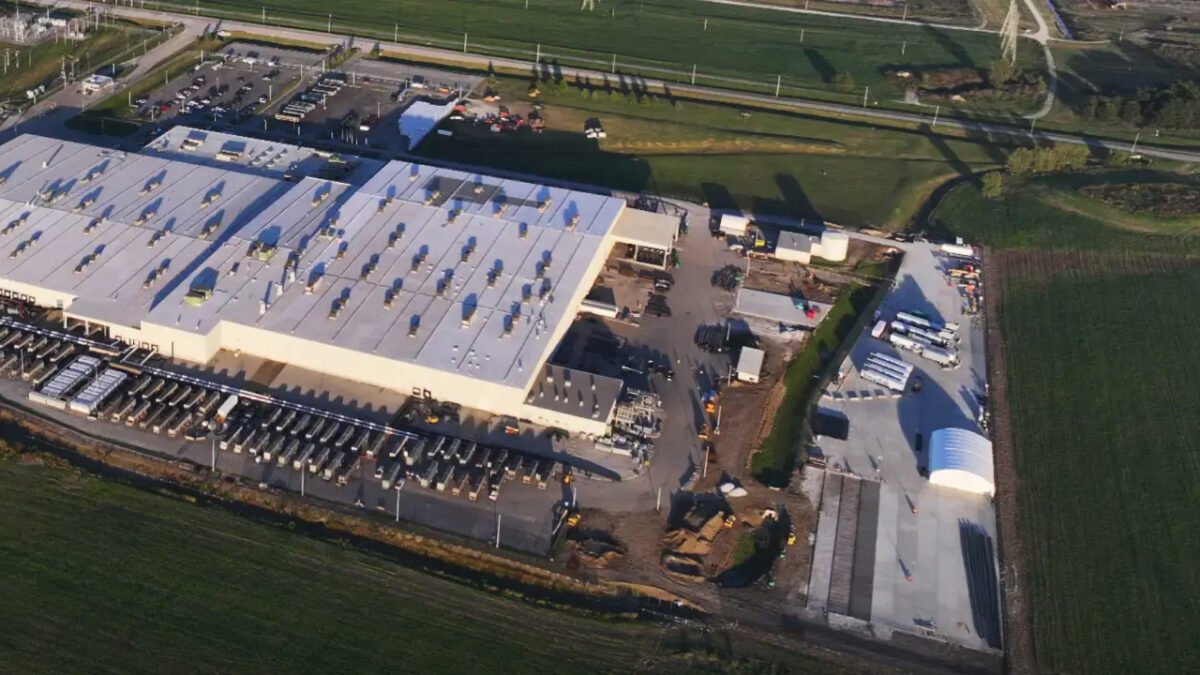
Here's the irony that makes this story extraordinary. xAI's Colossus supercomputer in Memphis houses 230,000+ GPUs (graphics processing units — the specialized chips that power AI training), including 30,000+ next-generation GB200 Blackwell chips from Nvidia. Colossus 2 is coming online with 550,000 Blackwell chips. A third site, codenamed "MACROHARDRR," has been acquired in Southaven, Mississippi. Total capacity: 2 gigawatts. The goal: 1 million GPUs by late 2026.
That makes xAI's infrastructure the largest AI compute cluster on Earth. But as any AI automation practitioner knows, raw hardware without research leadership is like owning the world's fastest car with no driver. xAI is currently training Grok 5, but the researchers who built Grok's earlier generations are all gone.
Grok AI's Competitive Gap vs Claude Code and ChatGPT
The product numbers tell the story. Grok — xAI's chatbot — trails both Claude Code (from Anthropic) and OpenAI's Codex significantly on coding benchmarks (standardized tests measuring how well AI writes and debugs code). Musk himself publicly acknowledged this gap. One developer summarized community sentiment bluntly: "Claude is 2x better than OpenAI and 3-4x better than Grok" in coding consistency.
For comparison, Anthropic's Claude Sonnet 4.6 scores 72.7% on SWE-bench (a benchmark that tests AI on real-world software engineering tasks). Grok is substantially behind. GitHub chose Claude Code — not Grok — to power its Copilot coding assistant.
The $300M AI Talent War xAI Is Losing to Meta and OpenAI
Where are xAI's former co-founders going? Straight into the arms of competitors offering record-breaking compensation. Meta has reportedly offered packages worth up to $300 million over 4 years to poach top AI talent. OpenAI, Google DeepMind, and Anthropic are all aggressively recruiting.
Several xAI co-founders originally came from DeepMind — Igor Babuschkin, Greg Yang, and Tobias Pohlen among them. DeepMind has been actively recruiting them back. The AI talent market has never been hotter, and xAI's instability is a recruiter's dream.
Meanwhile, Tesla shareholders are suing Musk for breach of fiduciary duty (the legal obligation to act in shareholders' best interest) over the $2 billion xAI investment. They watched Tesla money flow to xAI just weeks before Musk admitted the company needed to be "rebuilt from the foundations up." Adding to investor anxiety: SpaceX is targeting a mid-2026 IPO (initial public offering — the first time a company sells stock to the public) at a potential $1.75 trillion valuation, but the complete absence of xAI's founding brain trust complicates the narrative.
Can Elon Musk's $20B Buy xAI a Second Chance?
xAI is not short on capital. Between the $20 billion Series E, Tesla's $2 billion, and a prior $6 billion round in December 2024, Musk has near-unlimited resources. He's also building at a pace no competitor can match — 1 million GPUs by year's end would dwarf anything at OpenAI or Google.
But the question isn't whether Musk can buy his way back. It's whether a complete founding-team exodus — 11 for 11 — signals something deeper about xAI's organizational culture. As The Next Web's analysis concluded, the problems are not financial or infrastructural. They're about how the company is run.
Musk told remaining employees that some people are "better suited for the early stages of a company and less suited for the later stages." That framing may comfort internal morale, but it doesn't explain why every single person who started the journey decided the later stages weren't for them. If you're tracking the latest AI news, the people who understand the foundation matter — especially when you're admitting the foundation was wrong.
Related Content — Get Started | Guides | More News
Stay updated on AI news
Simple explanations of the latest AI developments