OpenAI Loses $14B a Year as Altman Promises AI Deflation
OpenAI loses $1.69 for every $1 earned — yet Sam Altman claims AI automation will make everything radically cheaper. Here's the uncomfortable math.
Sam Altman, CEO of OpenAI, stood in front of a room full of anxious developers in San Francisco on January 27, 2026, and made a promise that sounded almost too good: AI automation will create "massively deflationary pressure," making everything radically cheaper and your money worth vastly more. By year's end, he claimed, just $1,000 spent on AI inference (the cost of running an AI model to generate output) could complete software that previously required a whole team working for an entire year.
Two months later, Altman told Fortune the quiet part out loud: "Nobody knows what to do" about AI killing the labor-capital balance. The next few years, he admitted, will be "a painful adjustment."
Here's the uncomfortable math behind his promise.
OpenAI Loses $1.69 on Every Dollar While Promising AI Deflation
OpenAI hit $25 billion in annualized revenue (the yearly income if current monthly earnings hold steady) by February 2026. Impressive — until you see the other side of the ledger. The company's own internal projections show $14 billion in losses for 2026 alone, with cumulative losses ballooning to $115 billion through 2029.
That means OpenAI loses approximately $1.69 for every $1 it earns. It has pledged a staggering $1.4 trillion in capital expenditures (spending on data centers, servers, and infrastructure) over eight years. The company won't turn cash-flow positive (earning more than it spends) until 2030 at the earliest.
As Bernstein Research analyst Stacy Rasgon put it: Altman "has the power to crash the global economy for a decade or take us all to the promised land… right now, we don't know which is in the cards."
The Deflation Paradox: AI Gets Cheaper While Making Itself Expensive
Altman's core thesis sounds intuitive: AI automates work, productivity surges, costs drop, prices fall. McKinsey estimates AI efficiency gains could drag consumer prices down by 0.5–0.7 percentage points annually, potentially anchoring long-run inflation (the rate at which everyday prices rise over time) near 1.8% — below the Federal Reserve's 2% target.
But building AI is itself wildly inflationary. Tier IV data center construction costs (the highest-grade server facilities that power AI) have surged 35% since 2020. Power-distribution equipment is up 45%. Regional electricity prices in AI hub areas have climbed 10–18% year-over-year. Each generative AI query consumes 5–10 times more energy than a standard Google search.
The International Energy Agency projects data center electricity consumption will more than double by 2030. So while AI might make your software cheaper, it's making the electricity, construction, and hardware that runs AI significantly more expensive. That's a contradiction Altman hasn't addressed.
"I Was Wrong" — AI Automation Came for White-Collar Jobs First
Perhaps the most revealing admission Altman has made: "I thought AI would come for blue-collar work first. I was wrong."
Instead, AI is displacing cognitive and creative work — software engineering, graphic design, data analysis, management consulting — the very jobs its creators hold. The numbers back him up:
- McKinsey: Up to 30% of hours currently worked could be automated by 2030
- OECD: 27% of jobs across member nations are "highly exposed" to AI automation
- Forrester Research: AI could eliminate 6% of all US jobs by 2030
- US Senate report: AI could wipe out 100 million US jobs within a decade
Long-term unemployment in the US has already hit a four-year high in 2026. Investor Howard Marks summarized the mood: "I find the resulting outlook for employment terrifying."
If you work in a knowledge-economy role (a job centered on thinking, writing, or analyzing rather than physical labor), this isn't a distant threat. It's already reshaping hiring decisions, salary negotiations, and career paths. Our beginner's guide to AI tools can help you start adapting now — before the market forces you to.
OpenAI's $1.4 Trillion AI Automation Bet That Can't Afford to Fail
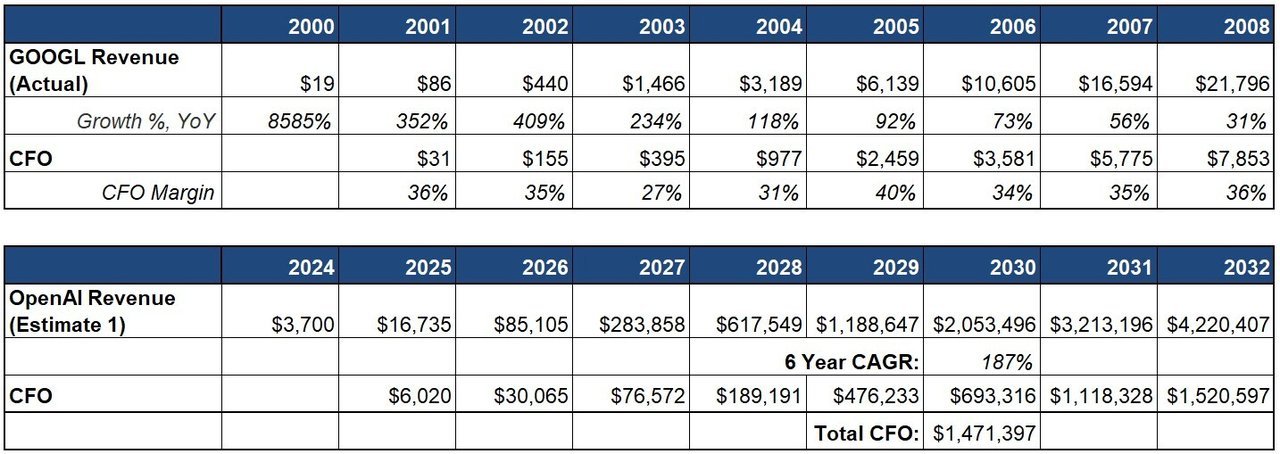
OpenAI's $1.4 trillion infrastructure commitment over eight years is unprecedented for any company, let alone one that isn't profitable. For context: OpenAI needs Google-era revenue growth rates (190%+ annually) to cover that commitment — but faces far more competition than early Google ever did, from Anthropic's Claude, Google's Gemini, Meta's LLaMA, and fast-moving open-source alternatives like DeepSeek.
Altman's deflation pitch isn't just an economic forecast — it's a fundraising narrative. If investors stop believing AI will transform the global economy, OpenAI's financial model collapses. When skeptical investors have questioned the math, Altman has responded bluntly: "If you want to sell your shares, I'll find you a buyer."
Meanwhile, other tech leaders are making equally sweeping claims. Marc Andreessen says AI will "make everything so cheap, it'll break the economy." Elon Musk predicts "no poverty in future, no need to save money." Anthropic CEO Dario Amodei warns AI will function as a "general labor substitute for humans."
None of them have explained what happens to the 100 million workers who might be displaced along the way.
The Uncomfortable Truth for Your Wallet and Career
The honest answer is Altman's own: nobody knows. The Federal Reserve still cites "elevated" inflation concerns, and US consumer prices aren't expected to normalize until end of 2027. The deflationary future Altman describes may eventually arrive — but the path there could be brutal.
By 2035, AI could account for 60–70% of total US productivity growth, effectively anchoring inflation to computational costs (the price of running AI hardware) rather than labor costs. That's a fundamental rewiring of the economy that hasn't happened since the Industrial Revolution (the 18th-century shift from hand production to machine manufacturing).
For now, the safest bet is preparation. Whether you're a developer, designer, analyst, or marketer, learning to work alongside AI tools isn't optional anymore — it's career insurance. The question isn't whether AI will reshape the economy. It's whether the people making trillion-dollar bets on that future can actually deliver without crashing everything first.
Related Content — Get Started | Guides | More News
Stay updated on AI news
Simple explanations of the latest AI developments