Arm AGI CPU: First Chip in 35 Years, Meta Co-Developed
Arm's first-ever chip in 35 years: 136 Neoverse cores at 300W vs Intel's 500W. Meta co-developed it, OpenAI signed up. Stock surged 16%.
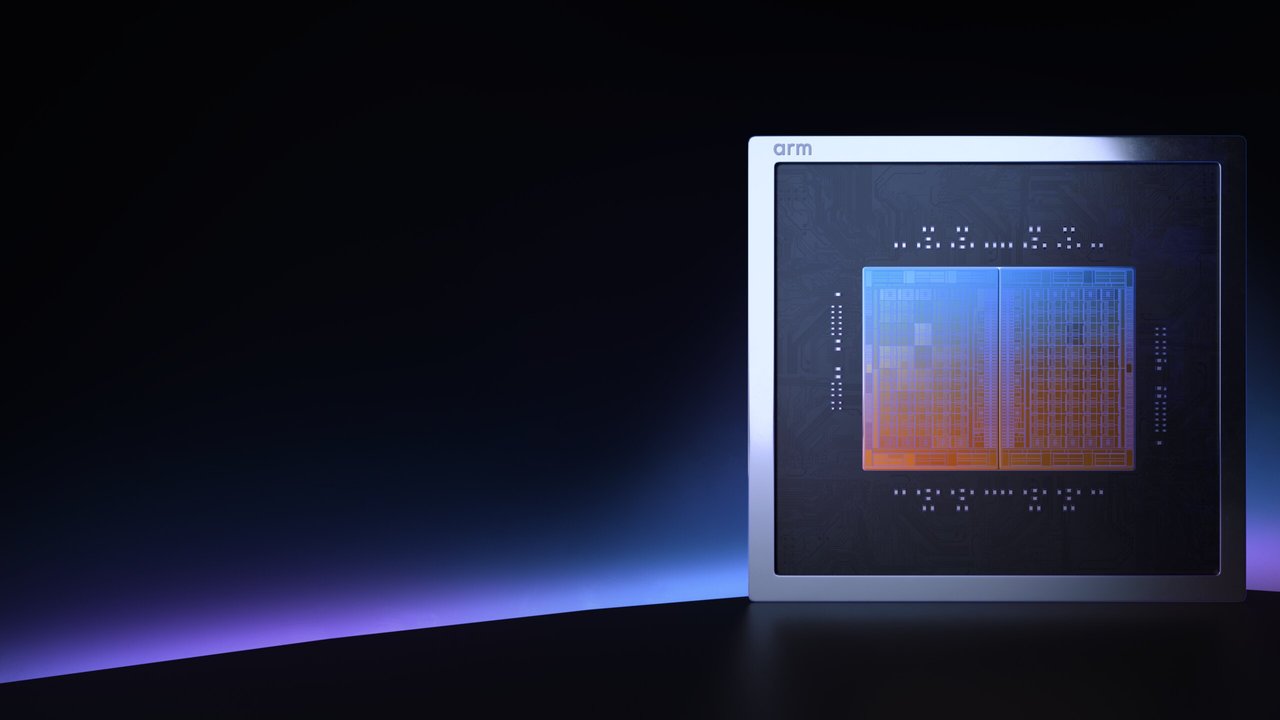
For 35 years, Arm Holdings was the Switzerland of the semiconductor world — it designed chip blueprints (called instruction set architectures, the fundamental rules that tell a processor how to execute software) and licensed them to Apple, Nvidia, Qualcomm, and Amazon, who then built their own silicon. Arm never competed with its own customers. Until now: the Arm AGI CPU marks the company's first data center chip in its 35-year history.
On March 24, 2026, Arm unveiled the AGI CPU — a 136-core data center processor built on TSMC's 3nm process (the most advanced chip manufacturing technology available today). Meta co-developed it. OpenAI, Cloudflare, and Cerebras have already signed up. And Arm's stock surged 16.4% in a single day.
From Blueprint Seller to AI Chip Maker
Arm CEO Rene Haas spent $71 million over 18 months quietly building three new lab rooms at Arm's Austin, Texas campus. The team grew from a small skunkworks project to over 1,000 engineers. The result is Arm's first production chip in the company's entire 35-year history — and it's aimed directly at Intel and AMD's most profitable market: data centers.
"The next phase of the Arm compute platform and a defining moment for our company," Haas said at the San Francisco launch event. That's corporate-speak for: we're no longer just the blueprint company.
The business math is striking. Arm currently generates about $4 billion in annual revenue, mostly from licensing fees with profit margins above 95%. Its new target: $25 billion in total revenue with $9 adjusted earnings per share by 2031 — a 6x increase. Chip sales alone are expected to contribute $15 billion of that, with volume shipments beginning in the second half of 2026 and chip revenue projected to hit roughly $1 billion by 2028.
136 Cores at Half the Power of Intel
The AGI CPU packs 136 Neoverse V3 cores (Arm's highest-performance server core design) running at 3.2 GHz all-core and 3.7 GHz boost. For context, AMD's competing EPYC 9755 tops out at 128 cores and 2.7 GHz all-core, while Intel's Xeon 6 manages 128 cores at just 2.3 GHz.
But the real headline is power consumption. The AGI CPU draws 300 watts — compared to 500W for equivalent x86 chips (the traditional processor architecture used by Intel and AMD) from both competitors. That's 40% less electricity for equal or better performance.
The Spec Sheet
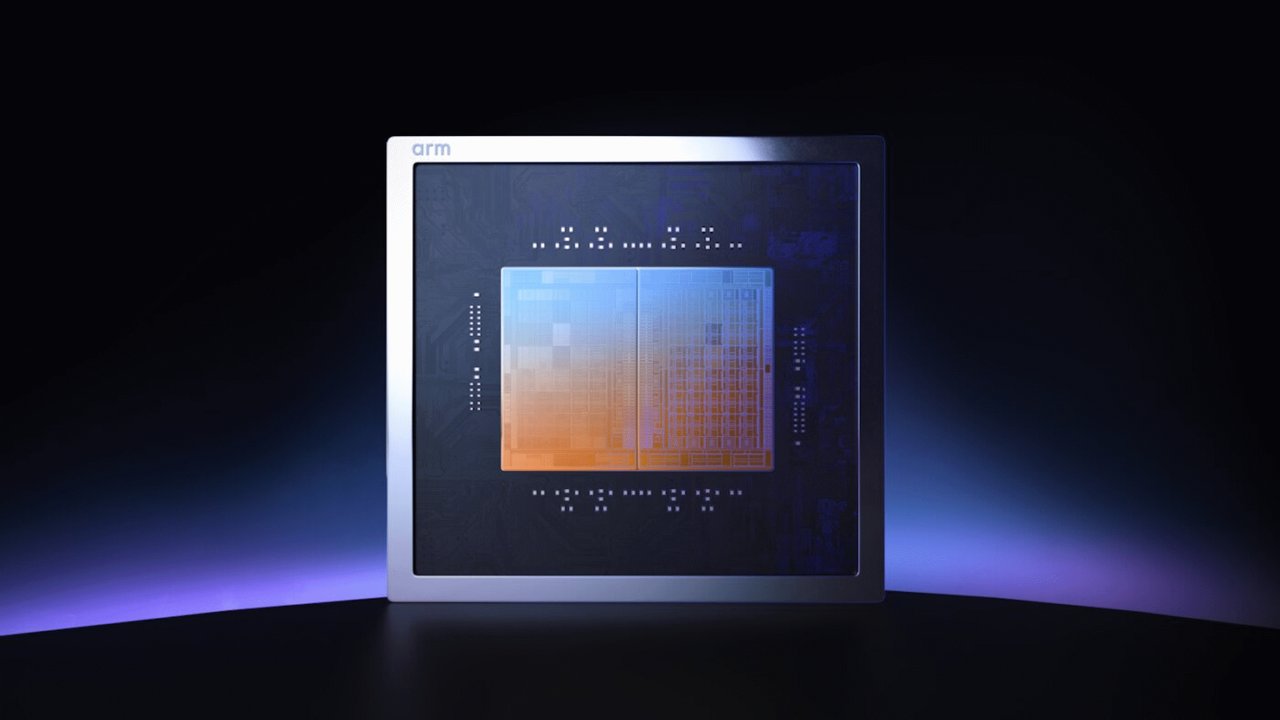
- Cores: 136 Neoverse V3 (Arm's most powerful server core)
- Process: TSMC 3nm (the smallest, most power-efficient manufacturing node available)
- Power: 300W TDP (thermal design power — the maximum heat output under full load)
- Memory: 12 channels DDR5 at 8800 MT/s, delivering 800+ GB/s bandwidth
- Connectivity: 96 PCIe Gen6 lanes (the fastest data transfer interface for servers) plus CXL 3.0 support
- Clock speed: 3.2 GHz all-core / 3.7 GHz boost
At the rack level, Arm claims air-cooled configurations can pack 8,160 cores at 36kW, while liquid-cooled racks scale to over 45,000 cores. The company says this delivers 2x the performance per rack versus equivalent x86 platforms — potentially saving $10 billion in capital expenditure per gigawatt of data center capacity.
Important caveat: No independent benchmarks exist yet. All performance claims come from Arm itself. Until third-party testing confirms these numbers, treat them as marketing projections, not verified results.
Meta Built It, OpenAI Wants It
Meta Platforms didn't just sign a purchase order — it co-developed the chip alongside Arm. Santosh Janardhan, Meta's head of infrastructure, said the company "worked alongside Arm to develop the Arm AGI CPU to deploy an efficient compute platform that significantly improves our data center performance density."
Meta plans to pair the AGI CPU with its proprietary MTIA chips (Meta Training and Inference Accelerator — custom silicon Meta built specifically for running its AI models). The combination targets what Meta sees as the next era of AI infrastructure: agentic AI workloads (AI systems that act autonomously on behalf of users, making decisions and completing tasks without constant human oversight).
Beyond Meta, seven more launch customers have committed: OpenAI, Cerebras, Cloudflare, F5, SAP, SK Telecom, Positron, and Rebellions. The ecosystem support list reads like a who's-who of tech: Broadcom, Marvell, Nvidia, Lenovo, AWS, Google, Microsoft, and Samsung are all on board.
Industry analysts project that CPU demand for agentic AI will jump 4x — from 30 million to 120 million cores per gigawatt — creating the exact market Arm is targeting. The total addressable market (the total potential revenue opportunity) for data center CPUs is estimated at $60–100 billion by decade's end.
The Most Controversial AI Chip Name of 2026
Arm named its chip the "AGI CPU." In the tech world, AGI stands for Artificial General Intelligence — the theoretical future AI that matches or exceeds human-level thinking across every domain. Arm's chip is... a CPU. A very good CPU, but a conventional processor with no novel AI-specific hardware.
The Hacker News community was not impressed. One commenter wrote that the name is "bordering on securities fraud. When people see the term 'AGI' now, they are assuming Artificial General Intelligence." Another noted: "This is just a Neoverse CPU that Arm will manufacture themselves at TSMC and then sell directly to customers. It isn't an 'AI' CPU. There is nothing AI about it."
The naming is clearly calculated — designed to ride the AI hype wave and capture investor attention. Given Arm's stock jumped 16.4% to $157.07 on announcement day (hitting an intraday high of $166.69), the marketing strategy appears to be working, at least on Wall Street. Barclays raised its price target from $165 to $200, and Evercore ISI went from $170 to $227.
A $25 Billion Bet Against Your Own Customers
Here's the tension Arm can't escape: by building its own chips, it's now competing directly with the companies that made it a $150 billion company. Apple builds its own Arm-based M-series chips. Nvidia uses Arm architecture for its Grace CPU. Qualcomm just launched Arm-based PC processors. Amazon's AWS has its Graviton line. Google has Axion. Microsoft is developing its own Arm server chips.
Every one of these companies pays Arm licensing fees. Every one of them now faces a competitor wearing a friendly mask.
Qualcomm has allegedly filed legal claims of "improper interference" with customer relationships. The risk is real: if major cloud providers who already build their own Arm-based chips refuse to adopt a competing Arm-branded product, the $15 billion revenue target becomes unreachable.
There's also a margin problem. Arm's licensing business runs at 95%+ profit margins — among the highest in the entire semiconductor industry. Manufacturing physical chips at TSMC involves silicon costs, packaging, testing, and logistics that will dramatically compress those margins. Arm is trading a high-margin business model for a high-revenue, lower-margin one — and the market hasn't decided yet whether that's genius or reckless.
Arm-based processors already represent roughly 40% of the cloud data center CPU market, with over 1 billion Neoverse cores deployed globally. Arm's most recent quarterly revenue hit $1.24 billion (up 26% year-over-year), with record royalty income of $737 million. The company doesn't need to make chips to grow. But Rene Haas is betting that licensing alone can't reach $25 billion — and that the accelerating AI infrastructure buildout creates a once-in-a-generation opportunity to grab a bigger slice.
Whether this is a visionary pivot or an overreach that alienates Arm's own ecosystem will become clear when those first chips ship in the second half of 2026. Until then, Meta's endorsement — and OpenAI's signature — suggest the industry is willing to bet alongside Arm. For those exploring how AI automation reshapes the tools we rely on, this is the kind of infrastructure shift that changes everything running underneath.

Related Content — Get Started | Guides | More News
Stay updated on AI news
Simple explanations of the latest AI developments