Nvidia AI Chips Smuggled to China: $2.5B Super Micro Scandal
Super Micro co-founder arrested for smuggling $2.5B in banned Nvidia AI chips to China's military. SMCI stock crashed 33%, wiping out $6.5B in a single day.
On March 19, 2026, FBI agents arrested Yih-Shyan "Wally" Liaw — the 71-year-old co-founder of Super Micro Computer (a major server manufacturer that builds AI infrastructure for data centers worldwide) — on charges of orchestrating a $2.5 billion smuggling operation that funneled restricted Nvidia AI chips directly to China. The same chips the U.S. government banned from export to prevent China's military from building advanced AI weapons systems.
The result: SMCI stock crashed 33% in a single day, wiping out $6.5 billion in market value. Short-sellers pocketed $860 million. And Congress is now fast-tracking legislation to embed GPS-like tracking inside every exported AI chip.

How Super Micro Smuggled Banned Nvidia AI Chips: Hair Dryers and Fake Warehouses
The DOJ indictment (a formal criminal charge issued by a grand jury) reads like a spy thriller. Liaw co-founded Super Micro in 1993 and helped build it into one of the world's largest AI server companies. He left after a 2018 accounting scandal, returned in 2021, and by 2024 was allegedly running one of the most brazen export control violations in U.S. tech history.
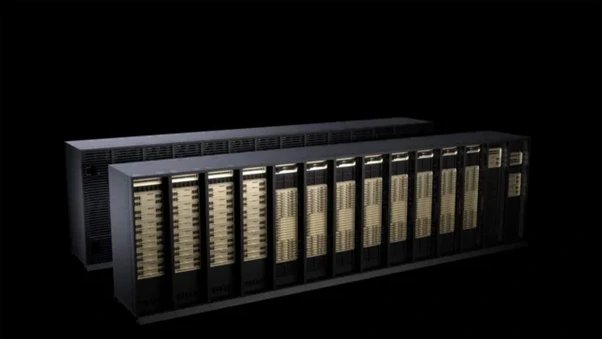
The scheme worked like this: servers loaded with restricted Nvidia A100, H200, and B200 GPUs (graphics processing units — the specialized chips that power AI model training, each worth $25,000–$30,000) were shipped from the U.S. to Taiwan. From there, they were rerouted to a shell company (a company that exists only on paper to hide true ownership) in Malaysia or Singapore. Workers then repackaged the servers in unmarked boxes with serial numbers removed before shipping them to mainland China.
How were the serial numbers removed? According to surveillance footage from a December 2025 government inspection, logistics contractor Ting-Wei "Willy" Sun was caught using a hair dryer to peel off serial number stickers from real servers — and reapply them onto hundreds of non-functional "dummy" servers staged in warehouses to fool auditors.
Speaking of auditors: during a 2024 compliance check, the operation's "friendly" auditor was reportedly "off-site enjoying entertainment paid for" by the shell company. The auditor never inspected the actual inventory.
"Speed These Up Before May 13": The $510M Nvidia AI Chip Rush to China
The most damning evidence may be Liaw's own text messages. When the Trump administration announced new AI export restrictions (rules that limit which technology can be sold to foreign countries) taking effect May 13, 2025, Liaw texted his co-conspirators:
"We need to speed these up before May 13!"
In just six months — from April to mid-May 2025 — the network diverted $510 million worth of servers. The Southeast Asian shell company became Super Micro's 11th largest customer globally in fiscal year 2024, generating $99.7 million in revenue — a red flag that apparently went unnoticed internally.
Liaw's co-defendant Ruei-Tsang "Steven" Chang, the Taiwan general manager, fled to Asia and remains a fugitive. Sun was arrested. Each defendant faces up to 20 years in prison per count for conspiracy to violate the Export Controls Reform Act (ECRA — the law governing what U.S. technology can be exported and to whom).
Chinese Military Universities Publicly Bought Banned Nvidia A100 AI Chips
Perhaps the most disturbing detail isn't the smuggling itself — it's what happened on the receiving end.
Public procurement documents reveal that at least four Chinese universities with direct military ties purchased Super Micro servers containing restricted Nvidia A100 chips between 2025 and early 2026. Two have been publicly identified:
- Beihang University — announced on March 16, 2026, the purchase of a machine-learning workstation with 4 Nvidia A100 chips from Super Micro
- Harbin Institute of Technology (HIT) — acquired a system with 8 Nvidia A100 chips via a July 2025 procurement notice, for missile, satellite, and robotics research
Both institutions belong to China's "Seven Sons of National Defense" — a group of seven public universities directly affiliated with China's Ministry of Industry and Information Technology that serve the People's Liberation Army (PLA, China's military forces). Both have been on the U.S. Entity List (a trade blacklist that restricts exports) since 2019–2020, with a presumption of denial for any license applications.
The universities weren't hiding their purchases. They posted public procurement notices — documents that anyone with an internet connection could read. The discovery came not from intelligence agencies, but from researchers reviewing publicly available Chinese procurement databases. If you're interested in how AI hardware shapes access to powerful tools, our AI guides break down the fundamentals.
SMCI Stock Crashes 33%: Wall Street's $6.5 Billion Reckoning

When the indictment was unsealed, SMCI stock plummeted from $31.50 to $20.53 — a 33% single-day crash that wiped approximately $6.5 billion from the company's market capitalization (the total value of all outstanding shares). The stock is now down 81.5% from its all-time highs.
Short-sellers (investors who profit when a stock price falls) had been betting heavily against Super Micro. They placed $2.6 billion in short positions before the news broke. On the day of the crash alone, they collected an estimated $860 million in profits, pushing their total March 2026 gains to nearly $1 billion.
Super Micro itself was not named as a defendant — the company claims to be a victim and has terminated both Chang and Sun. But this isn't Supermicro's first brush with sanctions violations. Between 2001 and 2003, the company illegally exported servers to Iran through the UAE, resulting in approximately $455,000 in fines. This time, the amounts involved are 5,000 times larger.
Chip Security Act: Congress Pushes GPS Tracking in Every Exported Nvidia AI Chip
The fallout extends well beyond one company. On March 26, 2026, the House Foreign Affairs Committee advanced the Chip Security Act (H.R. 3447), which would require manufacturers to embed location-verification mechanisms (essentially GPS-like tracking technology) inside every exported AI chip.
This represents a radical shift from the current system, which relies on paper-based export licensing — the same system that failed to stop $2.5 billion in chips from reaching Chinese military labs.
"If we're going to export advanced AI chips, we need confidence that they don't end up in the hands of the Chinese military," said Rep. Brian Mast (R-FL), chairman of the House Foreign Affairs Committee.
Meanwhile, Senators Jim Banks (R-IN) and Elizabeth Warren (D-MA) — an unusual bipartisan pairing — called on Commerce Secretary Howard Lutnick to pause all export licenses for advanced Nvidia AI chips to China and Southeast Asian intermediaries until new safeguards are in place.
The Super Micro case also dwarfs the December 2025 "Operation Gatekeeper," in which the DOJ dismantled another Chinese-linked chip smuggling network and seized $50 million in Nvidia technology — a bust that's now 50 times smaller than the Super Micro scheme.
How Three U.S. Export Control Rounds Failed to Stop Nvidia AI Chip Smuggling to China
The U.S. has tightened AI chip export controls three times — in October 2022, October 2023, and May 2025. Each round was circumvented through increasingly sophisticated shell company networks. China's domestic alternatives (like Huawei's Ascend 910B processor) remain an estimated 1–2 generations behind Nvidia's A100 and H100 chips in AI training performance, which explains the enormous demand for smuggled hardware.
James Smith, a former Department of Commerce official, put it bluntly: "This was not a case of paperwork errors or ambiguous regulations. The indictment describes a deliberate, well-organized operation to circumvent controls that are central to US national security strategy."
The Chip Security Act still needs to pass the full House, Senate, and receive presidential approval. Nvidia has not been accused of any wrongdoing and maintains it complies with all export controls. And the Trump administration has sent mixed signals — easing some chip restrictions in December 2025 while the DOJ simultaneously prosecuted smuggling rings.
But the central question remains: if blacklisted Chinese military universities were publicly posting procurement notices for banned American AI chips in 2026, how many similar purchases went completely unnoticed? For ongoing coverage of how AI hardware and policy shape the tools you use every day, follow our latest AI news.
Related Content — Get Started | Guides | More News
Stay updated on AI news
Simple explanations of the latest AI developments