Google Stitch Free AI Design Tool — Figma Stock Drops 12%
Google Stitch is now free: 350 AI UI designs/month, voice input & code export. Figma lost 12% in 48 hours. What it means for designers and developers.
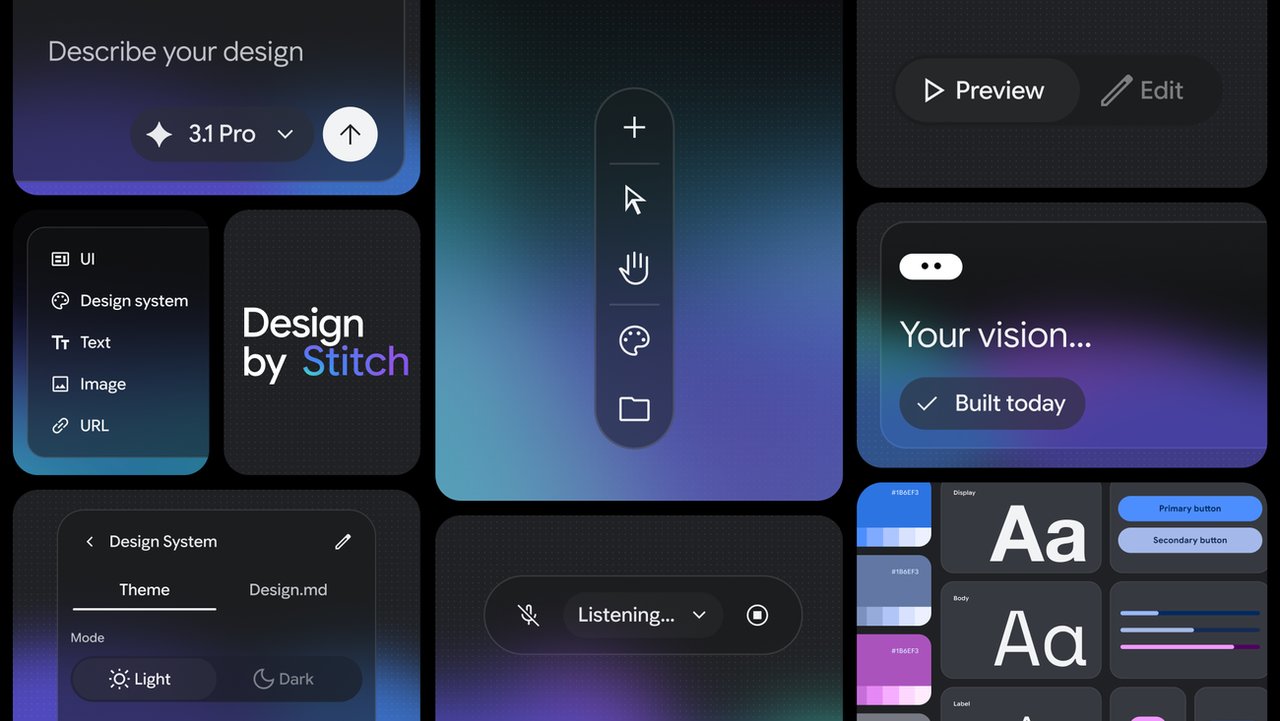
Google Stitch — Google's free AI design tool — triggered a 12% crash in Figma's stock, wiping out roughly $2.5 billion in market cap in just 48 hours. On Wednesday morning, Figma's stock (ticker: FIG) opened normally. By Thursday's close, it had lost 12% of its value. The catalyst? Google quietly upgraded Stitch from a modest experiment into a full-blown Figma competitor. The twist that spooked investors: Stitch is completely free.
A 12% Stock Crash in 48 Hours
Figma dropped 8% on Wednesday, March 19 — the day Google announced Stitch's massive overhaul. Another 4–5% followed on Thursday. The stock now sits at roughly $24.50, down 80% from its post-IPO peak of $142.92 and well below its $33 IPO price. Year-to-date in 2026, Figma is down approximately 35%.
The market reaction wasn't just about one product launch. It was about what Stitch represents: Google running the same playbook it used with Google Docs, Gmail, and Google Sheets — give away a powerful product for free, capture users, then monetize enterprise features later.
Figma's financials tell a complicated story. Revenue hit $1.06 billion in 2025 (up 41% year-over-year), but net losses ballooned to $1.25 billion — up from $732 million the year before. The company is growing fast and bleeding faster. Out of 9 analysts covering the stock, only 3 say buy while 6 say hold. The average price target is $40.25, implying 66% upside — but that target was set before Stitch's upgrade shook the market.
350 Free AI Designs Per Month — No Credit Card Needed
Here's what makes Stitch genuinely dangerous to Figma's business model: it costs absolutely nothing. Users get 350 generations per month on Standard mode (powered by Gemini 2.5 Flash and Gemini 3, Google's latest AI models) and 50 generations per month on Experimental mode (powered by Gemini 2.5 Pro, a more capable model for complex designs). No credit card. No trial countdown. Just a Google account.
Figma charges $12 to $90 per seat per month. For a 10-person design team, that's $120–$900 monthly — or up to $10,800 per year. Stitch doesn't just undercut Figma on price; it removes the pricing conversation entirely.
The March 2026 update transformed Stitch from a basic prompt-to-mockup tool into something far more ambitious. Five major features landed at once:
- AI-native infinite canvas — a workspace where you can arrange, compare, and iterate on multiple designs side by side
- Smarter design agent — the AI understands context across your entire project, not just individual prompts
- Voice input — speak your design instructions in real time instead of typing them out
- Instant prototyping — interactive, clickable prototypes generated automatically from any design
- DESIGN.md export — a new file format that AI coding tools can read directly to generate code
Voice Canvas: Just Say "Give Me Three Menu Options"
The most striking new feature is Voice Canvas. Instead of typing prompts, you talk to Stitch like you'd talk to a colleague: "Give me three different menu options" or "Show me this in a warmer color palette." The AI modifies the design live as you speak.
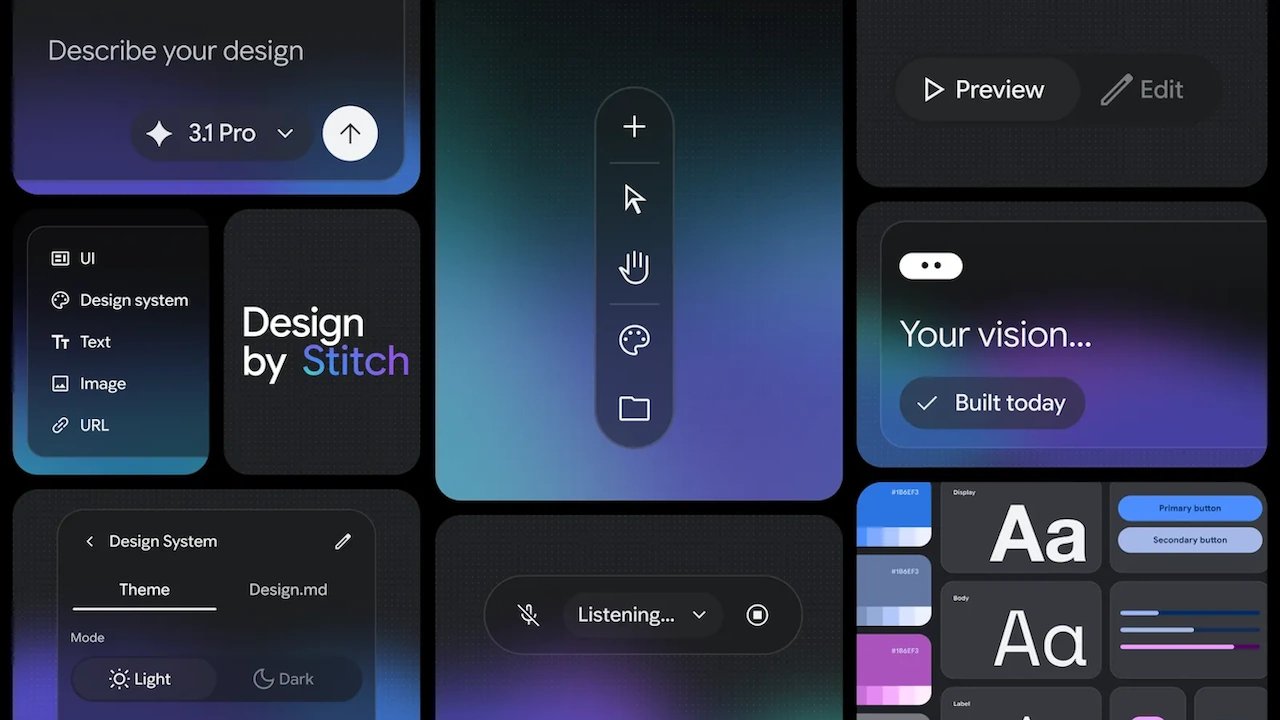
There's also "Vibe Design" mode — part of the broader vibe coding trend, where you describe intent rather than specific instructions. Here, you describe a feeling or business goal instead of specific UI elements. Say "I want something that feels premium and minimal for a wellness brand," and Stitch generates multiple design directions matching that intent. Google says users can "explore many ideas quickly leading to a higher quality outcome." In practice, Stitch produces roughly ten different design directions in under two minutes — a pace no human designer can match for initial exploration.
The trade-off? Natural language introduces ambiguity (the gap between what you say and what the AI interprets). Asking for "a warmer color palette" is subjective — a professional designer would specify exact hex values like #DC2626. Stitch handles vagueness reasonably well for early concepts, but outputs still require polishing before production use.
The Design-to-Code Pipeline That Developers Actually Want
Perhaps the most significant feature for developers isn't a design tool at all — it's DESIGN.md. This is a new markdown file format (a simple structured text file) that captures your entire design system: colors, typography (font choices and sizes), spacing rules, and component patterns. Here's what it looks like:
# Design System

## Colors
- Primary: #1a73e8
- Background: #ffffff
- Text: #202124

## Typography
- Heading: Inter, 24px, Bold
- Body: Inter, 16px, Regular

## Spacing
- Section gap: 48px
- Component gap: 16px
The breakthrough: DESIGN.md is readable by AI coding agents (programs that automatically write code from instructions) like Claude Code, Cursor, and Gemini CLI. This creates a direct AI automation pipeline: design in Stitch → export DESIGN.md → import into your coding tool → generate production-ready code. Setting up the connection takes one command:
npx stitch-mcpThis installs the Stitch MCP server (a bridge that lets AI coding tools pull designs directly from Stitch). The code output is HTML and CSS with Tailwind (a popular utility-first styling system used by millions of developers). You can also paste designs directly into Figma with preserved Auto Layout and layers — so Stitch can complement existing Figma workflows rather than replace them entirely.
If you're exploring how AI tools connect to create automated workflows, our AI automation beginner guides break down the fundamentals step by step.
Where Stitch Still Can't Replace Figma
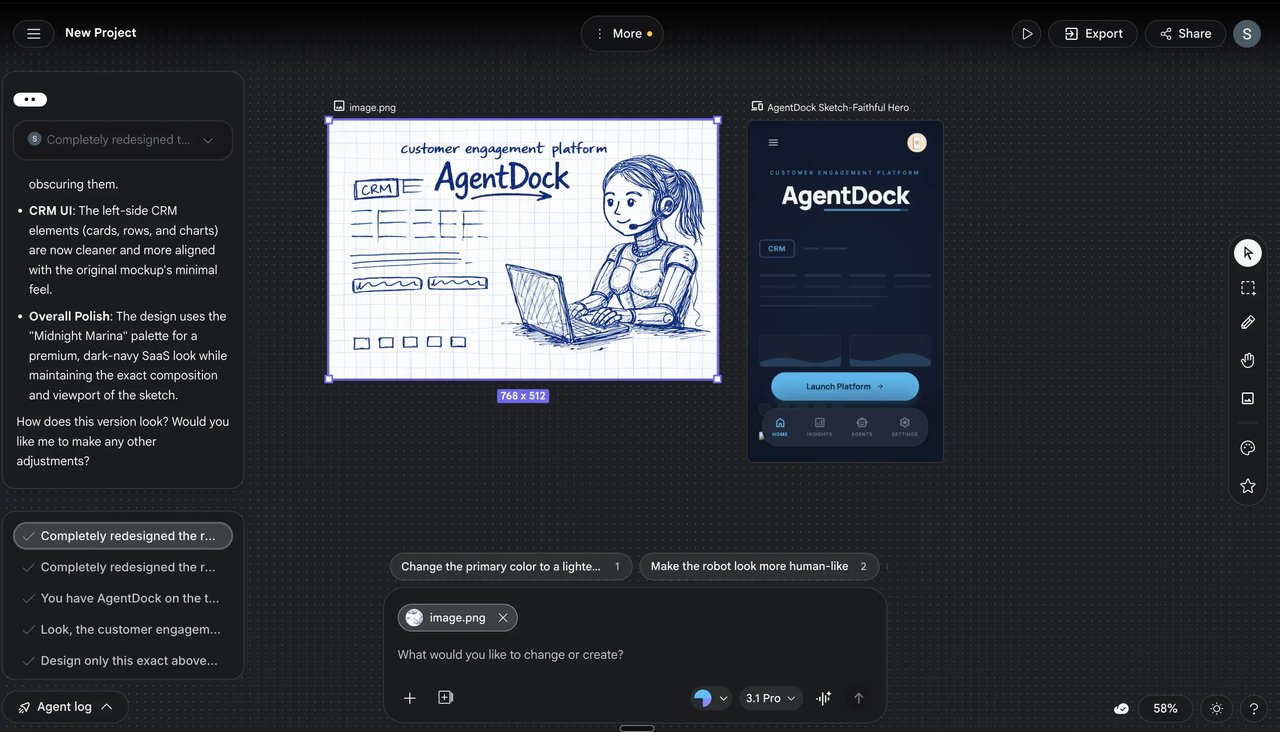
For all its capabilities, Stitch has critical gaps that make it unsuitable for professional design teams at scale — at least today:
No collaboration. Stitch is single-player only. No real-time multiplayer editing, no comments, no version history, no shared team workspaces. Figma's entire value proposition is built on collaboration — multiple designers working simultaneously on the same file. Stitch doesn't even attempt this.
No design system management. Professional teams maintain component libraries (reusable design elements like buttons, cards, and navigation bars) that ensure visual consistency across products. Stitch has no way to manage these across projects.
Inconsistent outputs. The same prompt can produce wildly different quality results. Stitch occasionally "forgets" components between iterations or reinterprets them unexpectedly. Icons and labels sometimes render incompletely.
HTML/CSS only. There's no native export to React, Vue, or SwiftUI (the frameworks most production apps actually use). The coding-agent pipeline can generate React through extra steps, but it's not seamless.
Google Labs discontinuation risk. Stitch lives in Google Labs, and Google has a well-documented track record of killing products. There's no announced monetization plan, making long-term viability a genuine question mark.
The Google Docs Playbook, All Over Again
The strategic pattern is unmistakable. Google Docs toppled Microsoft Office's dominance by being free and browser-native. Gmail did the same to Yahoo Mail. Now Stitch is running that identical formula against Figma: zero cost, instant access, deep ecosystem integration.
The adoption numbers speak loudly. Stitch search volume grew from 140 monthly searches a year ago to 40,500 today — a 289x increase in twelve months. Meanwhile, Figma's net dollar retention rate (how much more existing customers spend year-over-year) remains strong at 136%, suggesting current customers aren't leaving yet. But the threat isn't existing customers — it's the solo founders, indie developers, and startup teams who might never sign up for Figma in the first place.
Figma CEO Dylan Field put on a brave face: "I think volatility is probably good at strengthening companies long-term." But NVIDIA CEO Jensen Huang offered a blunter assessment of AI disrupting software companies: "It is the most illogical thing in the world and time will prove itself."
The expert consensus for designers is surprisingly nuanced. As one industry analysis concluded: "The designer who only does layout is in trouble. The designer who does strategy, research, systems thinking, and judgment is more valuable than ever." Stitch brilliantly automates the blank-canvas-to-layout phase. It cannot replace design thinking.
The recommended workflow from multiple expert analyses: explore in Stitch, refine in Figma, build with your coding tools. Stitch excels at rapid ideation. Figma excels at precision, collaboration, and production handoff. They may end up complementary rather than purely competitive. But try telling that to Figma's shareholders watching $2.5 billion vanish in two days.
To try Stitch yourself, visit stitch.withgoogle.com — all you need is a Google account. For a walkthrough on connecting AI design tools to your development workflow, see our step-by-step setup guides.
Related Content — Get Started | Guides | More News
Sources
Stay updated on AI news
Simple explanations of the latest AI developments