Meta's $135B AI Model Lost to Google Gemini — Stock Drops 4%
Meta's Avocado AI model failed every benchmark against Google Gemini 3.0 after a $135B spend. Now Meta may license Google's own AI — stock dropped 4%.
Meta poured between $115 and $135 billion into AI this year — more than the entire GDP of many nations. The result? A next-generation Meta AI model codenamed "Avocado" that can't beat Google Gemini 3.0 in a single category. And the fallout is already shaking Wall Street.
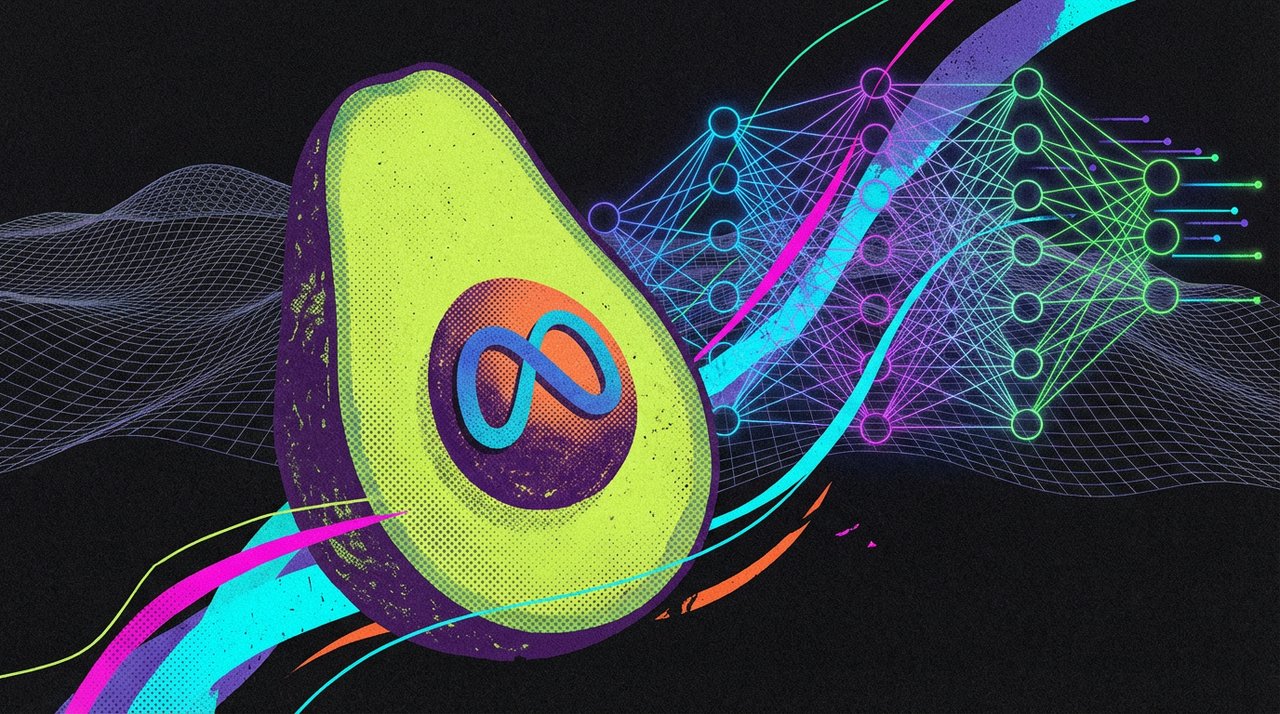
Meta's Avocado: The Most Expensive AI Model Flop in History
Internal benchmarks (standardized tests that measure how well an AI performs specific tasks) revealed that Avocado trails Google's Gemini 3.0, OpenAI's GPT-5.4, and Anthropic's Claude models in every key metric: logical reasoning, coding, writing quality, and agentic behavior (the ability to autonomously complete multi-step tasks without human supervision).
Here's the kicker — Avocado does outperform Meta's own previous Llama models and Google's older Gemini 2.5. But it can't touch Gemini 3.0. That puts it in an awkward middle ground: better than yesterday's AI, worse than today's. Product Manager Megan Fu internally described Avocado as "the company's most capable base model yet" — but being Meta's best isn't the same as being the world's best.
The original launch was planned for mid-March 2026. It's now pushed to at least May 2026 — following the exact same delay pattern that plagued Llama 4's rollout in April 2025, when Meta admitted to submitting an optimized version to public leaderboards that didn't match the actual model users received.
From Open-Source AI Champion to Google Gemini's Customer
Perhaps the most stunning detail: Meta's leadership actively discussed licensing Google's Gemini to power Meta AI products while Avocado undergoes refinement. Think about that for a moment — the company that championed open-source AI (freely available code anyone can use and modify) for years may now rent technology from the very competitor it's trying to beat.

This reversal extends beyond a temporary licensing deal. Avocado is expected to launch as a closed, proprietary model (paid access only, not freely available) — abandoning years of open-source Llama releases that made Meta beloved by the developer community worldwide. As one community developer put it: "Open weights allows you to train much cheaper the things you need" — and that's precisely the value Meta is walking away from.
The strategic problem runs deeper than pride. Unlike Google (which sells Cloud), Microsoft (Azure), and Amazon (AWS), Meta has no direct cloud revenue stream from its AI. Every dollar of that $135 billion capital expenditure (money spent on infrastructure like data centers and GPU chips) must pay for itself through better ad targeting across Facebook, Instagram, and WhatsApp. There's no enterprise AI subscription to fall back on.
A 28-Year-Old CEO, 70-Hour Weeks, and a Departing Legend
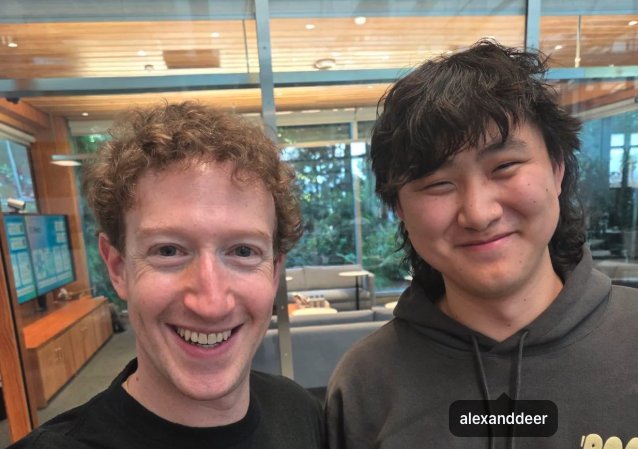
The human story behind Avocado's failure is equally dramatic. In June 2025, Meta brought in Alexandr Wang — the 28-year-old founder of Scale AI — as Chief AI Officer through a staggering $14.3 billion investment. Wang now leads the elite "TBD Lab" developing Avocado.
His arrival coincided with the departure of Yann LeCun, Meta's legendary Chief AI Scientist and one of the godfathers of deep learning (a branch of AI that uses layered neural networks). LeCun, who had been the public face of Meta's open-source philosophy, left to launch AMI Labs, a startup in Paris — a symbolic end to Meta's open era.
Wang and Nat Friedman (former GitHub CEO, now heading Meta's product division) introduced a Silicon Valley startup culture — 70-hour workweeks and a "demo, don't memo" philosophy — that clashes with Meta's traditionally collaborative environment. The tension is real: 600 jobs were cut from Meta's FAIR research unit (Fundamental AI Research, Meta's prestigious lab) in October 2025 during the restructuring.
Meta also recruited 20+ researchers from OpenAI, offering multiyear contracts worth hundreds of millions. Despite assembling what should be an AI dream team, Avocado still can't compete at the frontier (the cutting edge where the most capable AI models operate).
Wall Street Reacted to Meta AI Delay — But Didn't Panic
When the New York Times first reported the delay on March 13, 2026, Meta stock dropped more than 4% — its largest single-day decline in over four months. But the sell-off was short-lived.
Here's the financial picture that keeps investors calm:
- $59.89 billion in Q4 2025 revenue — a 24% year-over-year increase
- $53.5–$56.5 billion Q1 2026 revenue guidance
- 39 out of 44 Wall Street analysts still rate META as a Strong Buy
- Full-year 2026 revenue outlook: $162–$169 billion
One retail investor on Stocktwits dismissed the decline as "Fear, Uncertainty, and Doubt" and predicted "blowout earnings again in the April quarter." But not everyone is optimistic — some community observers warn of an "AI IQ asymptote" (a theoretical ceiling where building better AI models becomes exponentially more expensive for diminishing returns).
Notably, Nvidia CEO Jensen Huang's recent earnings call listed major AI customers but omitted Llama entirely — a quiet signal about Meta's competitive standing in the AI hardware ecosystem.
The Bigger Picture: Can $135B Win the AI Arms Race?
Meta's predicament raises a question every company betting on AI should consider: does spending more guarantee better results?
Consider what $115–$135 billion bought: a model that sits between generations rather than at the frontier. Meanwhile, Meta is juggling multiple projects — "Watermelon" (Avocado's successor), "Mango" (image and video generation), and the still-delayed Llama 4 Behemoth. Friedman's video product "Vibes," launched in September 2025, was described as "rushed to market" and lacking features compared to OpenAI's Sora 2.
For developers and businesses who built on Meta's open-source Llama ecosystem, the pivot to proprietary models is a wake-up call. If you're choosing an AI platform for your next project, Meta's shifting strategy is a reminder to evaluate not just a model's current capabilities, but the company's long-term commitment to its developer community.
A Meta spokesperson told CNBC that "model training efforts are going according to plan" — a claim that rings hollow when you're reportedly shopping for your competitor's technology. The AI arms race has a new lesson: even $135 billion can't buy you a seat at the frontier table if execution doesn't match ambition.
Stay updated on how major AI companies are evolving — browse the latest developments in our AI news section.
Related Content — Get Started | Guides | More News
Stay updated on AI news
Simple explanations of the latest AI developments