UK Rejects Teen Social Media Ban 307-173 — New Law Is Worse
UK MPs voted 307-173 against a teen social media ban — then gave a single minister unchecked power over internet access for all under-18s.
UK lawmakers voted 307 to 173 to defeat a proposed social media ban for under-16s — but what replaced it may concentrate more power in government hands than anything the Lords originally proposed. Instead of protecting minors through an independent regulator, the Commons amendment gives a single minister unchecked authority to restrict internet content for all under-18s, with no requirement to prove harm first.
UK Social Media Ban Vote: 307 vs. 173 — What It Actually Decided
On March 9, 2026, the UK House of Commons rejected an amendment from the House of Lords by 307 to 173. The Lords had proposed requiring social media platforms to install "age assurance measures" (technology that verifies whether a user is under 16 before granting access) as part of the Children's Wellbeing and Schools Bill.
MPs didn't abandon age restrictions — they redirected them. The Commons counter-proposal grants the Secretary of State direct power to restrict internet services for anyone under 18. The critical difference: no independent review, no evidence requirement, no public consultation before restrictions go live.
- Lords version (defeated 307-173): Under-16s ban, enforced by Ofcom (an independent regulatory body created under the Online Safety Act 2023), based on documented risk assessments
- Commons alternative (proposed): Under-18s restriction, enforced by ministerial decree — the Secretary of State acts without demonstrating specific harms exist
Why Removing Accountability Is the Alarming Part
The Electronic Frontier Foundation (EFF — a US nonprofit that has defended digital civil liberties since 1990) has spent 6+ years pushing back on UK internet regulation. Their concern here isn't that minors should face no restrictions online. It's that how decisions get made matters enormously.
Under the Online Safety Act (passed in 2023), Ofcom (the UK's independent telecommunications regulator, roughly equivalent to the FCC in the US) must conduct thorough risk assessments, gather evidence, and consult publicly before acting. The most recent consultation included 70+ organizations and technologists — among them Open Rights Group, Big Brother Watch, and Index on Censorship.
The Commons amendment strips that process away. UK Technology Secretary Liz Kendall described the Online Safety Act as "never meant to be the end point," signaling appetite for stronger measures. EFF and civil liberties groups warn that a phrase like "sexual material harmful to minors" — which appears in the proposed language — is elastic enough to cover:
- LGBTQ+ resources and community spaces (often vital for youth in non-affirming households)
- Sex education and reproductive health information
- Mental health support communities
- News and political commentary a minister deems age-inappropriate
This is not hypothetical. Several US states have already passed laws with "harmful to minors" definitions broad enough to encompass sex education websites and LGBTQ+ resources. The UK bill contains no independent check on how ministers interpret identical language. For a closer look at how AI-powered content moderation intersects with these debates, see our AI content moderation explainers.
4 Countries, 4 Models: The Global Race to Regulate Teen Social Media
The UK isn't acting in isolation. A wave of governments moved to restrict teen social media access in late 2025 and early 2026, each choosing a different enforcement model:
| Country | Age Limit | Enforcement Model | Status |
|---|---|---|---|
| Australia | Under 16 | Direct statutory ban on platforms | ✅ Enforced (Dec 2025) — world first |
| Indonesia | Under 16 | Government-mandated platform ban | 🟡 Announced March 5, 2026 |
| Brazil | Under 16 | Parental account linkage required | 🟡 In effect, March 2026 |
| UK (proposed) | Under 18 | Secretary of State discretion — no evidence standard | 🔴 Commons amendment pending |
| Spain / Philippines | TBD | Under consideration | 📋 Legislative stage |
The UK's proposed threshold — under 18 — is higher than any other country's model. And unlike Australia, which targets platforms directly, the UK proposal routes all decisions through a single minister. That combination gives it the widest reach and the least independent oversight of any framework currently active.
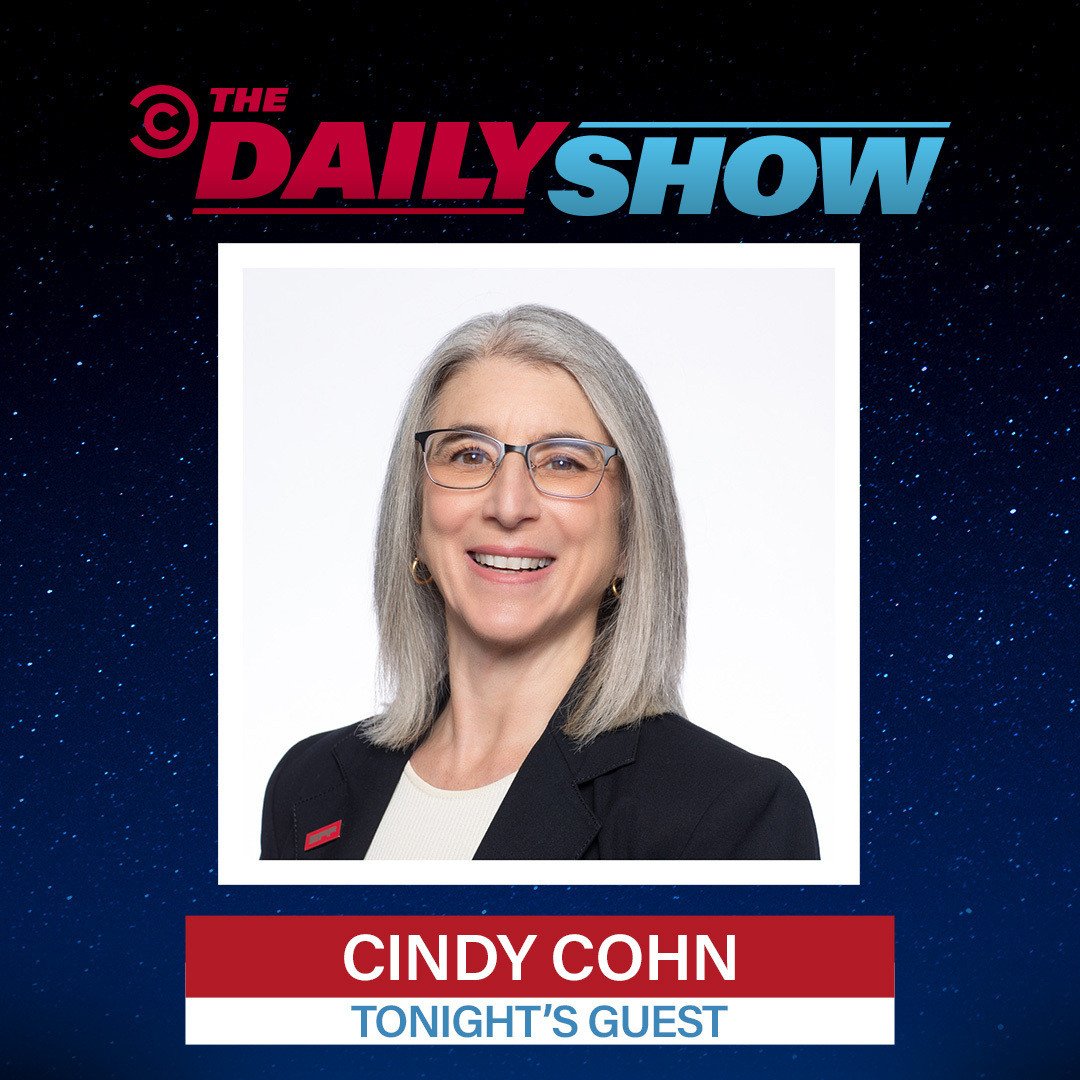
Cindy Cohn on The Daily Show: 30 Years of Privacy Battles Hit Prime Time
On March 30, 2026 — the night before this story published — EFF Executive Director Cindy Cohn appeared on The Daily Show at 11 PM ET/PT with host Jon Stewart. She was there to discuss her new book: Privacy's Defender: My Thirty-Year Fight Against Digital Surveillance (MIT Press).
The Daily Show, which has won 26 Primetime Emmy Awards and launched careers including Stephen Colbert, Samantha Bee, and John Oliver, brings these legal battles to an audience that typically never reads EFF press releases. Cohn's book traces three decades of privacy fights most people lived through without realizing they had defenders:
- 1990s Crypto Wars: The US government tried to mandate "backdoors" (hidden access points built into encryption software that let authorities bypass privacy protections) into commercial products — EFF fought back and won
- 2000s NSA Dragnet Surveillance: Mass collection of phone metadata and internet traffic from millions of Americans without warrants — EFF filed landmark lawsuits that reached the Supreme Court
- FBI Gag Orders: Secret legal instruments that prevented tech companies from notifying users they had been surveilled — EFF challenged and overturned multiple cases in court
The appearance signals something broader: when the EFF's executive director can explain 30-year privacy battles on a 26-Emmy late-night show, it means surveillance and digital rights have moved from niche legal concern to household conversation — precisely when the UK, Australia, Indonesia, and Brazil are making decisions that will define internet access for the next generation.

The Surveillance Problem Hidden Inside Every Age Verification System
Every social media ban requires age verification to work. The most common methods — facial age estimation, government ID upload, parental account linking, or credit card checks — all create a new surveillance layer at the point of entry. Age verification infrastructure (systems that confirm your identity before allowing you to access a service) does not evaporate after a single check. It generates records: who accessed what, when, and with which credentials.
Australia's December 2025 implementation has already drawn scrutiny from digital rights groups for exactly this reason. Brazil's parental linkage model creates a database connecting minors' accounts to adult identities. Indonesia's announced ban for under-16s extends to "high-risk" platforms — a category with no fixed definition.
EFF's core position is not that minors need zero protection online — it's that protection measures should be proportionate, evidence-based, and not engineered to outlast the political moment that created them. The Crypto Wars of the 1990s seemed like an obscure legal dispute among engineers and lawyers. The encryption EFF defended then is the same technology now protecting every bank transaction and private message you send.
Watch Cindy Cohn's Daily Show segment at youtube.com/thedailyshow (posted after the March 30 broadcast), track the UK Children's Wellbeing Bill at eff.org/deeplinks for free ongoing coverage, or read the book at eff.org/Privacys-Defender. Today's "minor protection" legislation is the privacy war of the 2020s — and it's moving faster than the 1990s version did.
Related Content — Get Started | Guides | More News
Stay updated on AI news
Simple explanations of the latest AI developments