Meta Open-Source AI: Forests, Brains & Cancer Research
Meta's 5 free open-source AI tools predict brain activity, map global forests, and accelerate cancer drug discovery — all available on GitHub now.
Meta just open-sourced a wave of AI tools in early 2026 — and none of them are for your social media feed. One reads human brain activity without needing to be trained on you first. Another creates high-resolution maps of every rainforest on Earth. A third is accelerating cancer drug discovery in research labs right now. All of them are free.
This is a deliberate strategy. While OpenAI charges per API call and Google keeps its most powerful models behind a paywall, Meta is building a developer ecosystem by giving away foundational research tools. The result: conservationists, neuroscientists, and oncologists are now running Meta AI in their workflows — at zero cost.
Meta TRIBE v2: Open-Source Brain Activity AI With Zero-Shot Prediction
In March 2026, Meta released TRIBE v2 — a model that predicts high-resolution fMRI (functional Magnetic Resonance Imaging, a brain scanning technique that measures blood flow to show which areas of the brain are active) activity. The remarkable detail: it works zero-shot, meaning it makes predictions for a person it has never seen before, in a language it was never trained on, performing a task it has never encountered.
Traditional brain-decoding models require dozens of expensive MRI scanning sessions per individual subject before they can make useful predictions. TRIBE v2 skips that entirely. It generalizes across:
- New subjects — people the model has never scanned before
- New languages — not just English speakers
- New tasks — activities never included in the original training set
The practical impact: neuroscience labs that couldn't afford thousands of expensive scans per participant can now run meaningful brain activity predictions at a fraction of the previous cost. TRIBE v2 could democratize brain research in universities across the world that operate on tight budgets.

Forest Mapping With Meta Open-Source AI: Free Satellite & Carbon Data
In March 2026, Meta and the World Resources Institute jointly released Canopy Height Maps v2 (CHMv2) — an open-source model that generates satellite-derived maps of forest canopy height (how tall the trees are, a key proxy metric for carbon storage and biodiversity health). Researchers can now map deforestation and forest recovery across entire countries without buying expensive proprietary satellite datasets.
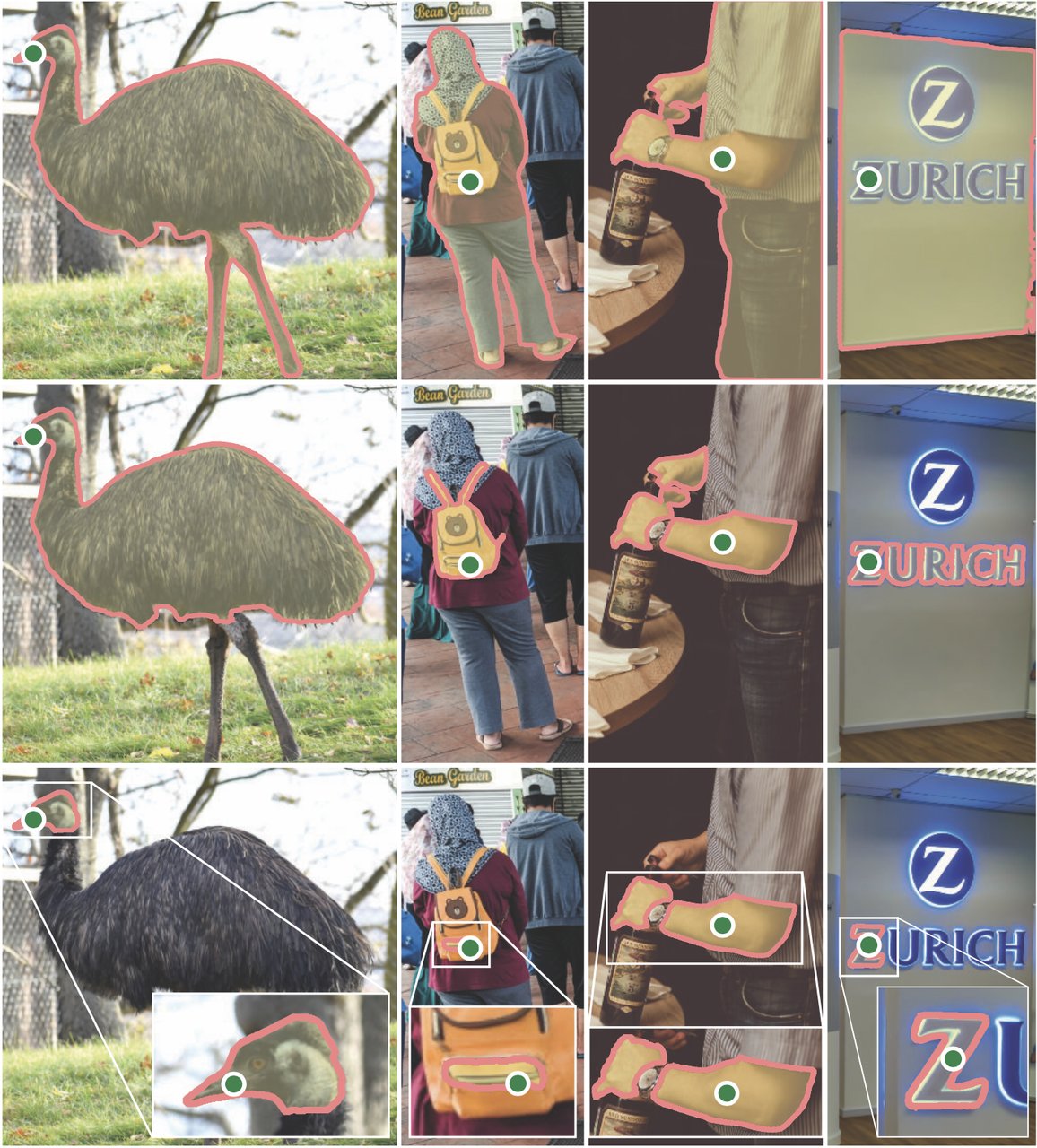
Running alongside CHMv2 is DINOv2, Meta's self-supervised vision model (an AI trained entirely on unlabeled images — no human annotation required). DINOv2 is already deployed in active reforestation programs. The UK government adopted it to reduce land survey costs and increase public greenspace access. Conservation X Labs uses Meta's Segment Anything Models (SAM) — image AI tools that can identify and outline any object in a photograph — for field conservation work worldwide.
The 3 tools together give environmental scientists capabilities that previously required expensive proprietary platforms or large teams of manual image analysts:
- CHMv2 — maps global forest canopy height from satellite imagery, completely free
- DINOv2 — classifies vegetation, land cover, and greenspace from aerial or satellite photos
- SAM — segments (precisely outlines) plants, animals, or terrain features in field photography
Cancer Research AI: Meta Open-Source Tools in Active Drug Discovery
Since early 2025, Orakl Oncology has been using Meta's AI models to speed up cancer drug discovery. Their workflow: run physical lab experiments to generate biological data, feed the results into Meta's machine learning models (AI systems trained to find patterns in large datasets), and let the AI predict which drug compounds are most likely to succeed — before committing to more expensive follow-on experiments.
The University of Pennsylvania took a different route: deploying Meta AI for emergency response automation, using AI to triage and route incoming medical cases faster than human dispatchers alone can process them. In both cases, neither organization built foundational AI from scratch. They picked up Meta's open-source tools and applied them to specific, high-stakes domains.
That is the entire logic of Meta's open-source strategy: eliminate the infrastructure barrier so applied researchers can focus entirely on the problems they actually care about.
ExecuTorch: Meta's Open-Source AI Runs on Mobile Without Cloud
Running a large AI model typically means renting server space from Amazon, Google, or Microsoft — paying per query and sending user data to a distant data center. ExecuTorch is Meta's answer to that dependency: an open-source lightweight inference engine (a system that runs a finished AI model efficiently, without the weight of a full training setup) that deploys AI directly on mobile devices, no cloud connection required.
Released in late 2025 and already running inside Instagram, WhatsApp, and Messenger, ExecuTorch delivers 4 concrete advantages over cloud-based AI:
- Privacy — your data never leaves the device in your hand
- Speed — no network round-trip latency (the delay caused by sending data to a server and waiting for a response)
- Cost — zero per-inference cloud charges for developers
- Offline capability — works without internet access, critical for field research and developing regions
ExecuTorch is fully open-source on GitHub. Any developer can use it to deploy AI models on Android and iOS without cloud fees or data exposure — making it especially valuable for apps handling sensitive health, financial, or personal data. If you're building AI automation tools that need on-device inference, see our step-by-step setup guide to get started without a cloud subscription.
Why Meta Open-Sources Its AI Tools: The Free Platform Strategy
Meta's AI blog describes serving AI models at global scale "while maintaining the lowest possible costs" as "one of the most demanding infrastructure challenges in the industry." That framing is deliberate. Meta is not a neutral scientific patron — it is executing a platform strategy that borrows from Google's playbook with Android.
By releasing SAM, DINOv2, CHMv2, ExecuTorch, and TRIBE v2 as free open-source tools, Meta achieves 3 strategic goals simultaneously:
- Developer lock-in — labs and companies that build on Meta's tools grow familiar with Meta's architecture, making switching costly and friction-filled
- Regulatory cover — it is harder for regulators to frame Meta as a monopolistic threat when scientists worldwide use its free tools for conservation and cancer research
- Talent pipeline — publishing high-visibility neuroscience, oncology, and climate research attracts researchers who want real-world impact, not just product demos
You can try any of these tools today through Meta's GitHub repositories. If you are building AI-powered tools for science, automation, or environmental monitoring, our practical guides walk through integrating open-source models into real workflows — no cloud subscription required.
Access Meta's Open-Source AI Tools Now
- ExecuTorch on GitHub — on-device AI inference engine
- Segment Anything Model (SAM) — universal image segmentation
- DINOv2 on GitHub — self-supervised vision model for environmental analysis
- Meta AI Blog — full research announcements and release notes
Related Content — Get Started | Guides | More News
Stay updated on AI news
Simple explanations of the latest AI developments