Railway Raises $100M: AI Cloud 180x Faster Than AWS
Railway raised $100M for AI-native cloud that deploys in <1 second — 180x faster than AWS. 2M developers, 31% of Fortune 500, up to 65% cheaper.
When AI agents can write working code in three seconds, waiting three minutes for it to deploy is the biggest bottleneck in the AI automation pipeline. Railway, a 30-person startup founded in 2020, just raised $100 million to fix exactly that — and 31% of Fortune 500 companies are already on board.
One Second vs Three Minutes: The AI Automation Bottleneck
The deployment bottleneck has quietly become the most painful friction point in modern AI-assisted software development. Traditional cloud platforms like AWS require provisioning (setting up and allocating server resources for) virtual machines through tools like Terraform — a process that routinely takes 2 to 3 minutes per deployment.
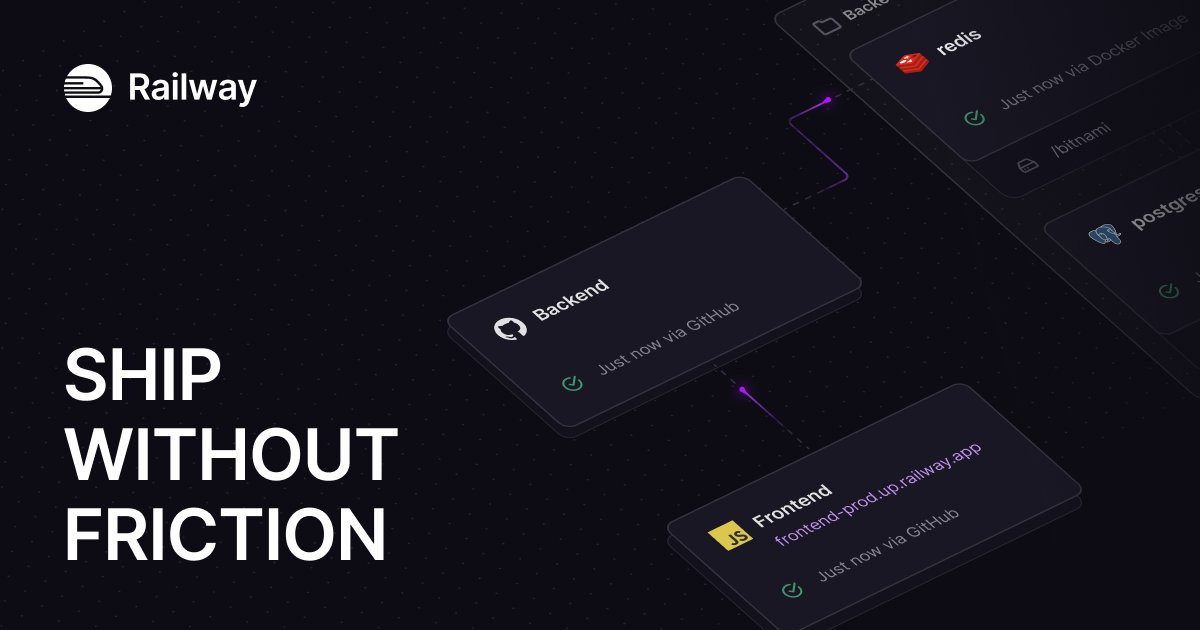
Railway compressed that to under 1 second by doing something most venture-backed startups avoid: building its own data centers. In 2024, CEO Jake Cooper made a bet that looked reckless on paper — he abandoned Google Cloud entirely and built proprietary data centers, giving Railway full vertical control over its network, compute (processing power), and storage layers.
"The last generation of cloud primitives (basic building blocks of cloud infrastructure) were slow and outdated," Cooper said. "Now with AI moving everything faster, teams simply can't keep up."
The pricing model reflects that philosophy. Railway charges by the second: $0.00000386 per GB-second for memory and $0.00000772 per vCPU-second (a vCPU is a virtual processor — the unit of compute power you rent in the cloud). You pay only while your app is actually running, not for idle servers. That makes Railway roughly 50% cheaper than hyperscalers (mega-scale cloud providers like AWS, Google Cloud, and Azure) at comparable workloads, with enterprise customers reporting up to 65% savings.
Zero Marketing, 2 Million Developers, $100M Later
Cooper, 28, built Railway without a single salesperson until last year. No advertising. No conference sponsorships. No growth hacking. Just developers telling other developers about a platform that was genuinely faster and cheaper than the incumbents.
That compounding word-of-mouth produced remarkable numbers:
- 2 million developers on the platform — zero acquired through paid marketing
- 10+ million deployments processed every month
- 1+ trillion requests through its edge network (servers positioned globally to cut loading delays)
- 3.5x revenue growth year-over-year, 15% month-over-month expansion
- 31% of Fortune 500 companies now run at least some workloads on Railway
The $100 million Series B was led by TQ Ventures, with participation from FPV Ventures, Redpoint, and Unusual Ventures. Notable enterprise customers include Bilt (a consumer loyalty rewards platform), Intuit's GoCo subsidiary, TripAdvisor's Cruise Critic, and MGM Resorts.
Cooper's roadmap is blunt: "In five years, Railway will be the place where software gets created and evolved, period. Deploy instantly, scale infinitely, with zero friction."
Why Railway's Speed Is Critical for AI Automation and Vibe Coding
Railway's edge is particularly sharp for teams building AI-powered applications. Cooper identified the friction point early: when an AI coding agent like Claude can generate a working app in 10 seconds, a 3-minute deployment cycle creates a jarring mismatch. "What was really cool for humans to deploy in 10 seconds or less is now table stakes for agents," he said. Railway's agentic-speed infrastructure (built to match the pace of AI-generated code, not just human-written code) is a direct response to this new baseline.
The $15,000 Monthly Bill That Became $1,000
The real test for any infrastructure platform is what it does to actual invoices. G2X, a technology consultancy, cut its monthly cloud spending from $15,000 to roughly $1,000 after switching to Railway — an 87% reduction. Deployment speed jumped 7x at the same time.
"The work that used to take me a week on our previous infrastructure, I can do in Railway in like a day," said Daniel Lobaton, CTO at G2X. "In Railway I can launch six services in two minutes."
Kernel CTO Rafael Garcia runs his entire customer-facing system on Railway for $444 per month. At his previous company, Clever (acquired for $500 million), he managed six full-time engineers whose sole job was AWS administration. Now he has six engineers — all of them building product.
"At my previous company I had six full-time engineers just managing AWS," Garcia said. "Now I have six engineers total, and they all focus on product. Railway is exactly the tool I wish I had in 2012."
Railway's technical envelope supports serious scale: up to 256 terabytes (TB) of persistent storage, 2 TB of RAM, and 112 vCPUs per service. Enterprise databases — PostgreSQL, MySQL, MongoDB, and Redis — are natively supported. Since August 2025, Railway has also supported Model Context Protocol (MCP — a standard that allows AI coding assistants to interact with external tools and services), letting AI agents like Claude deploy apps and manage infrastructure directly from inside a code editor without switching context.
Claude Code Costs $200/Month — Goose Does the Same Thing Free, With 26K GitHub Stars
Railway isn't the only infrastructure story reshaping developer costs right now. A parallel battle is playing out in AI coding tools — and the free, open-source side just crossed 26,100 GitHub stars.
Claude Code, Anthropic's AI coding agent (a tool that reads your codebase and automatically writes, fixes, or refactors code), costs between $20 and $200 per month depending on usage volume. Block — the company formerly known as Square — built and open-sourced Goose, a direct functional alternative that runs entirely on your local machine at zero cost.
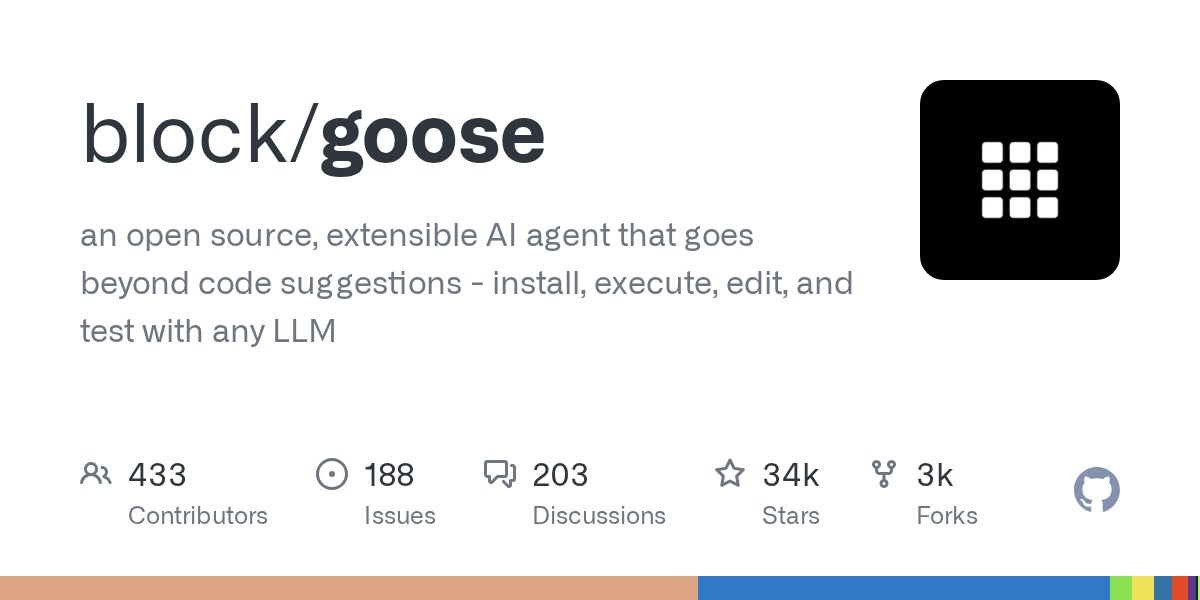
Goose has 26,100+ GitHub stars (a community metric showing how many developers have bookmarked or endorsed a project), 362 contributors, and 102+ releases since launch. Software engineer Parth Sareen captured the appeal simply: "Your data stays with you, period."
| Claude Code | Goose (free) | |
|---|---|---|
| Monthly cost | $20–$200 | Free |
| Where it runs | Anthropic's cloud | Your local machine |
| Your data | Uploaded to cloud | Never leaves your computer |
| Rate limits | Resets every 5 hours | None |
| Works offline | No | Yes |
| Community | — | 26,100+ stars, 362 contributors |
# Try Goose — free, open-source AI coding assistant (26,100+ GitHub stars)
git clone https://github.com/block/goose
cd goose
pip install -e .
goose
The trade-off: Goose runs on your own hardware and depends on your machine's available resources. For large collaborative team workflows or CI/CD pipelines (automated sequences that test and ship code on every commit), centralized cloud tools still have organizational advantages. But for individual developers and small teams currently paying $200/month, the cost difference is hard to justify ignoring.
What Could Go Wrong: The Honest Case Against Both
Railway's pitch is compelling — but honest evaluation means looking at the risks too:
- Team scale risk: 30 employees vs AWS's hundreds of thousands. Customer support, uptime SLAs (service level agreements — contractual guarantees on reliability), and enterprise security certifications all require staffing that a 30-person company can strain to deliver
- Sales infrastructure gap: Railway only hired its first salesperson last year. Enterprise procurement (the formal corporate buying process) typically requires a dedicated sales team, legal review, and vendor compliance checks — none proven at scale yet
- Data center capex exposure: Building proprietary hardware means paying fixed costs regardless of growth rate. If Railway's customer acquisition slows, the capital expenditure (upfront investment) in owned data centers won't
- Goose community dependency: Open-source projects without a commercial support model depend on volunteer contributors. 362 contributors can lose momentum if Block's internal priorities shift
- Lock-in cuts both ways: The same stickiness that keeps companies on AWS will eventually apply to Railway. Once Fortune 500 workflows are optimized for Railway's tooling, switching again carries real costs
Both tools are free to try right now. If your team is spending $5,000–$15,000 monthly on cloud infrastructure — or $200/month on AI coding subscriptions — evaluating Railway and Goose costs you nothing but an afternoon. The AI automation setup guides at AI for Automation walk through both tools with practical step-by-step instructions for getting started today.
Related Content — Get Started | Guides | More News
Stay updated on AI news
Simple explanations of the latest AI developments