$270M Crypto Hack, Iran Hits Data Centers, Reddit Bans AI
Drift lost $270M to hackers, Iran hit Oracle & Amazon data centers, and r/programming banned all AI posts — four crises in 48 hours.
Three separate cybersecurity crises struck the technology and AI automation industry in a single 48-hour window on April 2–3, 2026 — and together they expose simultaneous vulnerabilities across crypto, cloud infrastructure, semiconductor supply chains, and developer communities that will take months to untangle.
If you use crypto platforms, work at a company that relies on Amazon or Oracle cloud services, or follow programming communities online — at least one of these four stories directly affects your digital life right now.
$270 Million Gone: The Drift Crypto Hack
Cryptocurrency platform Drift suffered a catastrophic breach this week, with suspected total losses reaching $270 million — placing it among the five largest single-platform crypto hacks ever recorded. Drift immediately suspended all deposits and withdrawals upon detecting the intrusion, a standard damage-control move (halting all money movement to stop further losses once a breach is confirmed in real time). But the window had already closed on prevention.
To contextualize the scale:
- Mt. Gox (2014): $450 million lost — the breach that nearly destroyed Bitcoin's credibility entirely
- FTX (2022): $8+ billion lost — the collapse that sent a CEO to prison for fraud
- Drift (2026): $270 million suspected — a fresh entry on a list that refuses to stop growing
The attack vector (the specific technical pathway the attacker used — smart contract exploit, stolen private keys, or insider access) has not been publicly confirmed as of this writing. That silence is itself a systemic risk: without a public post-mortem (a detailed technical investigation into what went wrong and how), other platforms cannot defend against the same method before the next attack comes.
The pattern is now exhaustingly predictable. Every six to twelve months, a major crypto platform collapses under a breach of this scale. The industry's default posture — launch features fast, harden security later — continues to produce the same catastrophic outcome for ordinary users who trusted their savings to a platform's promises.

Nation-State Warfare: Iran Claims Strikes on Oracle and Amazon Data Centers
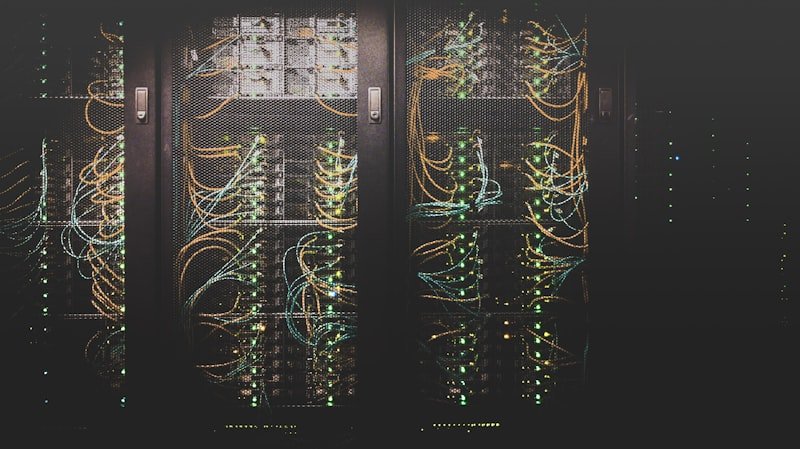
Iran announced this week that it successfully targeted two major cloud data centers (large warehouse-scale facilities packed with servers that power websites, apps, and business software for millions of organizations globally): Oracle's facility in Dubai, UAE, and Amazon's facility in Bahrain. Neither company has confirmed damage. U.S. officials had not independently verified the claims as of publication.
But the strategic implications extend well beyond whether the strikes were technically effective:
- Oracle Dubai: A primary cloud hub for enterprise customers across the Middle East and North Africa region
- Amazon Bahrain: One of AWS's (Amazon Web Services — Amazon's cloud division that powers roughly one-third of the entire internet's infrastructure) core regional facilities serving Gulf-region businesses
Iran also issued explicit future threats against NVIDIA (the company whose chips power virtually all large-scale AI model training today), Intel, and at least 17 additional named American technology companies.
This escalation matters to anyone whose organization runs on cloud services — which in 2026 means almost every organization on earth. Until recently, the standard risk model for cloud infrastructure focused on software attacks by hackers and hardware failures from age or weather. Nation-state actors physically targeting commercial data center buildings represents a qualitatively different threat category that existing business continuity plans (protocols for keeping operations running during major disruptions) were simply not designed to address.
Export Control Enforcement: Supermicro Co-Founder Charged
Wally Liaw, co-founder of Supermicro — a major server manufacturer with an estimated $50 billion supply-chain footprint in enterprise computing — pleaded not guilty in federal court this week to charges of illegally smuggling NVIDIA GPUs (graphics processing units, the specialized chips that power AI model training and inference, or running AI after training) to destinations prohibited under U.S. export controls.
Supermicro occupies a critical node in the global AI hardware pipeline: it purchases NVIDIA chips in bulk and assembles them into servers sold to data centers and enterprises worldwide. Export controls (U.S. laws restricting where advanced chips can be shipped, primarily designed to prevent China from acquiring the hardware needed to train cutting-edge AI models) are supposed to create a hard ceiling on what adversaries can build.
The chips most likely at issue here are NVIDIA H100s — the most sought-after AI training chips currently available, priced between $25,000 and $40,000 each on the open market. If those units reached unauthorized destinations through Supermicro's distribution network over an extended period, the strategic damage would be concrete and cumulative, not merely hypothetical.
The Liaw case is simultaneously a legal prosecution and a credibility test for the entire export control framework. The U.S. government has staked significant diplomatic capital on semiconductor restrictions as a geopolitical tool. Enforcement actions that reach company co-founders — not just mid-level logistics employees — will define whether the policy actually functions or simply creates paperwork.
r/programming Just Banned All AI Content
In a decision that rippled across the developer internet, r/programming — Reddit's largest programming community, with millions of active members — implemented a complete ban on all AI and LLM-related content (LLM stands for large language model, the core technology behind ChatGPT, Claude, Gemini, and every similar AI assistant tool). The community has historically served as a primary gathering point for developers to debate emerging technologies.
The stated rationale is a return to high-quality technical software discussion. The practical diagnosis: AI-related posts had grown to dominate the community's feed in a way that crowded out the substantive programming content the community originally existed to host and discuss.
Why this particular ban matters:
- r/programming shapes how millions of working engineers form opinions about their tools — what gets normalized in that community tends to get adopted and dismissed industry-wide
- It signals measurable AI content fatigue even among technically sophisticated audiences who were historically AI's most enthusiastic early adopters
- The ban establishes a formal precedent: major developer communities can and will exclude AI discussion from generalist spaces, redirecting it toward purpose-built communities
- The decision was reportedly unanimous among moderators — suggesting this is not a close call internally, but a community-wide consensus
The timing creates a sharp irony. On the same week that nation-states threatened NVIDIA's physical infrastructure and a $270 million hack exposed AI platform security gaps, the developer community's largest gathering decided it was formally done discussing AI. That may represent rational moderation of an oversaturated topic — or a cultural overcorrection that will reverse once the novelty fatigue recedes. Either way, it represents a measurable and institutionalized cultural shift.
For developers and professionals who relied on r/programming to stay current on AI tooling advances, the practical step is to identify better-targeted sources immediately. AI automation and cybersecurity news and purpose-built communities will become significantly more important as mainstream developer spaces close the door on the topic.
Four Crises, One 48-Hour Window: What the Convergence Signals
These events did not happen in isolation. They converged in the same 48-hour period and, together, expose simultaneous pressure points across the technology industry's most critical systems:
- Financial infrastructure: $270M in losses proves crypto platforms remain systematically exploitable — four years after FTX, the same categories of security failure keep succeeding against the same categories of defenses
- Physical infrastructure: Nation-state actors have begun treating commercial cloud facilities as legitimate military targets — a new threat category no existing enterprise risk framework was built for
- Supply chain integrity: Export control enforcement is now reaching company co-founders, signaling that the U.S. is serious about closing chip smuggling routes — but also revealing how porous those routes have been for years
- Community health: Developer fatigue with AI content is now measurable and institutionalized, reshaping where the next generation of AI conversations will happen online
None of these situations resolve in a week. Watch the Supermicro/Liaw federal prosecution for signals about whether export control enforcement becomes routine or stalls under legal challenge. Wait for Oracle and Amazon official statements on Iran's claims — their silence or confirmation will reveal just how exposed hyperscale cloud infrastructure actually is. And if you hold significant funds on any centralized crypto exchange: hardware wallets (physical devices that store your cryptocurrency keys completely offline, disconnected from internet-connected servers) remain the only storage method that a remote hack of Drift's type fundamentally cannot reach.
Related Content — Get Started with AI Automation | AI Automation Guides | More AI News
Sources
Stay updated on AI news
Simple explanations of the latest AI developments