Claude Code vs Goose: Free AI Coding Alternative
Claude Code costs $200/month — Block's Goose does the same for free. 26,100 GitHub stars. Railway raises $100M to deploy in under 1 second.
Every time a major AI company launches a paid AI coding assistant, someone ships a free version within weeks. This week, it happened to Claude Code — and the free challenger already has 26,100 GitHub stars.
Block (the company behind Square and Cash App) quietly released Goose, a fully open-source AI coding assistant (a tool that can write, edit, and debug software on your behalf). Claude Code, made by Anthropic, costs between $20 and $200 per month depending on usage. Goose costs nothing.
The $200-a-Month AI Coding Problem — and a Free Answer
Claude Code is genuinely powerful. It reads your entire codebase (all your project files together), suggests fixes, writes new features, and runs commands autonomously. But at up to $200/month per user, it adds real overhead for teams where multiple developers rely on it daily.
Goose matches most of those capabilities and adds something Claude Code simply cannot offer: total data privacy. Because it runs entirely on your local machine — rather than sending your code to a remote cloud server — nothing ever leaves your computer.
- Price: Completely free — no credit card, no usage limits
- Privacy: Fully local — your code never leaves your machine
- Community: 26,100+ GitHub stars, 362 active contributors, 102 releases
- Offline: Works without an internet connection once configured
- Flexibility: Compatible with any AI language model you choose to run locally
Parth Sareen, a developer who publicly demonstrated Goose, summed it up: "Your data stays with you, period."
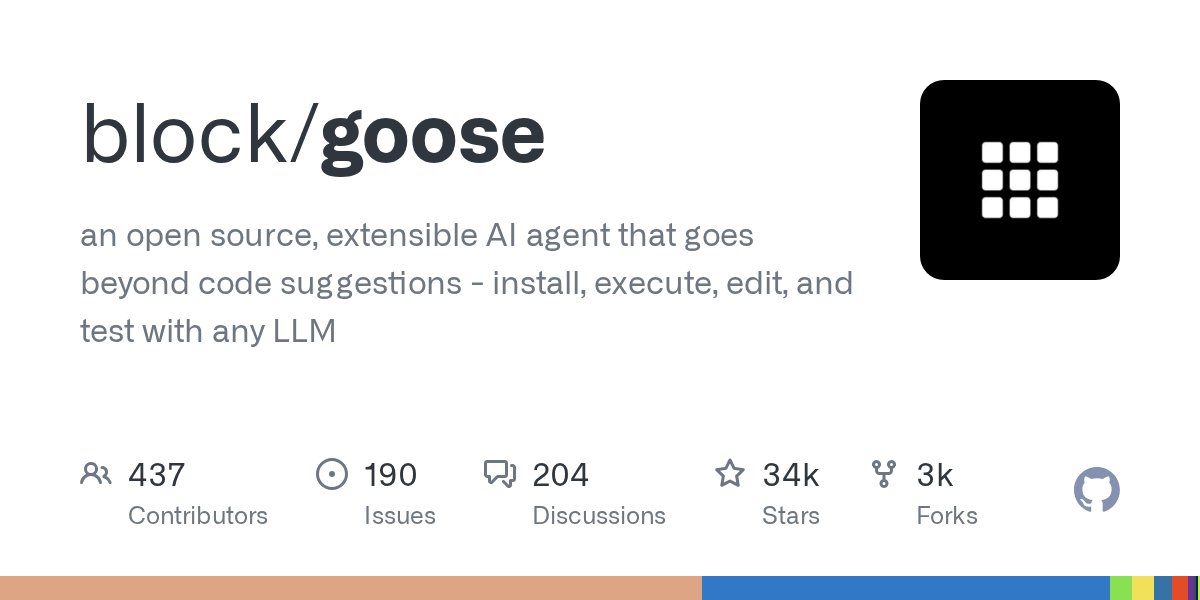
The Setup Trade-Off: 15 Minutes vs. Instant Start
Goose is not plug-and-play. You need to clone the GitHub repository (download the project code to your computer) and configure a language model (the AI engine that generates the assistant's responses). For any developer comfortable with the terminal (the command-line text interface on your computer), setup takes roughly 10–15 minutes.
Claude Code, by contrast, works immediately after installation and a credit card entry. That frictionless start is what Anthropic is betting you will pay for — but with 26,100 stars in a short window, the community clearly finds Goose's trade-off worth it.
git clone https://github.com/block/goose
cd goose
# Follow setup instructions in the README
For teams handling sensitive client code, proprietary algorithms, or regulated data, the privacy argument alone may justify the 15-minute setup cost. For casual users who just want to start immediately, Claude Code still wins on convenience.
Developers leaning into vibe coding — using AI automation tools to handle most of the writing while focusing on high-level direction — often find the privacy-first, local-run approach of Goose worth the short setup investment.
Railway's $100 Million Bet: Deploy in Under 1 Second
The Goose vs. Claude Code comparison doesn't exist in a vacuum. The same week Block revealed Goose's traction, Railway — a cloud infrastructure platform (a service that runs your application on remote servers so users can access it) — announced a $100 million Series B funding round led by TQ Ventures, with FPV Ventures, Redpoint, and Unusual Ventures joining.
The connection: AI coding tools have made writing software nearly instant. The bottleneck shifted to deploying that software. Traditional tools like Terraform (infrastructure-as-code software that automates server configuration) required 2–3 minutes per deployment. For humans, acceptable. For AI agents (programs that take autonomous multi-step actions) iterating in milliseconds, a fatal slowdown.
Railway's answer: deployments in under 1 second — roughly 180 times faster than the Terraform baseline. Jake Cooper, Railway's 28-year-old founder who previously worked at Wolfram Alpha, Bloomberg, and Uber, built the entire company around that single insight: "When godly intelligence is on tap and can solve any problem in three seconds, those amalgamations of systems become bottlenecks."
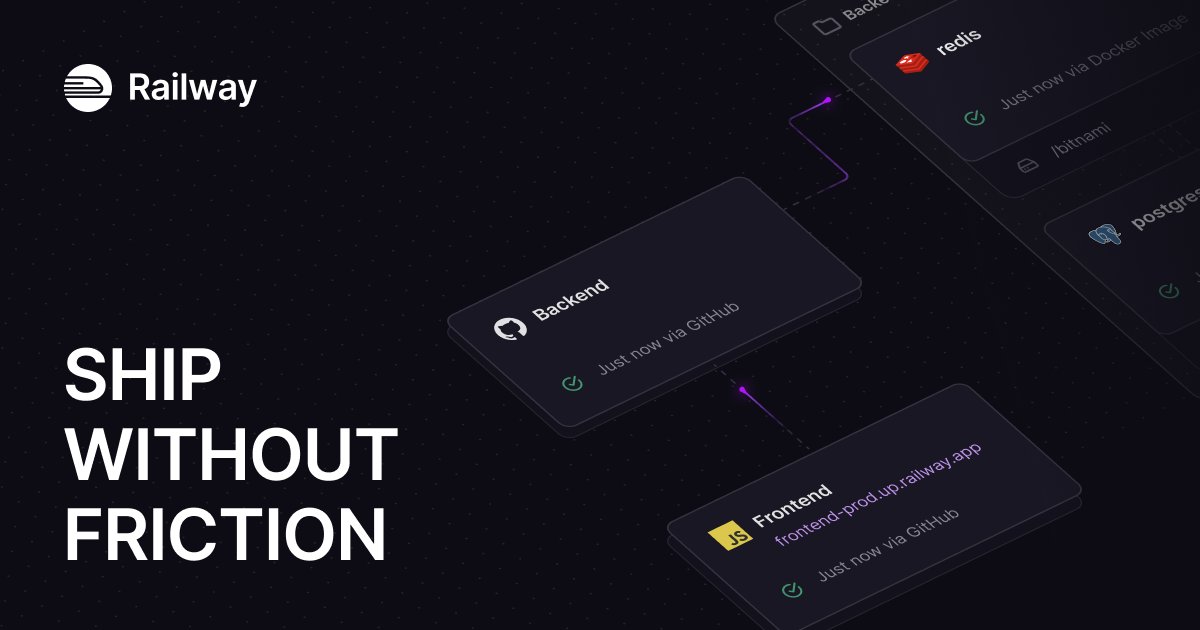
The Numbers Behind the $100M Round
Railway raised only $24 million total before this round — for a 30-person company with zero marketing budget and no sales team. The $100 million validates extraordinary organic growth:
- 2 million developers — acquired entirely through word-of-mouth
- 10+ million deployments per month across the platform
- 1 trillion requests processed through Railway's global edge network
- 3.5x year-over-year revenue growth, accelerating at 15% month-over-month
- 31% of Fortune 500 companies now use Railway for at least some workloads
Railway charges only for actual usage — not idle capacity. Instead of paying for a server whether or not it's doing anything (the standard hyperscaler model), you pay only while your code is actively running:
- $0.00000386 per GB-second of memory consumed
- $0.00000772 per vCPU-second (virtual processor time)
- $0.00000006 per GB-second of storage
Real-World Savings: $15,000 Down to $1,000 a Month
These aren't theoretical savings. Two Railway customers demonstrate what the usage-based pricing model means in practice.
G2X, a federal contractor platform serving 100,000 users, switched to Railway and cut its monthly infrastructure bill from $15,000 to approximately $1,000 — a 93% cost reduction. CTO Daniel Lobaton explained: "The work that used to take me a week on our previous infrastructure, I can do in Railway in like a day. If I want to spin up a new service and test different architectures, I can launch six services in two minutes."
Kernel, a Y Combinator-backed (Y Combinator is the elite startup accelerator behind Airbnb, Stripe, and Dropbox) AI infrastructure company, runs its entire customer-facing system for just $444 per month on Railway. Enterprise customers can scale to 112 vCPUs (virtual processors), 2 TB of RAM, and 256 TB of persistent storage per service — capacities previously only available through AWS or Google Cloud contracts.
In 2024, Railway abandoned Google Cloud entirely and built its own data centers. Cooper's reasoning: the major cloud providers built pricing models that benefit from idle servers. Owning hardware optimized for density let Railway charge only for genuine consumption, claim roughly 50% lower costs than the hyperscalers, and move faster on hardware decisions. Cooper: "We wanted to design hardware in a way where we could build a differentiated experience."
Two Stories, One Shift in AI Automation
Goose and Railway look like separate news items. They are both expressions of the same underlying change. AI has compressed the cost and time required to build software toward zero. Every tool, platform, and service that charges for steps AI can now automate faces the same pressure: get dramatically faster and cheaper, or get replaced.
For Claude Code, the pressure arrived as a free open-source competitor with 26,100 GitHub stars and 362 contributors. For AWS, it arrived as a 30-person startup charging 50% less and deploying 180 times faster. Cooper's five-year prediction is unambiguous: "Railway will be the place where software gets created and evolved, period. Deploy instantly, scale infinitely, with zero friction."
Whether AWS simply copies Railway's pricing model or whether a 30-person team actually displaces trillion-dollar cloud infrastructure remains the most interesting question in developer tooling right now. You can try Goose for free at github.com/block/goose and explore Railway at railway.app today — if your team pays for Claude Code or AWS, the comparison is worth 15 minutes this week. For more AI automation tools worth knowing, browse our complete guides.
Related Content — Get Started | Guides | More News
Stay updated on AI news
Simple explanations of the latest AI developments