Claude AI BIOS Mod Boots Intel Bartlett Lake on Z790 — Free
A modder used Claude AI to rewrite Z790 BIOS firmware, booting Intel Bartlett Lake on 4-year-old hardware — skipping a $200+ platform upgrade entirely.
A PC modder just used Claude AI to write custom BIOS firmware — making an unsupported 2026 Intel Bartlett Lake CPU boot on a 2022 Z790 motherboard. The twist: the CPU physically fits the socket. Intel blocked it in software. That software wall just fell, and it cost nothing.
This is the kind of result that used to require an engineering team inside ASUS or MSI. Now it's happening in someone's home office, with a chat window.
The Lock Was Never Physical
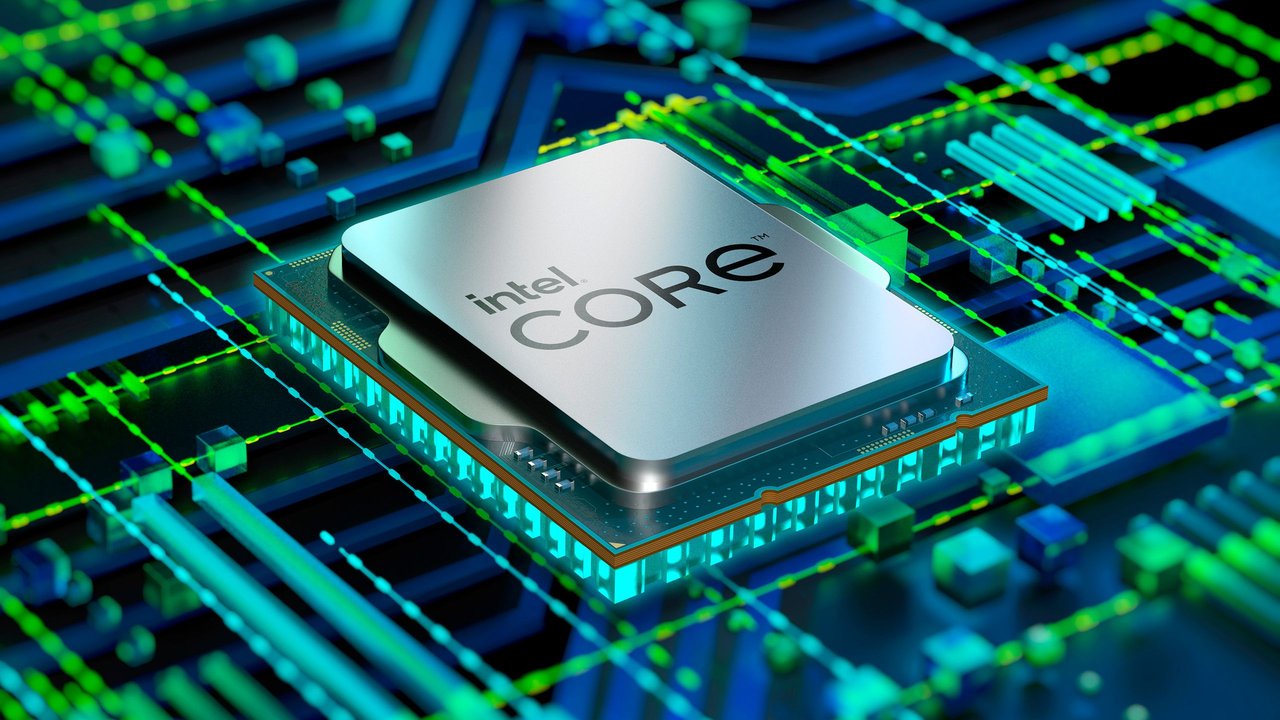
Intel's Bartlett Lake processors use the LGA 1700 socket — the exact same physical connector that Z790 and Z690 motherboards (released in 2022) already support. Every pin lines up. The chip slides right in.
But 600-series and 700-series boards officially reject Bartlett Lake at the software level. The block lives in the BIOS (Basic Input/Output System — the low-level firmware that tells a motherboard how to start up and which hardware to recognize). Intel's spec sheet says Z790 support stops at 13th and 14th Gen Raptor Lake. Bartlett Lake, the 2026 generation, is out.
Normally, that's the end of the conversation. To run a new-gen CPU officially, you'd need a new Z890 motherboard — typically $150 to $300+ before you even buy the CPU. The modder chose a different path.
Claude AI as Firmware Engineer
BIOS development has always been locked behind manufacturer walls. The code runs directly on hardware, handles CPU identification registers (tiny memory addresses inside the chip that broadcast its exact model number), and is almost never documented publicly.
Claude changed that equation. The modder used it to navigate the firmware layer by layer:
- Read existing BIOS code — Claude parsed the low-level instructions and located the CPU compatibility table (the built-in list of processor IDs the board is programmed to accept)
- Extend the compatibility list — Claude wrote new code adding Bartlett Lake's processor family signatures to that table
- Debug before flashing — Before writing the modified code to the motherboard's memory chip (a process called "flashing"), Claude helped catch errors that could have permanently disabled the board
- Confirm boot success — The modified Z790 successfully booted Windows with the 12 P-core Bartlett Lake CPU installed
The full report was published April 4, 2026 by Aaron Klotz at Tom's Hardware. It represents a real-world proof-of-concept for AI-assisted hardware modding at a level that was previously inaccessible to enthusiasts.
The Money Math
- New Z890 motherboard for official Bartlett Lake support: $150–$300+
- AI-assisted BIOS mod on existing Z790 board: $0
- Platform generation gap bypassed: ~4 years (2022 Z790 to 2026 Bartlett Lake)
- Physical socket compatibility: Already there — LGA 1700 fits both generations
- Performance cores in the unlocked CPU: 12 P-cores (the high-power cores that handle demanding tasks)
The risk is real: a failed flash can permanently disable the motherboard — a condition called "bricking," where the board becomes as useful as the object it's named after. This is not a beginner project. But the required expertise dropped from "works at a motherboard OEM" to "patient enough to work through a Claude session." That's a meaningful shift.
Why Intel Blocks Compatible Hardware in the First Place
Platform incompatibility between CPU generations isn't always a pure engineering requirement. When consumers must buy a new motherboard alongside a new CPU, that drives revenue across the ecosystem — not just for Intel, but for motherboard partners like ASUS, MSI, and Gigabyte.
In this case, the justification for blocking is unusually thin: the socket is identical. Bartlett Lake fits LGA 1700 physically. The only barrier is a firmware check — a short stretch of code that rejects the new CPU's ID number. The modder, with Claude's help, added that ID to the approved list.
AI-assisted modding at this level threatens the forced-upgrade model. Once a working BIOS mod for a specific CPU-board pair is published, other users can apply it without replicating the full engineering process. The modding community already distributes firmware patches for overclocking (pushing CPUs beyond their official clock speed limits) and feature unlocking — this is the same distribution pattern, applied at a more fundamental level.
What's Still Unknown
- Long-term stability — Power delivery tables (instructions for exactly how much electricity to send to each CPU core) may still be misconfigured for Bartlett Lake's different power profile
- Thermal management — How the board handles CPU temperature monitoring and fan control with an unrecognized chip
- Full-load performance — Whether all 12 cores run at rated speeds or throttle due to mismatched firmware settings
- Feature support — Advanced capabilities like Intel Thread Director (a scheduler that routes tasks between performance and efficiency cores) may not function correctly under a modded BIOS
No benchmark data has been published yet. The story today is proof-of-concept — not a finished solution for everyday PC builders. But the proof-of-concept is the hard part. Community refinement tends to be faster.
The Broader Signal for AI Automation
This story sits at an uncomfortable intersection for hardware manufacturers: AI automation is now competent enough to operate at the lowest level of personal computing — not just writing web apps or summarizing emails, but reading and rewriting the firmware that teaches hardware how to exist.
For PC builders watching their upgrade costs climb alongside each new platform generation, this is worth tracking closely. The enthusiast community will iterate on this proof-of-concept quickly, and the tools — Claude, specifically — are freely accessible. Whether this ends up as a niche modder achievement or the beginning of a genuine shift in how platform upgrades work depends on how far that community takes it.
If you want to follow how AI is changing hardware and software automation beyond the hype, our automation guides cover practical use cases at every skill level — and you can get your tools set up today to start experimenting yourself.
Related Content — Get Started | Guides | More News
Sources
Stay updated on AI news
Simple explanations of the latest AI developments