AI Data Centers Hit an Insurance Wall — No History, No...
Stargate, Meta, and Microsoft are building AI data centers at unprecedented scale — but insurers have no loss history for GPU-scale risk, creating a hidden...
AI data center buildouts from Stargate, Meta, and Microsoft are running into an unexpected wall: the insurance industry has no historical data to underwrite GPU-scale risk. As hundreds of billions flow into AI infrastructure, insurance carriers are being pushed past their limits — and that bottleneck threatens every app and AI automation tool that depends on this infrastructure.
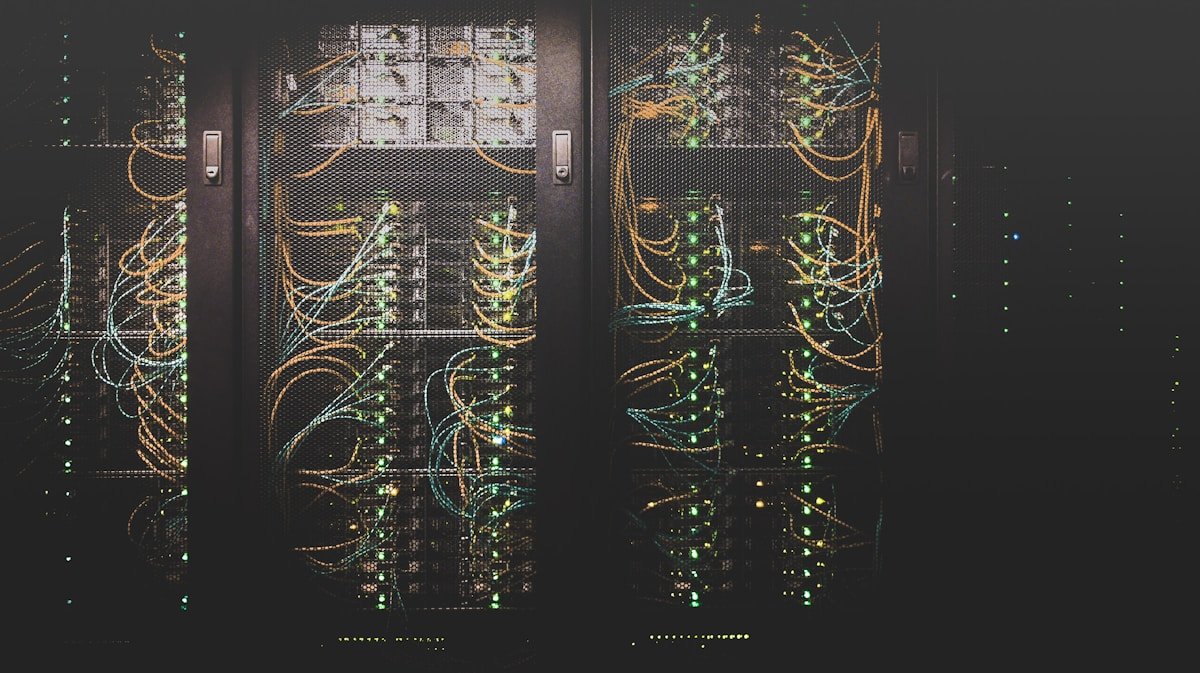
The AI Infrastructure Bottleneck Nobody Planned For
When you hear about a $500 billion AI infrastructure initiative like Stargate, the conversation quickly jumps to chips, power consumption, and real estate. What rarely makes headlines is the insurance underwriting (the process where an insurer evaluates and prices the risk of covering something) that has to back every single facility before it opens. Without coverage, banks won't finance. Without financing, the shovels don't move.
Insurance underwriting for traditional data centers developed over decades. The risk profiles were well understood: server failures, power outages, fire, flooding. Actuaries (the statisticians who calculate insurance risk) had years of real-world claims data to work from. They could price a conventional server farm with confidence.
AI data centers are fundamentally different. A modern GPU cluster — the interconnected network of graphics processing units, the specialized chips that run AI workloads — can contain tens of thousands of high-powered cards, each worth $30,000 to $40,000, running at extreme temperatures around the clock and consuming industrial-scale electricity. The failure modes, maintenance cycles, and replacement costs have no historical equivalent in the insurance industry's books.
GPU Debt: The New Financial Risk in AI Infrastructure
Making things more complex, AI data centers are increasingly financed through what the industry calls GPU debt — financial instruments (loans or bonds) where the underlying collateral is not real estate or traditional equipment, but clusters of AI chips. This creates a peculiar insurance challenge: how do you value and protect an asset whose market price can swing dramatically based on the latest model release from NVIDIA, Google, or a Chinese competitor?
A data center built around NVIDIA H100 GPUs (the most powerful widely-deployed AI chips through 2024-2025) might represent $4 billion in asset value when the chips are at peak demand. A new chip generation — or a sudden shift in AI workload architectures — could alter that valuation by 30-40% within 18 months. Traditional insurance models were built for assets that depreciate gradually and predictably, not for assets whose value can be disrupted overnight by a product announcement.

Private Capital Is Moving Faster Than Insurance Risk Models
The private equity and venture capital surge into AI infrastructure has compressed deal timelines dramatically. Projects that would historically take 18-24 months from planning to groundbreaking are now being pushed through in 6-9 months. Insurance carriers, which rely on thorough site surveys, engineering assessments, and actuarial modeling (the mathematical process of calculating risk from historical data) before issuing policies, are being asked to move at startup speed.
The result: the insurance market is operating near capacity for this specific risk category. When capacity is limited, premiums rise — and some projects simply can't get covered at all. For the AI infrastructure race, this creates an invisible ceiling that isn't on capital, isn't on chip supply, but on the ability to transfer risk off a developer's balance sheet.
If you're building with AI automation tools, understanding the infrastructure layer that powers them has never been more important.
Three Pressure Points Driving the Insurance Squeeze
- Scale mismatch: A single hyperscale AI facility can represent more insurable value than an entire regional insurance portfolio — forcing carriers to pool capacity across multiple underwriters for a single deal
- Speed mismatch: Private equity due diligence cycles now outpace insurance underwriting timelines by an estimated 3-4x, creating gaps between deal signing and coverage activation
- Model mismatch: Actuarial databases contain virtually zero AI data center loss history, making it nearly impossible to set statistically confident premiums
Who Gets Left Holding the AI Infrastructure Risk
When primary insurance carriers reach their capacity limits, the risk doesn't disappear — it migrates upstream into reinsurance (the insurance that insurance companies themselves buy for protection against catastrophic losses). From there, it increasingly flows into private credit markets, meaning institutional investors and pension funds are indirectly absorbing AI infrastructure risk that hasn't been fully priced or even fully understood.
The simultaneous scale of current buildouts makes this especially acute. Microsoft committed $80 billion in data center spending for 2025 alone. Meta announced a $65 billion capital expenditure plan. The Stargate initiative targets $500 billion in AI infrastructure investment. These aren't sequential projects — they're running in parallel, creating synchronized demand across every tier of the insurance chain at the same historical moment that carriers are still learning the risk profile.
No Historical Template — The Real Story Behind AI Data Center Risk
Insurance is fundamentally a history-dependent industry. Underwriters (the people who decide what to cover and at what price) work from loss databases built over decades. Cloud data centers in the 2010s required new policies, but that transition happened over several years with manageable project volumes. Semiconductor fabs in the 1990s needed specialized coverage, but the rollout was measured. The AI buildout is happening in months, across dozens of simultaneous mega-projects, with a fundamentally new class of asset — AI chips — sitting at the center of the financing structure.
For developers, marketers, designers, and business operators who build on AI tools daily, this dynamic has real downstream consequences. Service disruptions, coverage gaps, or financing stalls at the infrastructure level don't stay contained there. They ripple into cloud availability, API (application programming interface — the connection layer between AI models and the apps you use) reliability, and ultimately into pricing. The insurance wall is an unsexy problem with very visible consequences for everyone who depends on the infrastructure it underpins. Stay up to date with the latest developments at the AI automation news hub.
Related Content — Get Started | Guides | More News
Sources
Stay updated on AI news
Simple explanations of the latest AI developments