Railway Cuts AWS Costs 87% — $100M Raise, 30 Employees
Railway raised $100M to cut AWS costs 87%. Sub-second deploys, 2M developers, zero marketing. The AI-native cloud platform Fortune 500 already trusts.
A 28-year-old founder with just 30 employees raised $100 million to challenge Amazon Web Services — and 31% of Fortune 500 companies are already customers. Railway, the San Francisco cloud platform, reached 2 million developers without spending a single dollar on marketing. One customer slashed their monthly cloud bill from $15,000 to $1,000 after switching. That 87% cloud cost savings is Railway's most powerful pitch for developers seeking an AWS alternative, and it is clearly working.
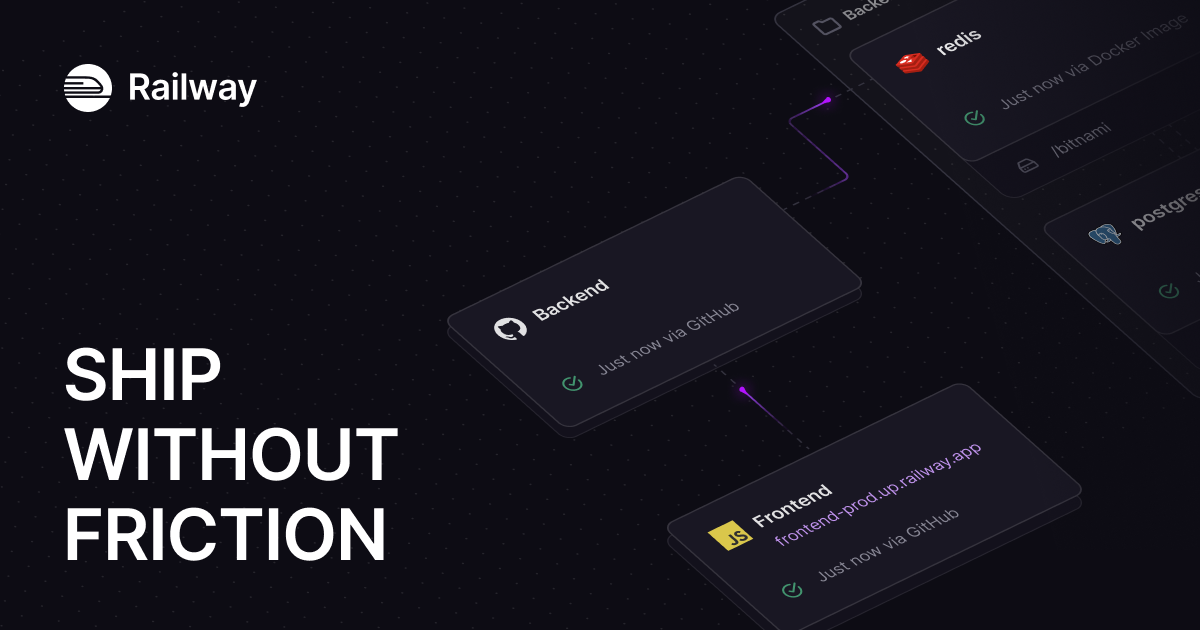
Railway: One Engineer's Week Becomes a Single Day
Daniel Lobaton, CTO at G2X (a platform serving 100,000 federal contractors), faced a problem shared by millions of engineering teams: too much time managing cloud infrastructure, not enough time building the actual product.
After migrating to Railway, his numbers changed dramatically:
- Deployment speed improved 7x — work that took a week now takes a single day
- Monthly infrastructure costs dropped from $15,000 to approximately $1,000 — an 87% reduction
- Launching 6 new services now takes under 2 minutes, compared to hours on their previous setup
"In Railway I can launch six services in two minutes. It would take so long on our old setup." — Daniel Lobaton, CTO at G2X
G2X is not an outlier. Across Railway's platform, customers report an average 10x increase in developer velocity (how quickly engineers ship new features and fixes) and up to 65% cost savings versus traditional cloud providers like AWS, Azure, and Google Cloud.
The 30-Person Team Running Fortune 500 Infrastructure
Railway was founded in 2020 by Jake Cooper, now 28, after stints at Wolfram Alpha, Bloomberg, and Uber. Today the company has just 30 employees, yet it processes over 10 million deployments per month and handles more than 1 trillion requests through its edge network (the globally distributed servers that route traffic to users around the world).
The company hired its first salesperson only last year. Every one of those 2 million developers arrived through word of mouth — the same organic growth pattern that made tools like Figma and Notion dominant before anyone noticed them competing with incumbents.
Rafael Garcia, CTO at Kernel (a Y Combinator-backed AI infrastructure startup), puts the value in stark terms:
"At my previous company Clever, which sold for $500 million, I had six full-time engineers just managing AWS. Now I have six engineers total, and they all focus on product. Railway is exactly the tool I wish I had in 2012." — Rafael Garcia, CTO at Kernel
Kernel's entire customer-facing production system runs on Railway for $444 per month. Revenue grew 3.5x last year, and the company continues expanding at 15% month-over-month.
Why AWS Cannot Deploy in Under a Second
Railway's core technical advantage comes from a contrarian 2024 decision: the company abandoned Google Cloud entirely and built its own data centers from scratch. This vertical integration — owning the full hardware stack rather than renting it — makes sub-second deployments possible in ways legacy cloud providers cannot easily replicate without dismantling their existing business models.
The key differences compared to traditional cloud providers:
- Deployment time: Under 1 second on Railway versus 2–3 minutes with Terraform (the infrastructure configuration tool most AWS and Google Cloud teams use to provision and update servers)
- Billing model: Pay per second at $0.00000772/vCPU-second — you pay for actual usage, not provisioned capacity sitting idle between tasks
- Cost advantage: 50% cheaper than hyperscalers like AWS; 3–4x cheaper than startup-focused alternatives like Render or Fly.io
- Uptime record: Railway stayed online during recent widespread cloud failures that knocked AWS, Azure, and Google Cloud customers offline simultaneously
For teams that need enterprise scale, Railway supports up to 112 vCPUs, 2 TB RAM, and 256 TB of persistent storage (data that survives between deployments, unlike temporary compute memory) with over 100,000 IOPS (input/output operations per second — a measure of how fast storage reads and writes data). Four global regions cover US East, US West, Europe, and Southeast Asia.
The AI Coding Surge That Drove a $100M Raise
Cooper says Railway is "default alive" — it generates enough revenue to survive without outside funding. So why raise $100 million from TQ Ventures? The answer is a large infrastructure bet on the near future of software development.
AI coding assistants like Cursor, Claude Code, and ChatGPT now enable vibe coding — generating working software in seconds without traditional engineering expertise. But when AI writes code that fast, a 3-minute cloud deployment pipeline becomes the critical bottleneck — the engineering equivalent of a Formula 1 pit stop that takes 10 minutes. Railway's sub-second deployments are designed for exactly that world.
Railway already integrated an MCP server (Model Context Protocol — a standard that lets AI assistants communicate directly with external tools like deployment platforms and databases) in August 2025. This means AI agents can deploy your code directly from inside editors like Cursor or VS Code without switching windows or writing deployment scripts — completing the AI automation loop from code generation to live production.
Cooper on the shift happening right now: "The notion of a developer is melting before our eyes. You don't have to be an engineer to engineer things anymore — you just need critical thinking and the ability to analyze things in a systems capacity."
The $100 million is meant to scale Railway's self-owned infrastructure before the AI-generated software wave fully arrives. If Cooper's thesis is right — that AI will eventually create 1,000 times more software than exists today — someone has to run it all. Railway is betting on being that someone.
Deploy Your First App in Under 2 Minutes with Railway CLI
Railway supports PostgreSQL, MySQL, MongoDB, and Redis databases out of the box. The CLI (command-line interface — the terminal tool you use to control Railway from your computer) takes under a minute to set up and deploy:
# Install Railway CLI via npm (Node Package Manager — bundled with Node.js)
npm install -g @railway/cli

# Log in to your Railway account
railway login

# Deploy your project from any directory
railway up
The pay-per-second billing model means a staging environment or small side project typically costs a few dollars per month — not the $50–100 monthly floor you hit on most traditional cloud platforms. Kernel's entire production system runs for $444/month.
If you are currently paying $500+ per month on AWS for an early-stage project or startup, the Railway pricing calculator is worth 10 minutes of your time. The AI deployment guides on this site also cover connecting tools like Cursor directly to Railway for one-command deploys — no manual cloud configuration required.
Related Content — Get Started | Guides | More News
Sources
Stay updated on AI news
Simple explanations of the latest AI developments