Meta's Zuckerberg AI Clone to Advise 70,000+ Employees
Meta is building an AI clone of Zuckerberg to answer 70,000+ employee questions — and a personal AI agent to help the CEO decide faster.
Mark Zuckerberg manages a company of over 70,000 employees. He can't answer every question. So, reportedly, Meta built an AI clone of him that can. According to Financial Times reporting, Meta is developing an AI character trained on Zuckerberg's mannerisms, tone, and publicly available statements — designed to advise employees when the actual CEO is unavailable or prefers not to engage directly. If it works, it may become the most-consulted executive in Silicon Valley who technically doesn't exist.
What makes this story unusual isn't just the AI clone. There are reportedly 2 parallel AI projects tied to Zuckerberg running simultaneously — one making him more accessible to employees, and a second personal AI agent helping Zuckerberg manage his own workload. At the world's largest social media company, the CEO is being replicated and augmented by enterprise AI automation at the same time.
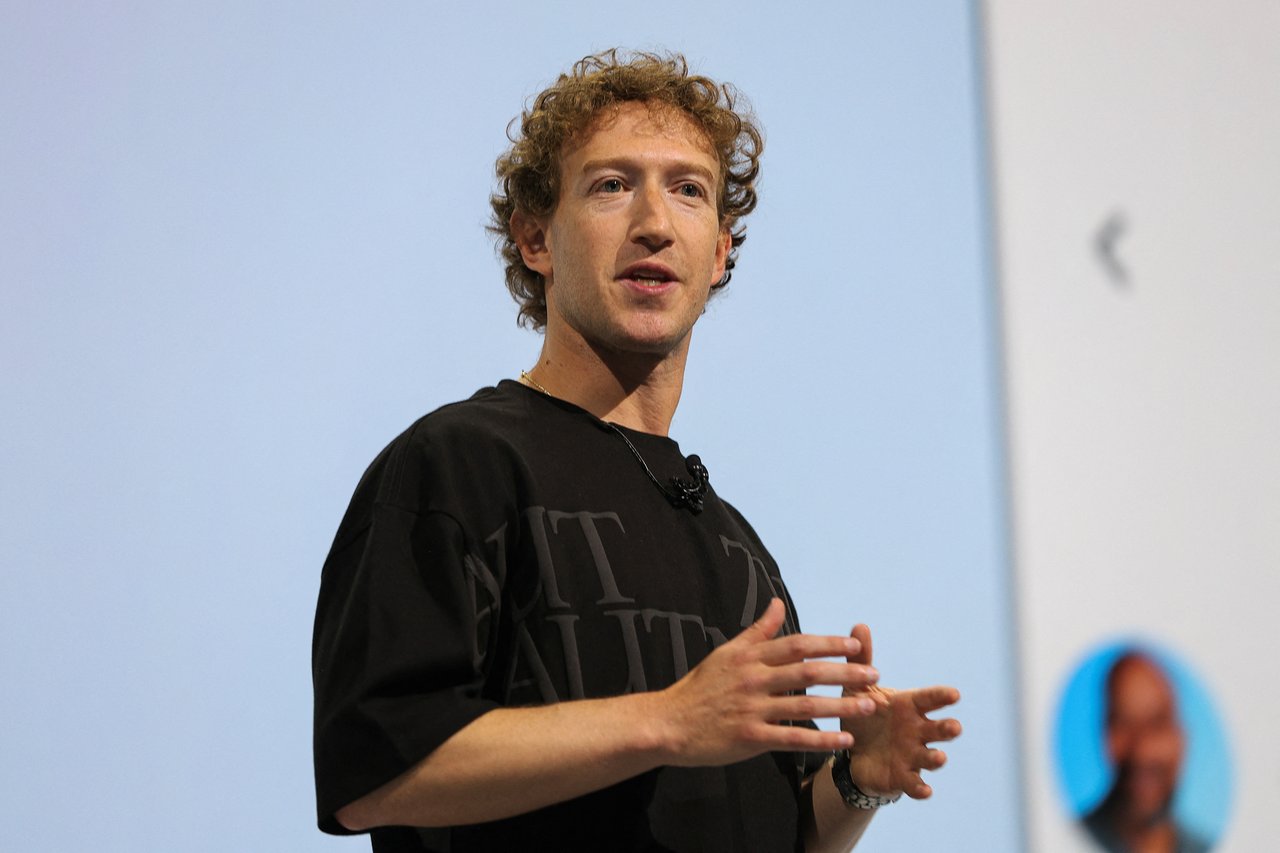
The AI Clone Designed to Answer Employee Questions
The employee-facing AI is built on top of Meta's existing AI character development work. The company has reportedly been creating photorealistic, 3D animated AI characters (digital human avatars rendered to look and move like real people) for some time — the Zuckerberg version adapts that same infrastructure to a specific, real executive.
Training data for the clone draws from publicly available material: interviews, keynote speeches, company Q&A sessions, and corporate communications. The goal is to replicate not just what Zuckerberg says, but how he reasons — the product-obsessed framing, the long-horizon strategic thinking, the particular cadence of his public statements.
The practical use case is straightforward: an employee working on a product decision asks the AI clone "How would Zuckerberg approach this?" and receives a response grounded in 20+ years of publicly documented thinking. Instead of routing that question upward through layers of management — where it likely never reaches the CEO anyway — the AI handles it directly.
This is advisory only. The clone would not issue binding policy, make hiring decisions, or represent official company positions. Its role is to extend the CEO's thinking to more people, more often, without adding to his calendar.
Zuckerberg's Personal AI Agent — The Second Project
Running in parallel is a second initiative: a personal AI agent that Zuckerberg himself uses to accelerate his own decision-making. The Wall Street Journal has reported on this separately. This AI handles information retrieval tasks — surfacing relevant data, finding answers to specific questions, and compressing the research leg of executive decision-making into seconds instead of hours.
The two projects solve different problems:
- The employee-facing clone extends Zuckerberg outward — giving thousands of employees access to CEO-level perspective they couldn't get otherwise
- The personal AI agent augments Zuckerberg inward — making him faster and better-informed as an individual decision-maker
Two directions. Two different problems. Both running simultaneously, centered on the same person. This is what AI-first organizational design looks like at the executive level in 2026.
Why Meta Has the Infrastructure to Build an Executive AI Agent
Building a convincing executive AI clone isn't just a large language model (LLM — a system trained on massive amounts of text to generate human-like responses) problem. It also requires voice. In July 2025, Meta acquired PlayAI — a startup specializing in voice cloning and speech synthesis (technology that replicates how a person sounds, not just what they say) — which provides the audio layer needed to make a Zuckerberg AI feel authentic rather than robotic.
Meta has committed over $21 billion to AI infrastructure investment. For a company at that scale, creating AI tools for internal use isn't experimental — it's the logical extension of the external products Meta is already shipping. Meta's consumer AI products are designed to give everyday users smarter assistants. The internal experiment tests the same capabilities on the organization itself.
The company also has years of experience building photorealistic human avatars through Meta Reality Labs (its virtual and augmented reality division, responsible for Quest headsets and Horizon Worlds). The Zuckerberg AI character didn't emerge from a blank slate — it builds on a mature technical foundation that already knows how to render and animate digital humans convincingly.
The Hard Questions No One Has Answered Yet
Meta has not officially confirmed any of this. There is no deployment timeline, no public statement, and no clarity on several critical unknowns:
- Training data scope: Is the AI trained only on public statements, or does it access internal strategy documents? The gap between those two dramatically changes how accurate — and how trustworthy — the output is for employees making real decisions
- Transparency: Will employees know they're interacting with an AI version of Zuckerberg, or will the interface make that ambiguous?
- Knowledge freshness: An AI trained on historical statements always reflects past thinking, not current priorities — a 2024-era AI Zuckerberg advising on 2026 strategy problems
- Accountability: If an employee acts on AI clone advice that leads to a bad outcome, where does responsibility land?
- Scope: Would this remain CEO-specific, or eventually extend to other Meta executives?
None of these have clean answers. They represent exactly the organizational design questions every company that attempts something similar will face.
The Precedent for Every Other Fortune 500 CEO
The template Meta is testing is replicable: take an executive's decades of public statements, apply LLM fine-tuning (the process of training an AI to behave like a specific person using targeted examples), add voice synthesis, and give employees a queryable version of that person's reasoning. The technology is already mature enough. The primary barrier is now organizational will, not technical capability.
If this works, the playbook becomes available to any company with sufficient AI investment. The Fortune 500 has roughly 500 CEOs. Within 3 to 5 years, a significant fraction may have AI versions deployed internally — for investor relations prep, employee onboarding, routine strategic Q&A, or handling the volume of questions that never reach the actual executive anyway.
The risk easiest to underestimate: the most valuable thing about an executive is their judgment under novel conditions — not their past statements. An AI clone is always a snapshot. The real Zuckerberg updates his thinking daily based on new data, market shifts, and competitive intelligence. The AI version doesn't.
That gap — between the AI's frozen knowledge and the CEO's live reasoning — is where this gets genuinely complicated. Watch how Meta solves the knowledge-freshness problem. If they crack it, every major company will copy the solution within months. You can track official developments at Meta's newsroom as any confirmation emerges — and explore what AI assistants mean for your own work at AI for Automation's learning guides.
Related Content — Get Started | Guides | More News
Sources
Stay updated on AI news
Simple explanations of the latest AI developments