Pentagon Maven AI Official: Chip Shortage Has No Backup Plan
Pentagon locked in Maven AI as its official command platform — CSET warns a chip shortage could delay military AI retraining by weeks, with no backup plan.
On April 4, 2026, Deputy Secretary Feinberg signed a directive making Maven Smart System (MSS) a formal Pentagon program of record (an official acquisition category with dedicated, long-term defense budget lines) — locking in AI-enabled command-and-control as the official future of U.S. military operations. The problem, according to Georgetown University's Center for Security and Emerging Technology (CSET): Congress hasn't established a single formal AI governance oversight mechanism for what happens next — and a quiet chip supply vulnerability could make the consequences severe.
That gap — between deployment speed and governance readiness — sits at the center of CSET's April 2026 research cluster, which also includes a blunt warning: if GPU supplies (the specialized graphics processing chips that power AI systems) are disrupted during a conflict, the U.S. military could be unable to retrain critical AI models for weeks. No commercial chip backup plan currently exists.
Maven Smart System: What It Is, and Why the Timeline Is Alarming
Maven Smart System is the Pentagon's AI platform for CJADC2 (Combined Joint All-Domain Command and Control — the military's framework for connecting battlefield information across air, sea, land, space, and cyber into a unified decision picture). Making it a "program of record" means the system is now embedded in long-term defense budgets and acquisition cycles — not a pilot project that can be quietly wound down.
CSET Senior Fellow Emelia Probasco put the oversight gap plainly:
"MSS is a great potential tool, but it comes with some really gnarly questions. And I think we're starting to wander into things that Congress would want to have more oversight on."
The directive was signed April 4, 2026. The White House National Policy Framework for AI — the first document to explicitly call for congressional legislative action on AI — was released just 15 days earlier, on March 20, 2026. The Pentagon locked in its AI architecture before the broader governance framework was even two weeks old.
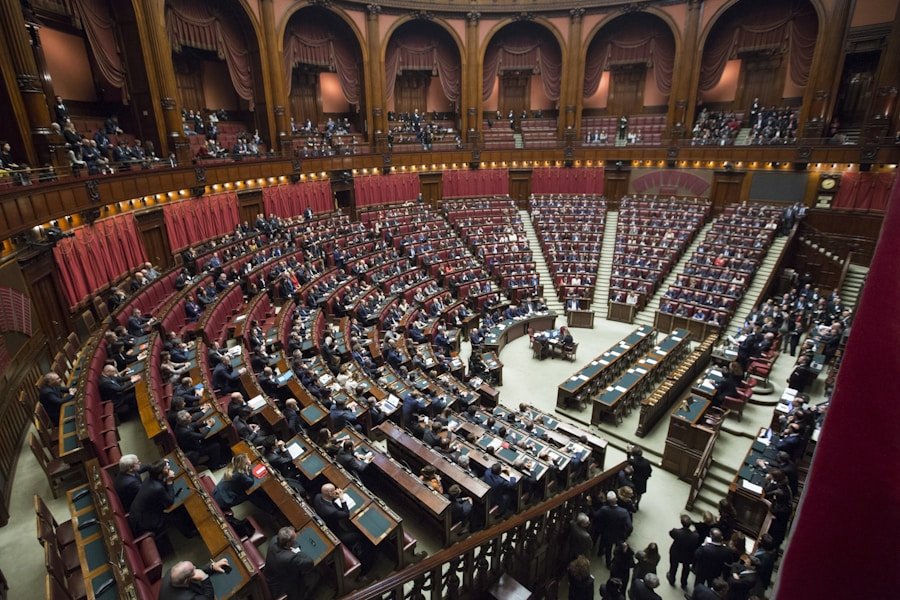
The White House AI Policy Framework: What It Covers — and What It Deliberately Skips
The National Policy Framework for AI (released March 20, 2026) is the most specific federal AI policy document to date. It followed a December 2025 executive order that tasked the Special Advisor for AI and Crypto with drafting legislative recommendations for Congress. This is a meaningful shift: previous White House AI documents were strategy memos; this one is an explicit call for Congress to codify rules into law.
What the framework does address:
- Child safety online — explicit restrictions on AI-generated content targeting minors
- Deepfakes and identity theft — though enforcement carveouts for "parody and satire" remain legally ambiguous
- Free speech and censorship guardrails — limits on AI content moderation
- Innovation sandboxes — regulatory safe zones (designated test environments where companies can deploy AI without full compliance liability during a trial period) proposed but not yet defined
- Federal preemption of state AI laws — the framework explicitly seeks to replace the current state-by-state patchwork, after two failed Congressional attempts to pass a moratorium on state AI regulation
What the framework deliberately sidesteps: frontier AI risks (the large-scale or existential safety concerns debated at international AI safety summits). The document references national security "considerations" without prioritizing them. CSET's analysis concluded the framework "varies in specificity and leaves many debates up for interpretation" — Congress is expected to "flesh out key details" on regulatory sandboxes and dataset governance rules.
One critical gap: the framework discusses developing an AI-ready workforce but does not outline steps to improve AI literacy for the policymakers who will actually write these laws. The people drafting AI legislation may not yet understand the technology they're regulating.
The Chip and GPU Shortage Warning the Framework Doesn't Mention
Buried in CSET's April 7, 2026 op-ed in The Hill, researcher Katie Caroll identified a vulnerability that appears in no policy document: what happens if GPU supply chains are disrupted during an active conflict?
Retraining an AI model (the process of updating it with new data or adapting it to new operational conditions — think of it as the AI equivalent of continuing education for a soldier) is not a background maintenance task for military systems. It's how AI-enabled decision support stays accurate as a conflict evolves. Days-versus-weeks matters in a high-tempo military operation.
Caroll's conclusion was direct:
"Faster access to commercial GPU capacity could mean the difference between retraining a critical AI model in days versus weeks."
No formal commercial GPU backup plan exists in the current defense acquisition structure. The Maven directive addresses what the system will do at scale; it says nothing about what happens when the hardware supply chain fails under wartime pressure.
1,000+ Governance Documents — and Still No Consensus
On April 9, 2026, CSET published an update to its AI governance landscape mapping project, cataloguing over 1,000 AI governance documents from the AGORA dataset (a comprehensive archive of international AI policy materials assembled for cross-jurisdictional research). The taxonomies created by MIT AI Risk Initiative and CSET researchers cover:
- AI risk categories and severity levels
- Actors involved — government bodies, private sector, civil society, international organizations
- Industry sectors targeted by AI rules
- AI lifecycle stages addressed — development, deployment, monitoring, decommission
- Legislative status of each document (proposed, enacted, repealed)
- Technical scope — which types of AI systems each document applies to
The volume of documentation underscores how fragmented global AI governance remains. Over a thousand documents exist across international jurisdictions, yet countries still disagree on fundamental definitions. The U.S. White House framework is one of many competing models, not an emerging global standard. And crucially — it is legally non-binding. It is a list of recommendations, not enforceable rules. States that have already passed AI laws are not automatically preempted until Congress acts.
The Space Data Center Wildcard Nobody Has Solved
CSET Research Analyst Kathleen Curlee, quoted in a Business Insider piece from April 3, 2026, added a note of caution to tech billionaires' proposals for space-based data centers (server facilities placed in Earth orbit to avoid land constraints, energy costs, and regulatory friction on the ground). She pointed to a challenge that no business plan has addressed yet:
"Data center maintenance in space is a lot more complicated than maintenance on Earth. There's the issue of space debris — they could get hit with a fleck of paint and sustain damage or go offline."
The same week, CSET's report on the U.S. space launch market was cited in The New York Times coverage of SpaceX's IPO filing, raising questions about whether SpaceX's near-monopoly on commercial launches creates national security risks in a sector increasingly critical to AI infrastructure expansion.
Three Things to Watch If You Work With AI
For developers, marketers, and business owners using AI automation tools in the U.S., the governance shifts playing out in April 2026 have concrete near-term implications:
- Your state's AI rules may not survive — The White House framework explicitly targets federal preemption of state AI laws. California, Colorado, and Texas rules you comply with today could be superseded by federal standards, but only after Congress legislates — and no timeline is guaranteed.
- Innovation sandboxes are coming but undefined — Regulatory test zones (where companies can deploy AI without full compliance liability) are proposed in the framework. The details — who qualifies, for how long, under what conditions — are left to Congress to specify.
- Deepfake rules will be contested — The framework includes carveouts for "parody, satire, or other expressive uses" but acknowledges these are "challenging to differentiate from unlawful uses." Enforcement ambiguity will create legal risk for any AI-generated content touching real people's likenesses.
The CSET governance map of 1,000+ documents shows how fast the policy landscape shifts — rules that don't exist today can become mandatory quickly. Watch the Congressional response to the White House framework over the next 90 days. If a bill moves, the preemption clock starts. You can explore CSET's full analysis at Georgetown's Center for Security and Emerging Technology, and check the AI tools and compliance guide to track how these regulatory shifts affect your current AI setup.
Related Content — Get Started | Guides | More News
Sources
Stay updated on AI news
Simple explanations of the latest AI developments