Claude Code $200/mo vs Goose: Free AI Coding Agent
Claude Code costs $200/mo with 5-hour rate limits. Block's Goose is a free offline AI coding agent—no limits, no cloud. Railway raised $100M on AI...
If you're paying up to $200 a month for Claude Code and watching the 5-hour rate limit interrupt your workflow mid-session, Block — the company behind Cash App and Square — built a free replacement that runs entirely on your own machine. At the same time, a 30-person startup just raised $100 million by making a single argument: AI now writes code faster than cloud infrastructure can deploy it.
Two separate stories converged this week to expose a fundamental crack in how developers pay for AI automation tools. The paid-versus-free divide between Claude Code and Goose is the immediate, personal story — especially relevant as vibe coding and AI-first development workflows become the norm. Railway's $100 million bet is the systemic one behind it.
The Hidden Cost of Claude Code Rate Limits for AI Automation
Claude Code — Anthropic's AI coding agent (a tool that writes, debugs, and edits code directly inside your terminal) — charges between $20 and $200 per month depending on how intensively you use it. Casual use fits the lower tier; daily intensive development pushes toward the ceiling.
But the monthly subscription isn't the sharpest friction point. The 5-hour rate limit reset is. When Claude Code exhausts its usage quota, developers lose access completely until the window refreshes. For a solo developer mid-debugging session, or a team running automated code reviews, a forced halt of that length carries a real productivity cost that never appears on the subscription invoice.
- Pricing range: $20–$200/month, scales with usage
- Rate limit: Hard stop with 5-hour refresh window
- Data routing: All code queries pass through Anthropic's cloud servers
- Connectivity: Requires active internet — no offline capability
Block's Goose: Free, Offline AI Coding Agent with 26,100 GitHub Stars
Goose, maintained by Block (the parent company of Square, Cash App, and Tidal), is an open-source AI coding agent (a program that reads your files, writes code, runs terminal commands, and iterates on your behalf) that matches Claude Code's core functionality at a price of zero. It runs entirely on your local machine, requiring no cloud connection and generating no external data transmission.
As of April 2026, Goose has accumulated 26,100+ GitHub stars, 362 contributors, and 102+ release versions — community metrics that indicate a production-ready tool, not a weekend experiment. There are no rate limits, no subscription tiers, and no usage quotas.
# Get started with Goose — no account or subscription required
# Full repository: https://github.com/block/goose
# License: MIT (open-source, free to use commercially)
# Runs entirely on your local machine — no internet, no rate limits
Parth Sareen, who has publicly demonstrated Goose, described the value plainly: "Your data stays with you, period." For developers handling proprietary codebases, regulated financial code, or healthcare applications, that sentence resolves the core objection to any cloud-based AI coding service.
Claude Code vs. Goose — AI Coding Agent Comparison
| Factor | Claude Code (Anthropic) | Goose (Block) |
|---|---|---|
| Monthly cost | $20–$200 | Free |
| Rate limits | 5-hour reset window | None |
| Works offline | No | Yes |
| Code stays on your machine | No (Anthropic cloud) | Yes |
| GitHub community | — | 362 contributors, 26,100+ stars |
The real tradeoff: Goose requires more hands-on configuration and relies on community support rather than a product team with SLA guarantees (legally binding uptime commitments). Developers building production pipelines where reliability is non-negotiable may still value Claude Code's accountability structure. But for individual developers, freelancers, and teams whose primary work is writing code rather than deploying it at scale, paying $200/month for a tool with built-in interruptions — when a free alternative exists — deserves a fresh look.
Railway's $100M Thesis: AI Automation Writes Code Faster Than AWS Can Deploy It
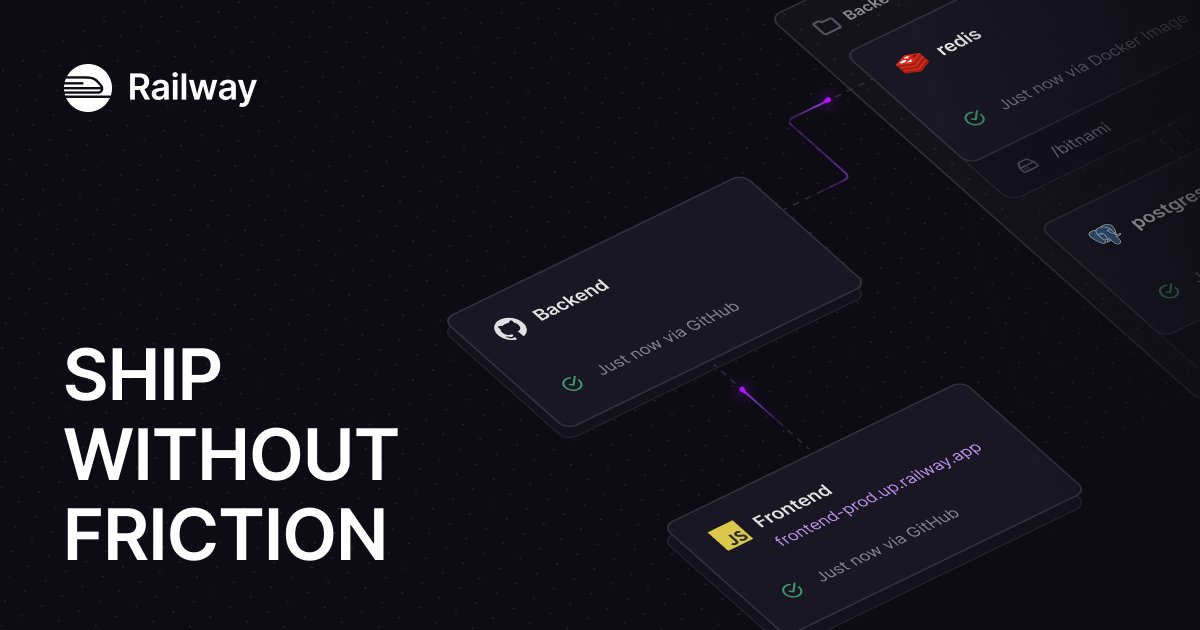
Railway, founded by Jake Cooper (a 28-year-old former Uber engineer), closed a $100 million Series B funding round led by TQ Ventures — a major jump from its previous total fundraising of $24 million. The company now serves 2 million developers, processes 10+ million deployments per month, and manages over 1 trillion requests through its edge network (the global system of distributed servers that routes application traffic quickly to users).
Cooper's central argument: traditional cloud deployment tools were designed for human-paced software development. AI coding tools have already outrun that assumption.
Deployment — the process of taking finished code and making it live on servers accessible to real users — using standard infrastructure tools like Terraform (a widely-used system for configuring cloud resources through code files) takes 2 to 3 minutes per cycle. Railway delivers the same result in under 1 second. That is a 180× speed difference that changes what AI-assisted development actually feels like day to day.
AI coding tools don't generate one version and stop. They iterate continuously — generating, testing, and revising through a session. When each deploy cycle takes 3 minutes instead of under a second, the AI agent's output speed is permanently bottlenecked by infrastructure built for human patience. Railway's bet: fixing this bottleneck is worth more than any individual AI coding tool subscription.
Cooper described Railway's full technical scope: "We're not just containers; we've got VM primitives, stateful storage, virtual private networking, automated load balancing. And we wrap all of this in an absurdly easy-to-use UI, with agentic primitives so agents can move 1,000 times faster."
Railway's five-year vision, in Cooper's own words: "In five years, Railway will be the place where software gets created and evolved, period. Deploy instantly, scale infinitely, with zero friction."
The G2X Case Study: 87% Off a $15,000/Month Cloud Bill
Abstract infrastructure arguments are easy to dismiss. G2X, a federal contractor platform (a company building software tools for U.S. government agencies), switched to Railway and cut its monthly infrastructure bill from $15,000 to $1,000. That is an 87% reduction — confirmed by their own CTO.
Daniel Lobaton, CTO at G2X, described the daily workflow shift: "The work that used to take me a week on our previous infrastructure, I can do in Railway in like a day. If I want to spin up a new service and test different architectures, it would take so long on our old setup. In Railway I can launch six services in two minutes."
Railway achieves this cost structure by owning its entire infrastructure stack. In 2024, the company abandoned Google Cloud entirely and built its own data centers — eliminating the markup that hyperscalers (massive cloud providers like AWS, Azure, and Google Cloud) add on top of commodity hardware. Operating with only 30 employees, Railway generates tens of millions in annual revenue, grew 3.5× last year, and expanded 15% month over month. Thirty-one percent of Fortune 500 companies now use the platform in some form.
Three Bets on AI Automation: Claude Code, Goose, or Railway?
Claude Code, Goose, and Railway each represent a distinct response to the same underlying change in software development. Anthropic is monetizing the AI coding agent itself at up to $200/month. Block is betting developers want local control and zero vendor lock-in (no dependence on a single company's infrastructure), so Goose is free. Railway is betting that deployment infrastructure speed will become the primary value lever as AI-generated code volume explodes — which explains why $100 million went to a 30-person company whose entire product is making deploys faster and cheaper.
Jake Cooper's projection is stark: AI will generate "a thousand times more software" than exists today. If that's even directionally accurate, the 3-minute Terraform cycle isn't just slow — it's the infrastructure equivalent of a single-lane bridge on a highway that's about to carry 1,000× more traffic.
For you, right now: if your team pays for Claude Code, evaluate Goose in the next 30 minutes at github.com/block/goose — no account, no payment, no lock-in required. If your monthly cloud bill exceeds $5,000 and you deploy frequently, run the G2X math against your own numbers at railway.app. Neither requires a long-term commitment to test.
The infrastructure shakeout around AI-generated code has already begun. The tools being built right now — both free and well-funded — will determine who captures that shift first. The 30-person team that raised $100 million and the open-source project with 362 contributors are both betting you'll need to pick a side before the incumbent cloud providers adjust their pricing.
Explore all available AI developer tools or start from zero with our beginner's guide to AI-assisted coding.
Related Content — Get Started | Guides | More News
Sources
Stay updated on AI news
Simple explanations of the latest AI developments